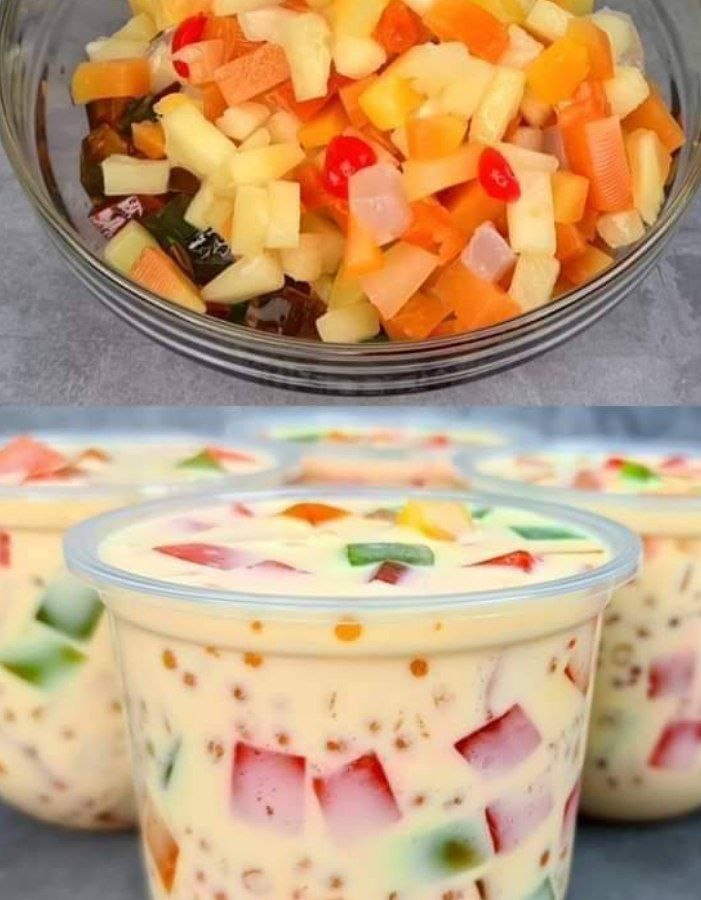
Instructions
- Prepare Gelatin: Follow the package instructions to prepare both the red and green gelatin. Pour the liquid gelatin into separate shallow dishes or pans (approximately 8×8 inches) and refrigerate for at least 2-4 hours, or until fully set. Once set, carefully slice the gelatin into small, uniform cubes, about 1/2 inch in size.
- Cook Sago: Bring a pot of water to a rolling boil. Add the small sago pearls and cook according to package directions, stirring occasionally to prevent sticking. This usually takes about 15-20 minutes, or until the pearls become translucent with a tiny white dot in the center. Drain the cooked sago in a fine-mesh sieve and rinse thoroughly under cold running water to remove excess starch and prevent sticking. Set aside to cool completely.
- Drain Canned Ingredients: Open and thoroughly drain the canned fruit cocktail, pineapple chunks, nata de coco, and kaong. It’s crucial to drain them very well to prevent the fruit salad from becoming watery. You can gently press the fruits and jellies in a colander to remove as much liquid as possible.
- Prepare the Cream Mixture: In a large mixing bowl, combine the two chilled packages of all-purpose cream and the chilled sweetened condensed milk. Using a whisk or an electric hand mixer on low speed, gently combine the ingredients until well blended and smooth. Be careful not to over-whisk, as this can sometimes cause the cream to separate. The mixture should be thick and creamy.
- Combine Ingredients: Add the drained fruit cocktail, pineapple chunks, nata de coco, kaong, cooked sago pearls, and cubed red and green gelatin to the large bowl with the cream mixture.
- Gently Mix: Using a large spatula or spoon, gently fold all the ingredients together until everything is evenly coated with the creamy dressing. Be careful not to mash the fruits or break up the gelatin cubes too much. The goal is to distribute all components evenly throughout the salad.
- Chill Thoroughly: Transfer the fruit salad to a large serving bowl or individual dessert dishes. Cover tightly with plastic wrap and refrigerate for at least 4 hours, or preferably overnight. Chilling is essential as it allows the flavors to meld beautifully and ensures the salad is delightfully refreshing when served.
- Garnish and Serve: Before serving, gently stir the fruit salad once more. If desired, garnish with halved maraschino cherries and a sprinkle of shredded cheddar cheese for an authentic Filipino touch. Serve chilled and enjoy!
Cooking Tips and Variations
For the freshest taste, always ensure your all-purpose cream and condensed milk are thoroughly chilled before mixing. This helps achieve a thicker, more stable cream base for your fruit salad. When draining canned fruits, take the extra step to gently press out excess syrup; this prevents a watery salad and allows the creamy dressing to shine. Don’t rush the chilling process; at least 4 hours, or even overnight, in the refrigerator allows all the flavors to meld beautifully and the salad to set into its perfect creamy consistency. A cold salad is a delicious salad!
Feeling adventurous? Try adding a 1/2 cup of drained lychees or peeled and sliced grapes for an extra burst of freshness. For a tropical twist, incorporate 1/2 cup of fresh mango cubes (when in season) or a can of sliced peaches. If you’re a fan of a slightly richer, more complex flavor, a small block (3-4 ounces) of cream cheese, softened and whipped into the cream mixture, can add a wonderful tang and silkiness. For an added textural crunch, sprinkle in some chopped toasted pecans or walnuts just before serving. For a less sweet option, you can reduce the amount of condensed milk by a quarter or use a sugar-free condensed milk alternative, adjusting to your taste preferences. Finally, for an extra vibrant presentation, consider using different colored gelatin flavors like orange or yellow, ensuring a rainbow of colors in your festive bowl.
Storage and Reheating
Filipino Fruit Salad is best enjoyed chilled. Store any leftovers in an airtight container in the refrigerator. When properly stored, it will remain fresh and delicious for up to 3-4 days. Beyond this, the fruits may start to soften and release more liquid, affecting the texture and consistency of the salad. It is not recommended to freeze Filipino Fruit Salad, as freezing and thawing will significantly alter the texture of the fruits, sago, and gelatin, making them mushy and watery, and the creamy dressing may separate. This dessert is designed to be served cold and fresh, so plan to consume it within its recommended refrigerated shelf life for the best experience. There’s no “reheating” involved with this refreshing dessert; it’s always served chilled.
Frequently Asked Questions
Can I use fresh fruits instead of canned fruits?
Absolutely! While canned fruits are traditional and convenient for Filipino Fruit Salad, using fresh fruits can add a wonderful vibrancy and different textural elements. Good choices for fresh fruits include diced ripe mangoes, grapes (halved), melon (cantaloupe or honeydew), kiwi, and strawberries. Just be mindful that certain fresh fruits, especially those with high water content like watermelon, can release a lot of liquid, which might thin out your cream mixture. If using fresh fruits, prepare them just before mixing and ensure they are very dry to prevent excess moisture. You might also want to add them closer to serving time to maintain their crispness.
What can I use if I can’t find nata de coco or kaong?
Nata de coco and kaong are distinctive ingredients that add unique chewiness and subtle flavor to Filipino Fruit Salad. If they are unavailable, you can still make a delicious version. For a similar chewiness, you can increase the amount of sago pearls or add finely diced jelly. You could also experiment with other chewy tropical jellies or even diced mochi pieces for a different twist. While the authentic texture will be slightly altered, the overall creamy and fruity experience will still be delightful. Check Asian grocery stores, as they typically carry these items.
Why did my fruit salad become watery?
There are a few common reasons why your fruit salad might become watery. The most frequent culprit is insufficient draining of the canned fruits and jellies. Excess syrup or juice from these ingredients will inevitably dilute your creamy dressing. Always make sure to drain them thoroughly, even pressing gently in a colander. Another reason could be using fruits with very high water content, especially if they weren’t properly drained, or if the salad wasn’t chilled long enough for the cream to fully set and meld with the ingredients. Lastly, over-mixing can sometimes break down the fruits and gelatin, causing them to release more liquid. Ensure gentle folding when combining ingredients.
Can I make this fruit salad dairy-free or vegan?
Yes, you can adapt Filipino Fruit Salad to be dairy-free or vegan with a few substitutions. Replace the sweetened condensed milk with a can of sweetened condensed coconut milk, which is widely available. For the all-purpose cream, use a can of full-fat coconut cream (chilled overnight and scoop out the thick cream on top) or a dairy-free whipping cream alternative. Ensure that your gelatin is also vegan by opting for agar-agar based jellies or making your own with agar-agar powder and fruit juices, as traditional gelatin contains animal products. With these adjustments, you can enjoy a delicious dairy-free and vegan version of this classic dessert.