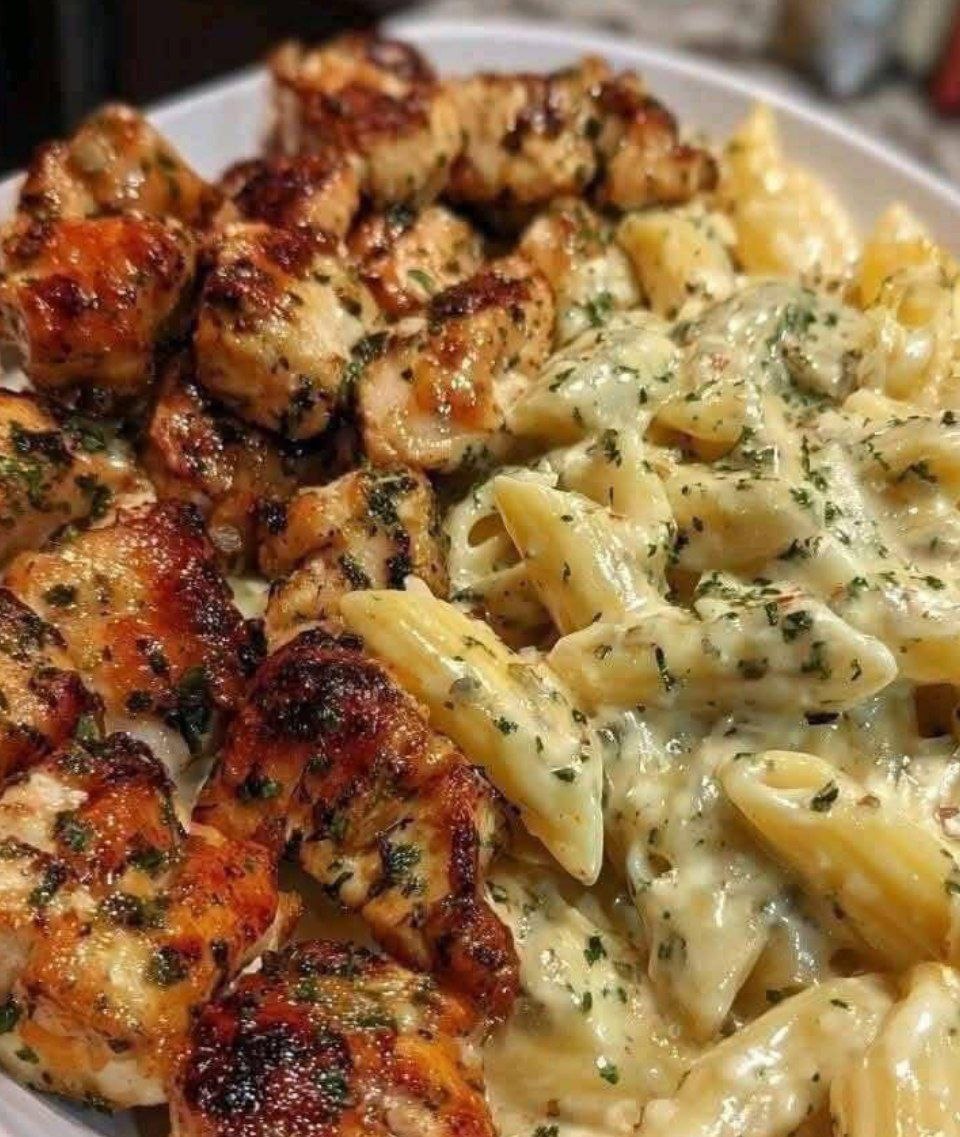
Instructions
- Prepare the Chicken: In a medium bowl, combine the chicken cubes with 1 tablespoon of olive oil, Italian seasoning, smoked paprika, garlic powder, onion powder, 1/4 cup of chopped fresh parsley, 1 tablespoon of chopped fresh chives, 1/2 teaspoon salt, and 1/4 teaspoon black pepper. Toss well to ensure all chicken pieces are evenly coated. Set aside to marinate for at least 10-15 minutes while you prepare other ingredients.
- Cook the Pasta: Bring a large pot of salted water to a rolling boil. Add the penne pasta and cook according to package directions until al dente. Before draining, reserve 1 cup of the pasta cooking water. Drain the pasta and set aside.
- Cook the Chicken: While the pasta is cooking, heat the remaining 1 tablespoon of olive oil in a large skillet or Dutch oven over medium-high heat. Add the marinated chicken pieces in a single layer, being careful not to overcrowd the pan. Cook for 3-5 minutes per side, or until golden brown and cooked through. Remove the cooked chicken from the skillet and set aside on a plate.
- Sauté Aromatics: Reduce the heat to medium. Add the butter to the same skillet. Once melted, add the finely diced onion and cook for 3-4 minutes, stirring occasionally, until softened and translucent. Add the minced garlic and cook for another 1 minute until fragrant, being careful not to burn it.
- Deglaze (Optional) and Build the Sauce: If using, pour in the dry white wine to deglaze the pan, scraping up any browned bits from the bottom. Let it simmer for 1-2 minutes until the alcohol has cooked off. Add the heavy cream and chicken broth to the skillet. Bring the mixture to a gentle simmer, stirring occasionally.
- Simmer and Thicken the Sauce: Reduce the heat to low and let the sauce simmer for 5-7 minutes, stirring frequently, until it slightly thickens.
- Add Cheese and Herbs: Remove the skillet from the heat. Gradually stir in the 1 cup of freshly grated Parmesan cheese until it is fully melted and incorporated, creating a smooth, creamy sauce. Stir in the remaining 1/4 cup of fresh parsley and 1 tablespoon of fresh chives. Season the sauce with salt and black pepper to taste.
- Combine the Dish: Add the cooked penne pasta and the cooked chicken bites back into the skillet with the sauce. Toss gently to coat everything evenly. If the sauce appears too thick, add a splash of the reserved pasta cooking water, one tablespoon at a time, until you reach your desired consistency.
- Serve: Serve immediately, garnished with extra freshly grated Parmesan cheese and a sprinkle of fresh parsley, if desired.
Cooking Tips and Variations
To achieve the best possible results with your Creamy Garlic Parmesan Pasta with Herb Chicken Bites, consider these essential tips. Firstly, always cook your pasta to al dente. This means it should be firm to the bite, not mushy. Al dente pasta holds its shape better and provides a more satisfying texture in the finished dish. Overcooked pasta will absorb too much sauce and become soggy. Secondly, use fresh ingredients whenever possible, especially for the herbs and Parmesan cheese. Freshly grated Parmesan has a superior flavor and melts more smoothly into the sauce compared to pre-shredded varieties, which often contain anti-caking agents. Similarly, fresh parsley and chives offer a brighter, more vibrant flavor than their dried counterparts, significantly enhancing the overall aroma and taste of the dish.
When cooking the chicken, ensure your skillet is adequately hot before adding the meat. This allows the chicken to develop a beautiful golden-brown sear, locking in juices and adding another layer of flavor through the Maillard reaction. Avoid overcrowding the pan, as this will steam the chicken instead of searing it, resulting in less flavorful and less appealing pieces. Cook the chicken in batches if necessary. Another crucial tip for the sauce is to remove it from the heat before adding the Parmesan cheese. This prevents the cheese from clumping or becoming oily, ensuring a smooth, luxurious consistency. Gradually stirring the cheese in allows it to melt evenly and incorporate perfectly into the creamy base.
This recipe is also incredibly versatile and can be easily adapted to suit different tastes and dietary preferences. For a vegetarian option, simply omit the chicken and add a variety of sautéed vegetables such as mushrooms, spinach, bell peppers, or sun-dried tomatoes. These additions will absorb the rich sauce beautifully and provide a wonderful texture contrast. If you’re looking for a different protein, shrimp or Italian sausage would be excellent substitutes for chicken. Cook the shrimp until pink and opaque, or brown the sausage before adding it back to the sauce at the end.
To add more depth of flavor to the sauce, consider incorporating a pinch of red pepper flakes for a subtle kick, or a squeeze of fresh lemon juice at the very end to brighten the dish and cut through the richness. For a richer, more umami flavor, a teaspoon of Dijon mustard can be whisked into the cream sauce. If you prefer a thicker sauce, you can make a quick slurry with a tablespoon of cornstarch mixed with a tablespoon of cold water, then whisk it into the simmering sauce. Conversely, if the sauce becomes too thick, simply thin it out with a little more chicken broth or the reserved pasta cooking water until it reaches your desired consistency. Don’t be afraid to experiment with different types of pasta as well; farfalle, fettuccine, or even spaghetti would work wonderfully with this creamy sauce. Finally, for an extra touch of richness and flavor, a drizzle of high-quality extra virgin olive oil over the finished dish before serving can make a noticeable difference.
Storage and Reheating
Proper storage and reheating are key to enjoying your Creamy Garlic Parmesan Pasta with Herb Chicken Bites as delicious leftovers. Once the dish has cooled to room temperature, transfer it to an airtight container. It can be stored in the refrigerator for up to 3-4 days. To prevent the pasta from drying out or absorbing too much of the sauce, ensure the container is sealed tightly. While the flavors may deepen slightly overnight, the texture of the pasta and sauce might change a little as the pasta continues to absorb the liquid.
For reheating, the best method to maintain the creamy texture is on the stovetop. Transfer the desired portion of pasta to a non-stick skillet or a saucepan over medium-low heat. Add a splash of milk, cream, or chicken broth (about 1-2 tablespoons per serving) to help rehydrate the sauce and prevent it from drying out. Stir gently and continuously until the pasta is heated through and the sauce becomes creamy again. Avoid high heat, as this can cause the cream to separate or the cheese to become oily.
Alternatively, you can reheat individual portions in the microwave. Place the pasta in a microwave-safe dish, add a tablespoon or two of milk or broth, and cover it loosely with a lid or microwave-safe plastic wrap. Heat on medium power for 1-2 minutes, then stir and continue heating in 30-second intervals until warmed through. Stirring periodically helps to distribute the heat evenly and prevent hot spots. Be mindful not to overheat, as this can make the pasta rubbery and the sauce break.
Freezing this dish is generally not recommended. Cream-based sauces, especially those with cheese, tend to separate and become grainy upon thawing and reheating. The pasta can also become mushy after being frozen and thawed. For the best experience, enjoy your leftovers within the refrigerated timeframe.
Frequently Asked Questions
Why did my cream sauce separate or become grainy?
Cream sauces can separate or become grainy for a few reasons. One common culprit is adding cheese to a sauce that is too hot or boiling. High heat can cause the fat in the cheese to separate from the solids, leading to an oily, clumpy texture. To prevent this, always remove the sauce from the heat before stirring in the Parmesan cheese, and add it gradually while stirring constantly. Another reason could be overheating the sauce during reheating. Always reheat cream sauces gently over low heat, adding a splash of liquid if needed, and avoid bringing them to a rolling boil.
Can I make this dish gluten-free?
Absolutely! Making this dish gluten-free is very straightforward. The main ingredient that contains gluten is the pasta. Simply substitute the regular penne pasta with your favorite brand of gluten-free penne pasta. Most gluten-free pastas are made from corn, rice, or lentil flour and cook similarly to traditional pasta. Ensure you follow the package instructions for cooking time, as gluten-free pasta can sometimes cook a bit faster or require different handling. All other ingredients in this recipe, such as chicken, cream, cheese, and herbs, are naturally gluten-free, but it’s always a good practice to check labels on broths or seasonings to ensure they are certified gluten-free if you have a severe sensitivity.
What can I use if I don’t have white wine?
If you prefer not to use white wine or don’t have any on hand, you can easily substitute it with chicken broth. The white wine is primarily used for deglazing the pan and adding a subtle layer of acidity and depth to the sauce. Chicken broth will achieve a similar effect for deglazing and will blend seamlessly with the other flavors. For an added touch of acidity that mimics the wine, you can add a small squeeze of fresh lemon juice (about 1-2 teaspoons) to the sauce along with the chicken broth. This will brighten the flavors without introducing alcohol.
Can I prepare parts of this dish in advance?
Yes, you can certainly prepare some components of this dish in advance to save time. The chicken can be cut and marinated up to 24 hours ahead of time and stored in an airtight container in the refrigerator. You can also mince the garlic and dice the onion in advance and store them in separate airtight containers in the fridge. However, it’s best to cook the pasta and prepare the sauce fresh just before serving. Cooked pasta can become sticky and less appealing if made too far in advance, and cream sauces are at their best when freshly made. Assembling the entire dish just before eating ensures the best texture and flavor.