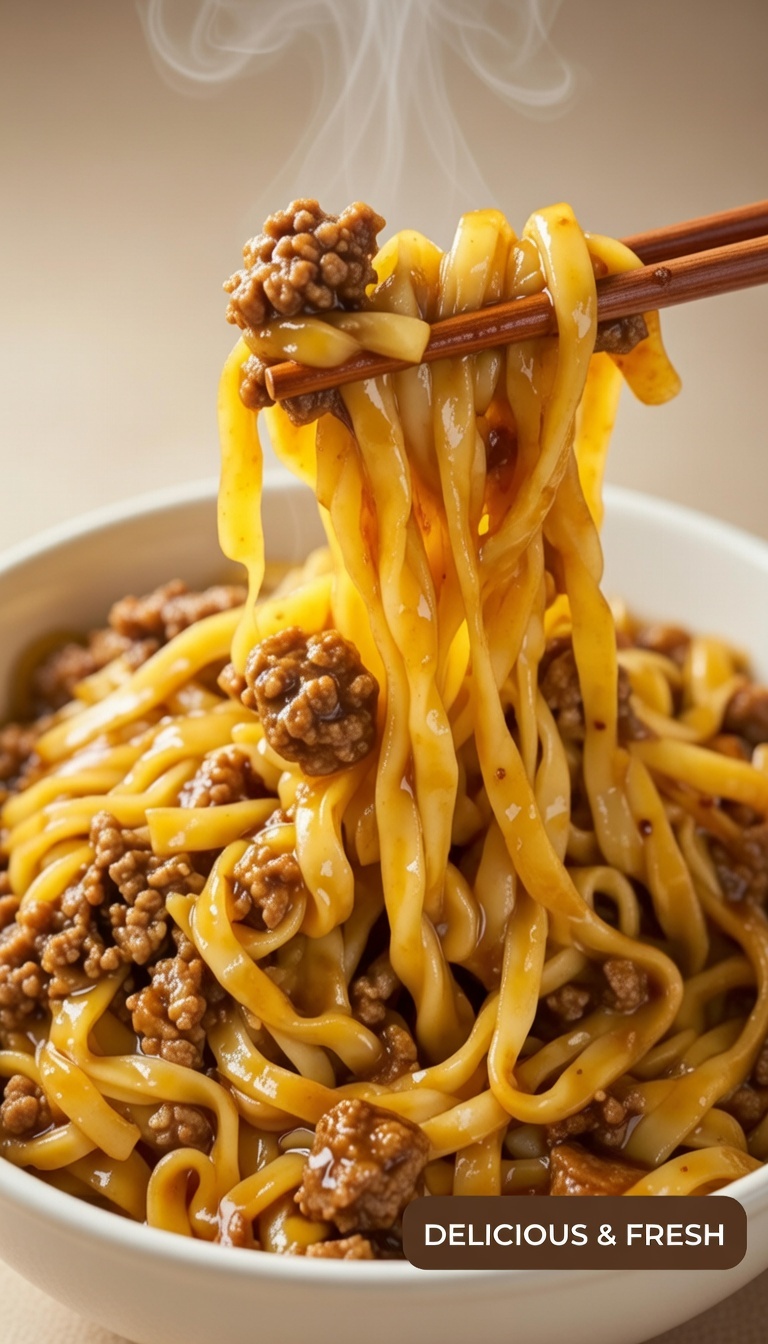
Why Mongolian Ground Beef Noodles Are So Popular 🍜
If you’re looking for a quick, deeply satisfying meal that combines bold flavors with simple pantry ingredients, Mongolian Ground Beef Noodles might become one of your favorite recipes. This dish delivers savory, slightly sweet, garlicky goodness wrapped around tender noodles and juicy ground beef — all in under 30 minutes.
Busy families across the United States love recipes like this because they strike the perfect balance between convenience and flavor. Unlike complicated stir-fry recipes that require specialty ingredients, Mongolian Ground Beef Noodles rely on affordable items you can find in almost any grocery store.
The rich sauce made with soy sauce, garlic, ginger, and brown sugar coats every bite, creating a glossy, restaurant-style noodle dish that tastes like it came from a takeout kitchen — but costs a fraction of the price.
According to Chef Maria Lawson, a culinary consultant specializing in home cooking techniques, “Dishes like Mongolian noodles succeed because they layer salty, sweet, and umami flavors in a way that feels indulgent but is actually very easy to execute at home.”
Whether you’re a beginner cook, a busy parent, or someone trying to reduce takeout spending, this recipe is an excellent place to start.
Understanding the Flavor Profile 🍲
Despite the name, Mongolian-style noodles are actually more inspired by Chinese-American cuisine than traditional Mongolian food. The signature flavor combination includes:
- Savory soy sauce
- Sweet brown sugar
- Aromatic garlic
- Fresh ginger
- Rich beef flavor
When these ingredients simmer together, they create a glossy sauce that clings beautifully to noodles and meat.
Culinary instructor James Holloway explains, “The key to great Mongolian-style dishes is balance. Too much sugar and it becomes syrupy; too much soy sauce and it becomes overly salty. The magic is in the ratio.”
Ingredients for Mongolian Ground Beef Noodles 🥢
Core Ingredients
- 1 lb ground beef
- 1 tablespoon ginger paste
- 5 teaspoons minced garlic
- ½ cup beef broth
- ½ cup soy sauce
- ¼ cup brown sugar
- 8 ounces noodles (lo mein, spaghetti, or ramen)
- 1 tablespoon cornstarch (optional for thickening)
- 2 tablespoons water
- 2 green onions, sliced
- 1 tablespoon sesame oil (optional)
These ingredients create a rich, glossy sauce that coats noodles beautifully and enhances the savory flavor of the beef.
Essential Kitchen Tools 🔪
One reason this dish is so beginner-friendly is that it requires minimal equipment.
Recommended Cooking Tools
- Large skillet or wok
- Medium pot for boiling noodles
- Wooden spoon or spatula
- Measuring cups and spoons
- Knife and cutting board
Chef Maria Lawson recommends using a wide skillet: “A larger surface area allows the beef to brown instead of steam, which dramatically improves the flavor of the dish.”
Step-by-Step Preparation Guide 👩🍳
Step 1: Cook the Noodles
Bring a pot of salted water to a boil and cook your noodles according to package instructions. Drain and set aside.
Step 2: Brown the Ground Beef
Heat a large skillet over medium-high heat. Add the ground beef and cook until browned, breaking it apart as it cooks. Drain excess grease if necessary.
Step 3: Add Garlic and Ginger
Stir in minced garlic and ginger paste. Cook for about 1 minute until fragrant.
Step 4: Make the Mongolian Sauce
Add beef broth, soy sauce, and brown sugar to the skillet. Stir well and bring to a gentle simmer.
Step 5: Thicken the Sauce
If you prefer a thicker sauce, mix cornstarch with water and stir it into the skillet.
Step 6: Combine Noodles and Sauce
Add cooked noodles to the skillet and toss until evenly coated.
Step 7: Finish and Serve
Drizzle sesame oil on top and garnish with sliced green onions.
Nutrition, Ingredients & Functional Benefits
| Ingredient | Measurement | Approx. Calories | Serving Weight | Functional Benefit |
|---|---|---|---|---|
| Ground Beef | 1 lb | 1,150 | 454 g | Protein source that promotes satiety and energy |
| Soy Sauce | ½ cup | 70 | 120 g | Adds umami depth and seasoning balance |
| Brown Sugar | ¼ cup | 200 | 55 g | Balances savory ingredients with mild sweetness |
| Beef Broth | ½ cup | 15 | 120 g | Enhances flavor while adding moisture |
| Noodles | 8 oz | 840 | 226 g | Provides carbohydrates for energy |
| Garlic | 5 tsp | 25 | 25 g | Adds aroma and savory complexity |
| Ginger | 1 tbsp | 5 | 6 g | Brightens flavor and balances richness |
Homemade vs Store-Bought Stir-Fry Meals
Homemade Version
- Full control of sodium levels
- Fresh ingredients
- Customizable flavors
- More affordable for families
Store-Bought or Takeout
- Higher sodium content
- Often uses added oils
- Less control over ingredient quality
- Higher cost per serving
Nutritionist Sarah Coleman notes, “Cooking at home allows you to control ingredients, especially salt and sugar, which are often much higher in restaurant-style dishes.”
Health & Food Safety Tips 🥗
- Cook ground beef to an internal temperature of 160°F.
- Refrigerate leftovers within 2 hours.
- Store cooked noodles in airtight containers.
- Consume leftovers within 3–4 days.
- Reheat thoroughly until steaming hot.
For households with food allergies, consider low-sodium or gluten-free soy sauce alternatives.
Common Mistakes When Making Mongolian Noodles ⚠️
Overcooking the Noodles
Soft noodles break apart when mixed with sauce.
Using Too Much Soy Sauce
This can make the dish overly salty.
Skipping the Browning Step
Proper browning creates deep flavor.
Not Thickening the Sauce
Without cornstarch, the sauce may feel watery.
10 Frequently Asked Questions
1. Can I use ground turkey instead of beef?
Yes, ground turkey or chicken works well as a lean alternative.
2. What noodles work best?
Lo mein, ramen, spaghetti, or udon noodles all work well.
3. How much does this recipe cost to make?
For most households, the total cost ranges between $8 and $12 for four servings.
4. Can I make this recipe gluten-free?
Yes. Use gluten-free noodles and tamari instead of soy sauce.
5. Can I add vegetables?
Absolutely. Broccoli, bell peppers, and snap peas are great additions.
6. How long do leftovers last?
Stored properly in the refrigerator, leftovers last up to four days.
7. Can I freeze this dish?
Yes, though noodles may soften slightly after thawing.
8. What’s the best way to reheat?
Reheat in a skillet with a splash of broth or water.
9. Is sesame oil necessary?
No, but it adds a traditional aroma.
10. How can I make the sauce thicker?
Add a cornstarch slurry while simmering.
More Comfort Recipes to Explore 🍽️
If you enjoy simple comfort food recipes like this one, you might also enjoy exploring additional noodle and skillet meals available on
gentplu.com, where home-style cooking ideas often highlight quick weeknight dinners and family-friendly meals.
Final Thoughts: A Perfect Beginner Stir-Fry 🍜
Mongolian Ground Beef Noodles prove that flavorful meals don’t require complicated techniques or expensive ingredients. With simple pantry staples and one skillet, you can create a dish that rivals restaurant takeout while staying budget-friendly and customizable.
Once you’ve mastered this recipe, experiment with vegetables, spice levels, and different noodle types to create your own version. The beauty of this dish lies in its flexibility — making it perfect for beginner cooks and experienced home chefs alike.
With the right balance of sweet, savory, and aromatic ingredients, this dish can easily become a weeknight staple in any kitchen.