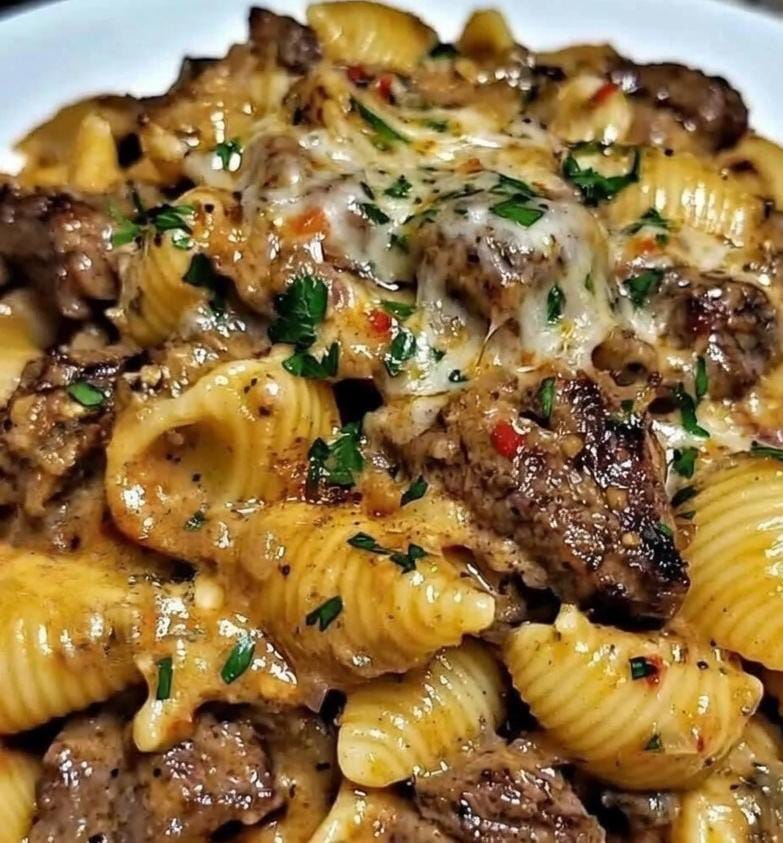
Irresistible Creamy Garlic Butter Steak & Shell Pasta 🥩🧄🍝
The Dish That Disappears in Minutes
We’ve all tasted a dish so good it felt almost dangerous to make again. Maybe it was served at a family gathering. Maybe it came from someone’s “just throw it together” weeknight dinner. And somehow, you couldn’t stop eating it.
This Creamy Garlic Butter Steak & Shell Pasta is exactly that kind of recipe. Tender, seared steak bites folded into ridged pasta shells, coated in a velvety garlic butter cream sauce, finished with melted cheese and fresh herbs. It’s rich, comforting, and undeniably satisfying.
But beyond the indulgence, there’s something else: this dish is surprisingly customizable, cost-conscious, and adaptable to different kitchen setups—from a small apartment stovetop to a fully equipped home kitchen. In this guide, we’ll explore everything from ingredient quality to food safety, preparation methods, and smarter cooking decisions for American home cooks.
Why This Steak Pasta Is So Addictive 🍴
Flavor Layering Done Right
Chef Maria Lawson explains, “The key to a dish like this isn’t just cream and cheese. It’s contrast—seared beef with caramelized edges, garlic butter depth, a hint of heat, and pasta that holds onto sauce.”
The ridges of shell pasta trap sauce, making every bite flavorful. The steak brings savory richness. Garlic butter provides warmth. A sprinkle of parsley brightens it all up.
Texture Balance
- Seared exterior on steak pieces
- Al dente pasta with bite
- Creamy but not watery sauce
- Melted cheese for stretch and cohesion
That balance is what makes people go back for seconds… and thirds.
Choosing the Right Ingredients 🛒
Best Cuts of Steak for Pasta
For a dish like this, you don’t necessarily need filet mignon. In fact, smart ingredient selection can significantly reduce your grocery bill.
- Sirloin (Budget-Friendly & Reliable) – Lean and flavorful
- Ribeye (Premium Option) – Higher fat content, richer flavor
- Strip Steak – Balanced marbling and tenderness
- Flank Steak (Sliced Thin) – Economical, but requires proper slicing
Culinary Instructor James Holloway advises slicing steak against the grain to maintain tenderness, especially with leaner cuts.
Fresh vs Pre-Shredded Cheese
Pre-shredded cheese often contains anti-caking agents that affect melting. Freshly grated mozzarella or provolone melts smoother and integrates better into the sauce.
Garlic: Fresh vs Jarred
Fresh garlic offers sharper aroma and flavor. Jarred minced garlic saves time but can taste slightly muted. For a dish centered around garlic butter, fresh is worth the extra step.
Essential Kitchen Tools 🔪
You don’t need professional equipment, but the right tools make a difference:
- Heavy-bottom skillet (cast iron or stainless steel)
- Large pasta pot (at least 5–6 quarts)
- Instant-read thermometer (for safe steak cooking)
- Microplane or box grater for cheese
- Tongs for flipping steak evenly
A heavy skillet ensures proper searing. Thin pans can lead to uneven browning and overcooked meat.
Step-by-Step Cooking Strategy
1. Cook the Pasta Properly
Salt your pasta water generously—it should taste lightly salty like broth. Cook shells to al dente (usually 1 minute less than package instructions). Reserve ½ cup pasta water before draining.
2. Sear the Steak
Pat steak dry before seasoning. Moisture prevents browning. Cook over medium-high heat for 2–3 minutes per side for medium doneness.
Safe internal temperatures:
- Medium rare: 130–135°F
- Medium: 140–145°F
Allow steak to rest before combining with pasta to preserve juices.
3. Build the Sauce
In the same skillet:
- Add butter
- Sauté garlic (30–60 seconds only)
- Deglaze with a splash of broth
- Add heavy cream
- Stir in cheese gradually
Reserved pasta water helps adjust sauce thickness without making it greasy.
Nutrition & Ingredient Breakdown
| Ingredient | Amount (Per 4 Servings) | Serving Weight | Calories (Approx per Serving) | Functional Benefit |
|---|---|---|---|---|
| Sirloin Steak | 1 lb | 4 oz cooked | 250 | Protein for satiety and energy |
| Shell Pasta | 12 oz | 1.5 cups cooked | 310 | Carbohydrates for balanced fuel |
| Heavy Cream | 1 cup | 1/4 cup | 200 | Richness and texture satisfaction |
| Mozzarella Cheese | 1 cup shredded | 1/4 cup | 80 | Flavor and creaminess |
| Butter | 3 tbsp | 3/4 tbsp | 75 | Flavor depth and mouthfeel |
Total estimated calories per serving: 800–900 depending on portion size.
Nutritionist Sarah Coleman notes, “Rich pasta dishes can absolutely fit into a balanced diet when portioned thoughtfully and paired with vegetables.”
Homemade vs Store-Bought Versions 🏪
Store-Bought Alfredo Sauce
- Convenient
- Consistent flavor
- Often higher in sodium
Homemade Cream Sauce
- Control over ingredients
- Lower sodium option
- Better texture and freshness
Homemade wins in flavor and flexibility, especially for adjusting thickness or seasoning.
Cooking Method Comparisons 🔥
Stovetop (Best Overall)
Allows control over sauce consistency and steak doneness.
Oven Finish
Add cheese on top and broil briefly for bubbly golden crust.
Air Fryer Steak
Great for small batches, but lacks pan drippings for sauce depth.
Health & Food Safety Tips 🧼
- Store leftovers within 2 hours of cooking
- Refrigerate in airtight container up to 3 days
- Reheat to 165°F
- Do not leave cream-based dishes at room temperature
- Use separate cutting boards for meat and vegetables
Those with dairy allergies can substitute lactose-free cream and cheese alternatives.
Common Mistakes to Avoid ❌
Overcooking the Steak
Results in dry, chewy texture.
Boiling the Cream Sauce
High heat can cause separation.
Undersalting Pasta Water
Leads to bland base flavor.
Adding Cheese Too Quickly
Can cause clumping.
10 Frequently Asked Questions
1. Is this an expensive recipe to make?
Using sirloin keeps cost moderate. Expect $15–$25 total depending on steak quality.
2. Can I use chicken instead of steak?
Yes. Boneless chicken thighs work well.
3. Can I freeze leftovers?
Cream sauces may separate after freezing. Best enjoyed fresh or refrigerated only.
4. What pasta works best?
Shells, penne, or rigatoni hold sauce effectively.
5. How do I lighten it?
Use half-and-half instead of heavy cream and reduce cheese slightly.
6. Is cast iron necessary?
No, but it improves searing quality.
7. How long does prep take?
Approximately 35–45 minutes total.
8. Can I add vegetables?
Spinach, mushrooms, or roasted broccoli pair beautifully.
9. How do I reheat without drying it out?
Add a splash of milk before reheating gently on stovetop.
10. Can I make it ahead?
Prepare sauce and steak separately, combine before serving.
Pairing & Serving Ideas 🍷
- Simple arugula salad with lemon vinaigrette
- Garlic bread
- Roasted asparagus
For more comforting pasta and dinner ideas, you may enjoy browsing recipes at https://gentplu.com for inspiration.
Final Thoughts: Should You Dare to Make It? 🤔
This is one of those meals that feels indulgent but becomes unforgettable for good reason. With smart ingredient choices, mindful portioning, and proper cooking techniques, it can be both satisfying and balanced.
As Chef Maria Lawson says, “Comfort food isn’t about excess—it’s about intention. When you cook with care, even a rich pasta dish can feel thoughtfully made.”
So yes, it might disappear quickly. But now you know exactly how—and why—it works. And maybe that’s the best reason to make it again.