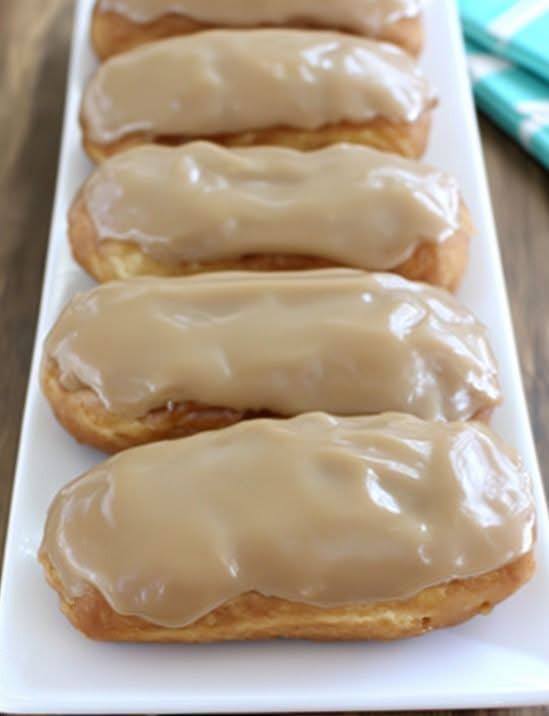
Instructions
Part 1: Making Glazed Cake Donuts
- In a large bowl, whisk together the all-purpose flour, granulated sugar, baking powder, salt, and ground nutmeg (if using).
- In a separate medium bowl, whisk together the lightly beaten egg, milk, melted butter (or oil), and vanilla extract until well combined.
- Pour the wet ingredients into the dry ingredients. Stir with a spoon or spatula until just combined. Be careful not to overmix; a few lumps are okay. Overmixing will result in tough donuts.
- Lightly flour a clean work surface. Turn the dough out onto the floured surface. Gently pat the dough to about 1/2-inch thickness. If the dough is too sticky, add a little more flour, but avoid adding too much.
- Using a 3-inch donut cutter or two concentric cookie cutters (one large for the outer ring, one small for the hole), cut out donut shapes. Re-roll scraps gently to cut out additional donuts, but try not to overwork the dough.
- Heat 4-6 cups of neutral oil in a large, heavy-bottomed pot or Dutch oven over medium heat to 350°F (175°C). Use a candy thermometer to monitor the oil temperature accurately.
- Carefully slide 2-3 donuts (do not overcrowd the pot) into the hot oil. Fry for 60-90 seconds per side, or until golden brown.
- Using a slotted spoon or spider, transfer the fried donuts to a wire rack set over a baking sheet lined with paper towels to drain excess oil.
- While the donuts are still warm, dip them into the prepared vanilla glaze (instructions below).
- Place glazed donuts back on the wire rack to allow the glaze to set. Serve warm or at room temperature.
Part 2: Making Glazed Yeast Donuts
- In a small bowl, combine the warm water and 1 teaspoon of granulated sugar. Sprinkle the active dry yeast over the top and let it sit for 5-10 minutes until it becomes foamy. This indicates the yeast is active.
- In a large bowl, whisk together the warm milk, remaining 1/4 cup granulated sugar, lightly beaten egg, melted butter, vanilla extract, and salt.
- Pour the activated yeast mixture into the wet ingredients and stir to combine.
- Gradually add the all-purpose flour, one cup at a time, mixing with a wooden spoon or a stand mixer with a dough hook attachment. Once the dough starts to come together, turn it out onto a lightly floured surface.
- Knead the dough for 5-7 minutes, or until it is smooth and elastic. It should be slightly tacky but not sticky.
- Lightly grease a clean large bowl with a little oil. Place the dough in the bowl, turning it once to coat. Cover the bowl with plastic wrap or a clean kitchen towel.
- Let the dough rise in a warm place for 1 to 1.5 hours, or until it has doubled in size.
- Once doubled, gently punch down the dough to release the air. Turn the dough out onto a lightly floured surface.
- Roll the dough to about 1/2-inch thickness. Using a 3-inch donut cutter or two concentric cookie cutters, cut out donut shapes. Place the cut donuts and donut holes on parchment-lined baking sheets.
- Cover the donuts loosely with plastic wrap or a clean kitchen towel and let them proof again in a warm place for 30-45 minutes, or until visibly puffy and almost doubled in size. This second rise is crucial for light, airy donuts.
- Heat 4-6 cups of neutral oil in a large, heavy-bottomed pot or Dutch oven over medium heat to 350°F (175°C). Use a candy thermometer to monitor the oil temperature accurately.
- Carefully slide 2-3 proofed donuts (do not overcrowd the pot) into the hot oil. Fry for 60-90 seconds per side, or until golden brown. The donut holes will cook much faster, about 30 seconds per side.
- Using a slotted spoon or spider, transfer the fried donuts to a wire rack set over a baking sheet lined with paper towels to drain excess oil.
- While the donuts are still warm, dip them into the prepared vanilla glaze (instructions below).
- Place glazed donuts back on the wire rack to allow the glaze to set. Serve warm or at room temperature.
Part 3: Making Simple Vanilla Glaze
- In a medium bowl, whisk together the powdered sugar, milk (or water), vanilla extract, and a pinch of salt until smooth and lump-free.
- If the glaze is too thick, add a tiny bit more milk, a teaspoon at a time, until it reaches your desired consistency. If it’s too thin, whisk in a little more powdered sugar.
- Dip warm donuts into the glaze, turning to coat evenly. Allow excess glaze to drip off before placing on a wire rack.
Cooking Tips and Variations
Oil Temperature is Key: For perfectly fried donuts, maintaining the correct oil temperature is crucial. If the oil is too hot, the donuts will brown too quickly on the outside and remain raw inside. If it’s too cool, they’ll absorb too much oil and become greasy. Invest in a good deep-fry thermometer and keep the temperature steady at 350°F (175°C).
Don’t Overcrowd the Pot: Fry donuts in small batches (2-3 at a time) to prevent the oil temperature from dropping too drastically. This ensures even cooking and browning.
For Cake Donuts, Don’t Overmix: Overmixing cake donut batter develops the gluten, leading to tough donuts. Mix just until the ingredients are combined.
For Yeast Donuts, Activate Your Yeast: Always test your yeast by letting it proof in warm water and a pinch of sugar. If it doesn’t get foamy, your yeast might be old or dead, and your donuts won’t rise.
Proofing Yeast Donuts: A warm, draft-free place is ideal for proofing. You can create one by turning your oven on to its lowest setting for a few minutes, then turning it off and placing the covered dough inside.
Flavorful Glaze Variations:
- Chocolate Glaze: Whisk 2 tablespoons of unsweetened cocoa powder into the vanilla glaze recipe.
- Maple Glaze: Replace 1/4 cup of milk with 1/4 cup of maple syrup in the vanilla glaze recipe.
- Lemon Glaze: Replace the milk with fresh lemon juice and add 1 teaspoon of lemon zest to the vanilla glaze.
Topping Ideas: After glazing, sprinkle with rainbow sprinkles, chopped nuts (peanuts, walnuts, pecans), shredded coconut, a dusting of cinnamon sugar, or crushed cookies.
Filled Donuts: For yeast donuts, once cooled, you can inject them with your favorite fillings like jelly, custard, or whipped cream using a piping bag fitted with a long, thin nozzle.
Storage and Reheating
Storage: Donuts are best enjoyed fresh, ideally within a few hours of making them. However, if you have leftovers, store them in an airtight container at room temperature for up to 1-2 days. Glazed donuts tend to get sticky over time, and the glaze can absorb moisture from the air, losing its crispness.
Reheating:
- Microwave: For a quick reheat, place a donut in the microwave for 10-15 seconds. Be careful not to overheat, as this can make them tough.
- Oven/Toaster Oven: For a slightly crisper exterior, place donuts on a baking sheet and warm in a preheated oven at 300°F (150°C) for 3-5 minutes, or until just warm through. This works particularly well for cake donuts.
Frequently Asked Questions
Why are my homemade donuts dense and heavy?
Density in cake donuts often comes from overmixing the batter, which develops gluten and makes them tough. For yeast donuts, insufficient kneading or improper proofing (not letting them rise enough or letting them deflate too much) can lead to a dense texture. Ensure your yeast is active and give the dough ample time to rise in a warm environment.
Can I bake these donuts instead of frying them?
While you can bake donuts, especially cake donuts, the texture will be different. Baked donuts will be more like a cake or muffin, lacking the crisp exterior and airy interior that frying provides. For cake donuts, you can bake them in a greased donut pan at 375°F (190°C) for 10-15 minutes. Yeast donuts are generally not suitable for baking if you want the traditional light, fluffy texture.
How do I know if my oil is at the right temperature without a thermometer?
While a thermometer is highly recommended for accuracy, if you don’t have one, you can test the oil with a small piece of dough. If the dough immediately sizzles and floats to the top, browning in about 60 seconds, the oil is likely ready. If it sinks and doesn’t sizzle, the oil is too cool. If it browns almost instantly, the oil is too hot.