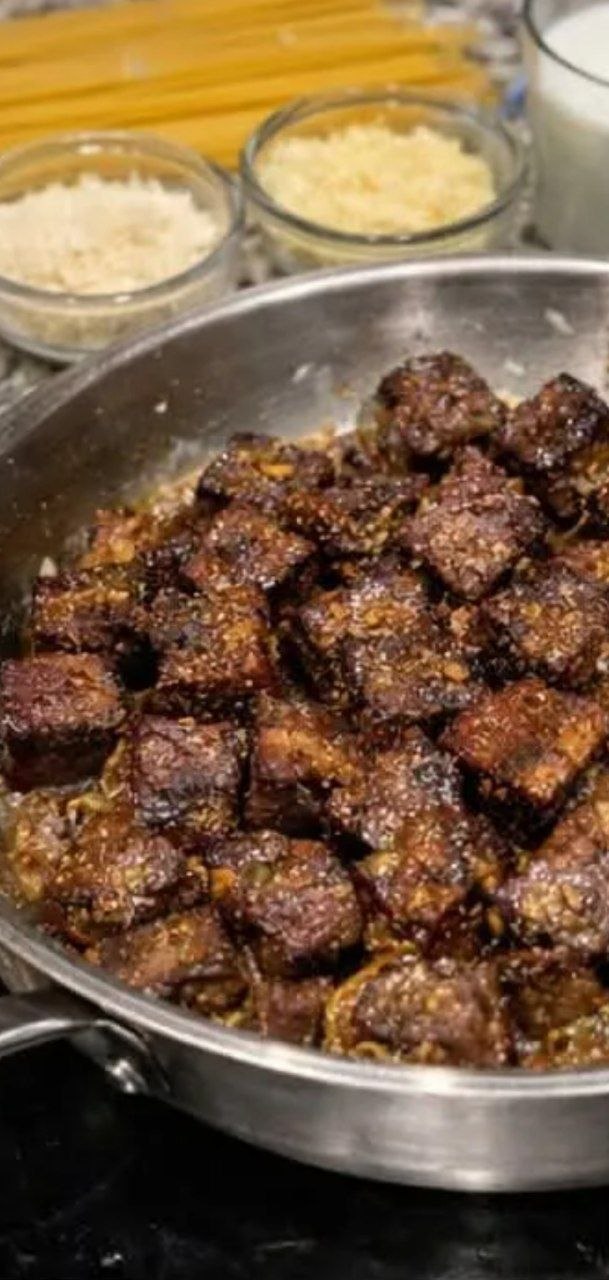
Instructions
- Prepare the Steak: Pat the steak cubes dry thoroughly with paper towels. Season generously with salt and black pepper on all sides.
- Sear the Steak: Heat 1 tablespoon of olive oil and 1 tablespoon of butter in a large, heavy-bottomed skillet or cast-iron pan over medium-high heat until the butter is melted and shimmering.
- Add half of the steak cubes to the hot pan in a single layer, ensuring not to overcrowd the pan. Sear for 2-3 minutes per side until a deep brown crust forms. Remove the seared steak to a plate and repeat with the remaining steak, adding another tablespoon of olive oil if needed.
- Create Garlic Butter Sauce for Steak: Once all steak is seared and removed, reduce the heat to medium. Add 2 tablespoons of butter to the same skillet. Once melted, add 3 cloves of minced garlic and sauté for about 30 seconds until fragrant, being careful not to burn the garlic.
- Return all the seared steak to the pan, tossing gently to coat in the garlic butter. Cook for another 1-2 minutes, spooning the garlic butter over the steak, until the steak reaches your desired doneness (medium-rare to medium is recommended for tenderness). Remove the steak from the pan and set aside.
- Cook the Spaghetti: While the steak is cooking, bring a large pot of salted water to a rolling boil. Add the spaghetti and cook according to package directions until al dente. Reserve 1 cup of pasta water before draining.
- Prepare Creamy Parmesan Sauce: In a separate large saucepan or the same skillet (wiped clean if desired, or embracing the steak drippings for extra flavor), melt the remaining 1 tablespoon of butter over medium heat. Add the remaining 3 cloves of minced garlic and sauté for about 30 seconds until fragrant.
- Pour in the heavy cream and milk. Bring the mixture to a gentle simmer, stirring occasionally.
- Reduce the heat to low. Gradually whisk in the grated Parmesan cheese until melted and smooth. Stir in 0.5 teaspoon of black pepper and 0.5 teaspoon of salt. Taste and adjust seasoning as needed.
- Combine Spaghetti and Sauce: Add the drained spaghetti directly to the creamy Parmesan sauce. Toss until the spaghetti is fully coated. If the sauce is too thick, add a splash or two of the reserved pasta water, a tablespoon at a time, until it reaches your desired consistency.
- Assemble and Serve: Divide the creamy Parmesan spaghetti among serving plates. Top generously with the garlic butter steak cubes.
- Garnish with fresh chopped parsley and an extra sprinkle of Parmesan cheese, if desired. Serve immediately and enjoy!
Cooking Tips and Variations
Choosing Your Steak: For the best garlic butter steak, opt for cuts like sirloin, ribeye, or New York strip. These cuts have good marbling, which contributes to their tenderness and flavor. For a more economical option, flank steak or skirt steak can also work, but ensure you slice them against the grain after cooking for maximum tenderness.
Patting Dry is Key: Don’t skip the step of patting your steak dry with paper towels. Excess moisture on the surface of the steak prevents a good sear, leading to a steamed rather than crusted exterior. A dry surface ensures that beautiful, flavorful crust we all love.
Don’t Overcrowd the Pan: When searing the steak, cook it in batches if necessary. Overcrowding the pan lowers the temperature, preventing the steak from searing properly and instead steaming it. Give each piece enough space to brown evenly.
Garlic Prowess: For the garlic butter sauce, be mindful not to burn the garlic. Burnt garlic turns bitter and can ruin the flavor of your sauce. Sauté it until it’s just fragrant, usually about 30 seconds to a minute on medium heat.
Al Dente Perfection: Cook your spaghetti until it’s al dente – firm to the bite. It will continue to cook slightly when added to the hot sauce. Overcooked pasta can become mushy and lose its appealing texture.
Reserved Pasta Water: That starchy pasta water is your secret weapon for the creamy Parmesan sauce. It helps to emulsify the sauce, making it incredibly smooth and glossy, and also helps it cling beautifully to the spaghetti. Don’t throw it all out!
Cheese Quality Matters: For the best creamy Parmesan spaghetti, use freshly grated Parmesan cheese, not the pre-shredded kind that often contains anti-caking agents. Freshly grated cheese melts much more smoothly and offers a superior flavor.
Temperature Control for Sauce: When adding Parmesan cheese to the sauce, make sure the heat is low. High heat can cause the cheese to clump or become stringy. Whisk it in gradually for a silky-smooth consistency.
Variations:
Add Vegetables: Boost the nutrition and flavor by adding some vegetables. Sautéed mushrooms, spinach, asparagus, or cherry tomatoes would be excellent additions to either the steak or spaghetti components. You could even toss them directly into the creamy pasta sauce at the end.
Spicy Kick: For those who love a bit of heat, add a pinch of red pepper flakes to the garlic butter sauce for the steak or directly into the creamy Parmesan spaghetti sauce.
Herbaceous Notes: Experiment with different fresh herbs. Besides parsley, fresh thyme or rosemary sprigs can be added to the pan while the steak is searing for an extra layer of aroma. Fresh basil can be stirred into the pasta sauce just before serving.
Different Pasta Shapes: While spaghetti is classic, feel free to use other pasta shapes like fettuccine, linguine, penne, or even rigatoni. Any pasta that can hold a creamy sauce well will work.
Wine Deglaze: After searing the steak and removing it from the pan, you can deglaze the pan with a splash of dry white wine or beef broth before adding the butter and garlic for the steak sauce. This adds another layer of complexity to the flavor.
Lemon Zest: A little lemon zest grated over the finished dish can add a bright, fresh counterpoint to the richness of the steak and creamy pasta.
Storage and Reheating
Storage: If you have leftovers of this delicious Garlic Butter Steak and Creamy Parmesan Spaghetti, it’s best to store the steak and spaghetti separately if possible, though they can also be stored together. Place them in airtight containers and refrigerate promptly within two hours of cooking. They will keep well in the refrigerator for up to 3-4 days.
Reheating:
- For the Spaghetti: The creamy sauce tends to thicken and absorb into the pasta upon refrigeration. When reheating, you’ll likely need to add some moisture to bring it back to its creamy consistency.
- Stovetop Method (Recommended for Spaghetti): Place the leftover spaghetti in a saucepan over medium-low heat. Add a splash of milk, heavy cream, or even a little water (about 1-2 tablespoons per serving) to help loosen the sauce. Stir gently and continuously until heated through and the sauce is creamy again.
- Microwave Method (for Spaghetti): Place a single serving of spaghetti in a microwave-safe dish. Add a tablespoon of milk or water. Loosely cover with a lid or microwave-safe plastic wrap, leaving a small vent. Heat in 30-second intervals, stirring in between, until heated through. Be careful not to overheat, as this can make the sauce separate or become oily.
- For the Steak: Reheating steak can be tricky as it tends to dry out or become tough.
- Stovetop Method (Recommended for Steak): Heat a small amount of olive oil or butter in a skillet over medium heat. Add the steak cubes and quickly toss for 1-2 minutes until just heated through. Avoid overcooking.
- Microwave Method (for Steak): If reheating with the spaghetti, the steak will likely heat alongside it. If heating alone, place it on a microwave-safe plate and heat in very short bursts (15-20 seconds) until warmed, checking frequently.
- Combining (if stored separately): Reheat the spaghetti and steak separately using the methods above, then combine them on the plate for serving.
Note: While delicious, the texture of the steak and the creaminess of the sauce are always at their peak when freshly prepared. Reheating may alter the texture slightly, but it will still be a very enjoyable meal!
Frequently Asked Questions
What kind of steak is best for this recipe?
For the best results, we recommend using cuts like sirloin, ribeye, or New York strip steak. These cuts have good marbling, which contributes to their tenderness and rich flavor when seared. You can also use more economical options like flank or skirt steak, but ensure you slice them against the grain after cooking to maximize tenderness.
Can I make the creamy Parmesan sauce ahead of time?
While the creamy Parmesan sauce is best made fresh and served immediately with the hot pasta, you can prepare it a few hours in advance. Store it in an airtight container in the refrigerator. When reheating, gently warm it over low heat, adding a splash of milk or heavy cream and whisking constantly to restore its smooth, creamy consistency. Avoid boiling the sauce, as this can cause it to separate.
How do I prevent the steak from becoming tough?
There are a few key steps to ensure your steak remains tender. First, always pat the steak dry before searing to achieve a good crust without steaming. Second, don’t overcrowd the pan; sear in batches if necessary. Third, cook the steak to your desired doneness, preferably medium-rare to medium, as overcooked steak can become tough. Finally, slice the steak against the grain if you are using cuts like flank or skirt steak, as this shortens the muscle fibers and makes it more tender to chew.
What can I use instead of heavy cream for the sauce?
If you’re looking for an alternative to heavy cream, you can use half-and-half or a combination of milk and a tablespoon of cornstarch (mixed with a little cold milk before adding to the sauce to prevent lumps). Keep in mind that using lighter alternatives may result in a less rich and slightly thinner sauce. For a dairy-free option, coconut milk (full-fat) can be used, but it will impart a subtle coconut flavor to the sauce.