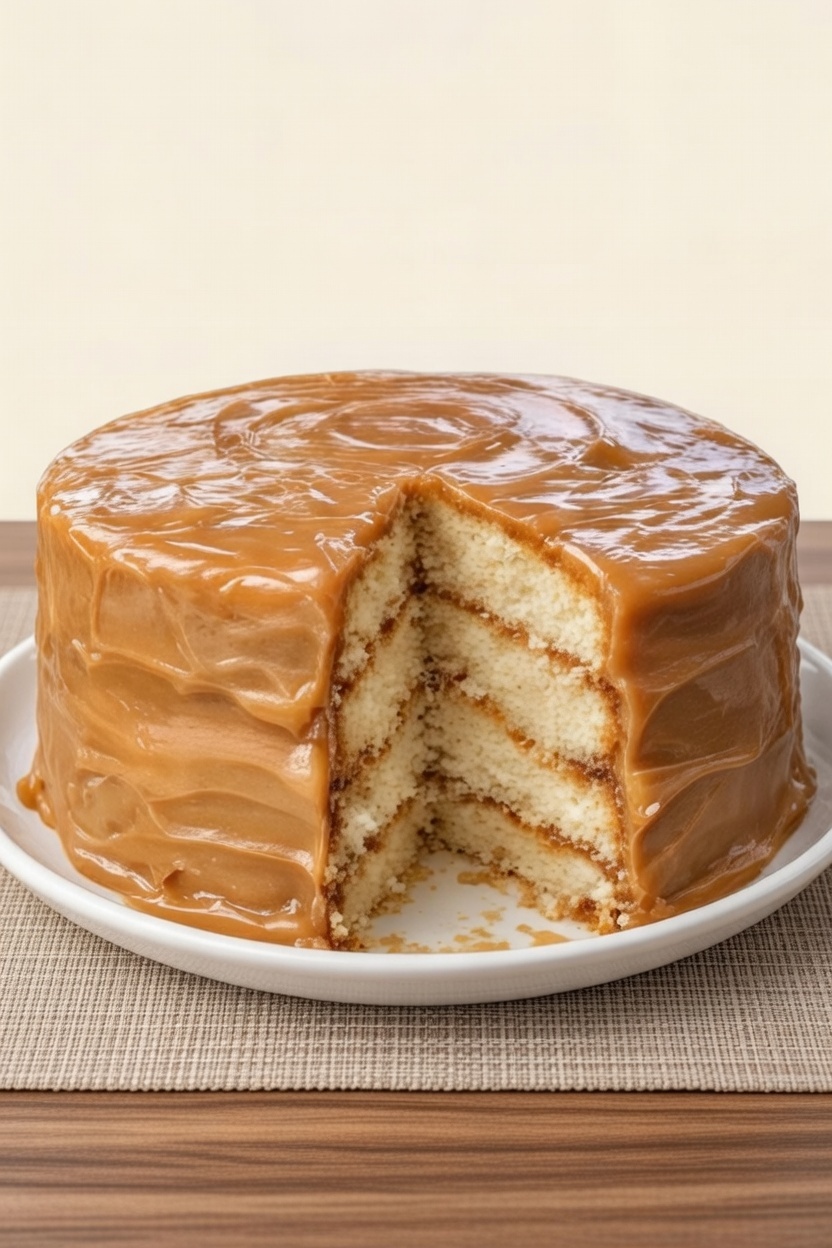
Southern Caramel Cake: The Classic Homemade Dessert You Don’t Want to Lose 🍰
There are cakes you enjoy… and then there are cakes you remember forever. Southern Caramel Cake belongs firmly in the second category. With its soft, buttery layers and rich caramel icing that melts gently into every bite, this cake delivers comfort, nostalgia, and pure dessert satisfaction. Whether you’re baking for a holiday, family gathering, or simply treating yourself, mastering this cake will elevate your baking skills and deepen your understanding of classic American desserts.
Unlike many modern cakes filled with artificial flavors and shortcuts, Southern Caramel Cake relies on simple pantry ingredients and careful technique. The magic comes from transforming butter, sugar, eggs, and flour into tender layers, then finishing with homemade caramel icing that creates a smooth, luxurious finish.
Chef Maria Lawson, a pastry chef with over 20 years of experience in traditional Southern baking, explains: “Southern Caramel Cake is not just about sweetness. It’s about balance—rich butter, controlled caramelization, and proper layering. When done right, it’s elegant but comforting.”
This guide will teach you everything you need to know—from ingredient selection and equipment choices to expert tips, comparisons, and food safety advice.
Understanding the Ingredients: Quality Makes the Difference 🧈
Flour: The Structural Foundation
All-purpose flour provides structure while maintaining tenderness. Premium flour brands often have more consistent protein content, which improves texture and reliability.
Budget vs Premium Comparison:
- Budget flour: affordable and effective for everyday baking
- Premium flour: finer milling, smoother crumb, improved consistency
Culinary Instructor James Holloway advises: “Always measure flour correctly. Too much flour is the number one cause of dense cakes.”
Butter: Flavor and Moisture Core
Unsalted butter allows precise salt control and delivers a richer, cleaner taste compared to margarine. European-style butter contains more fat, which enhances flavor and tenderness.
Sugar: More Than Just Sweetness
Granulated sugar sweetens and contributes to structure, while brown sugar in caramel icing adds deeper flavor through molasses content.
Buttermilk: The Secret to Tenderness
Buttermilk’s acidity weakens gluten formation, resulting in softer cake layers. It also reacts with baking soda for proper lift.
If unavailable, substitute with:
- 1 cup milk + 1 tablespoon lemon juice
Eggs: Stability and Richness
Eggs bind ingredients and provide structure. Room temperature eggs blend better and create smoother batter.
Essential Kitchen Tools for Best Results 🔧
Using proper equipment improves safety, consistency, and results.
- Stand mixer or hand mixer
- Measuring cups and spoons
- Mixing bowls
- 24–26 cm cake pans
- Cooling rack
- Heavy-bottom saucepan for caramel icing
- Offset spatula
Chef Maria Lawson emphasizes: “Heavy-bottom pans prevent burning, especially when making caramel.”
Step-by-Step Preparation Guide 👩🍳
Step 1: Preparing the Cake Batter
- Preheat oven to 350°F (175°C)
- Cream butter and sugar until light and fluffy
- Add eggs one at a time
- Mix flour, baking powder, and baking soda separately
- Alternate adding flour mixture and buttermilk
- Add vanilla extract
This method ensures even mixing and proper texture.
Step 2: Baking the Layers
- Grease cake pans thoroughly
- Divide batter evenly
- Bake 25–30 minutes
- Cool completely before icing
Cooling prevents icing from melting and sliding.
Step 3: Making the Caramel Icing
Caramel icing requires patience and temperature control.
- Melt butter
- Add brown sugar
- Cook gently while stirring
- Add milk or cream gradually
- Beat until smooth and spreadable
James Holloway notes: “Never rush caramel. Burned sugar creates bitterness.”
Nutritional and Ingredient Functional Overview 📊
| Ingredient | Measurement | Calories (Approx) | Serving Contribution | Functional Benefit |
|---|---|---|---|---|
| All-purpose flour | 2½ cups | 1,100 | Structure base | Provides stability and texture |
| Butter | 2 cups total | 3,200 | Flavor core | Adds richness and moisture |
| Sugar | 4 cups total | 3,100 | Sweetness | Provides energy and balance |
| Eggs | 4 large | 280 | Binding agent | Supports structure and stability |
| Buttermilk | 1 cup | 100 | Moisture source | Improves tenderness |
| Brown sugar | 2 cups | 1,700 | Caramel icing base | Enhances depth of flavor |
Homemade vs Store-Bought Cake Comparison 🏪
Homemade Advantages
- Better ingredient control
- No preservatives
- Superior flavor freshness
- Customizable sweetness
Store-Bought Advantages
- Convenient
- No preparation time
- Consistent appearance
However, homemade cakes generally offer better flavor and ingredient transparency.
Health, Safety, and Storage Tips 🧊
Nutritionist Sarah Coleman recommends proper portion control due to the cake’s richness.
- Store covered at room temperature for 2 days
- Refrigerate up to 5 days
- Freeze up to 3 months
- Always cool before storage
Food safety tip: Never store warm cake in sealed containers to prevent condensation.
Common Mistakes and How to Avoid Them ⚠️
Overmixing the Batter
Causes dense cake texture.
Incorrect Ingredient Temperature
Cold butter and eggs mix poorly.
Burning the Caramel
Always use medium heat.
Applying Icing Too Early
Warm cake melts icing.
Cost and Budget Considerations 💰
This cake is cost-efficient compared to premium bakery cakes.
- Estimated homemade cost: $10–$18
- Bakery equivalent: $35–$60
Bulk purchasing ingredients reduces long-term baking costs.
Frequently Asked Questions ❓
1. Can I use margarine instead of butter?
Yes, but butter provides better flavor and texture.
2. How long does homemade caramel cake last?
Up to 5 days refrigerated.
3. Can I freeze caramel cake?
Yes, freeze tightly wrapped for 3 months.
4. What’s the best pan material?
Aluminum pans provide even heating.
5. Can I reduce sugar?
Yes, but texture and caramel quality may change.
6. Why is my cake dry?
Usually caused by overbaking.
7. Can beginners make this cake?
Yes, with careful attention to instructions.
8. Is buttermilk necessary?
Recommended for best texture.
9. Can I use alternative flour?
Yes, but texture may vary.
10. What other recipes pair well with this?
You can explore classic Southern desserts at gentplu.com for complementary recipes.
Final Thoughts: Mastering a True Southern Classic 🍰
Southern Caramel Cake represents timeless baking tradition. It teaches patience, ingredient understanding, and technique. While store-bought cakes offer convenience, nothing compares to the flavor and satisfaction of homemade caramel cake.
With proper ingredients, tools, and technique, you can consistently create bakery-quality results in your own kitchen. Focus on ingredient quality, temperature control, and careful caramel preparation.
Once mastered, this cake becomes more than a dessert—it becomes a signature recipe you’ll proudly share for years.