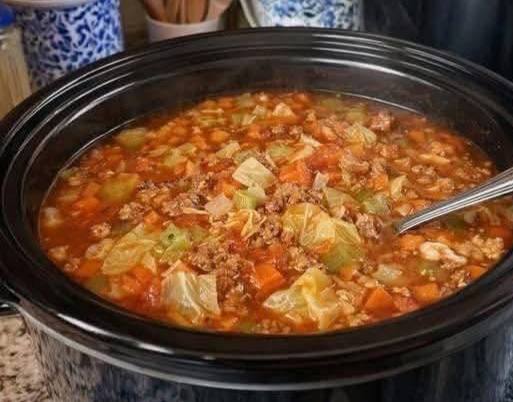
Instructions
- Heat the olive oil in a large skillet over medium-high heat. Add the ground beef and cook, breaking it up with a spoon, until it is fully browned and no pink remains. Drain any excess grease from the skillet.
- Add the chopped onion to the skillet with the browned beef. Cook for 5-7 minutes, stirring occasionally, until the onion softens and becomes translucent. Stir in the minced garlic and cook for another 1 minute until fragrant. Remove the skillet from the heat.
- Transfer the browned beef, onion, and garlic mixture to the slow cooker insert.
- Add the chopped cabbage, diced carrots, and diced celery to the slow cooker.
- Pour in the crushed tomatoes, tomato sauce, and diced tomatoes (with their liquid) over the vegetables and meat.
- Stir in the beef broth, rinsed uncooked rice, brown sugar, apple cider vinegar, dried oregano, dried basil, smoked paprika, and black pepper. Mix all ingredients thoroughly until well combined.
- Cover the slow cooker and cook on LOW for 6-8 hours or on HIGH for 3-4 hours, or until the cabbage is very tender and the rice is fully cooked.
- Once cooked, taste the soup and season with salt as needed. The amount of salt will depend on the sodium content of your beef broth and canned tomatoes.
- Ladle the hot soup into bowls. Garnish with fresh chopped parsley and a dollop of sour cream or Greek yogurt, if desired. Serve immediately.
Cooking Tips and Variations
To achieve the best possible flavor for your Slow Cooker Cabbage Roll Soup, don’t skip browning the ground beef and sautéing the onions and garlic first. This crucial step develops a rich depth of flavor that simply simmering raw ingredients won’t provide. The caramelization on the meat and vegetables adds wonderful savory notes to the broth. Also, draining the excess fat from the ground beef after browning prevents the soup from becoming greasy. For an even more robust flavor, consider using a good quality beef broth or homemade stock.
When it comes to the cabbage, the cooking time can vary based on your preference for tenderness. If you like your cabbage very soft and melt-in-your-mouth, add it at the beginning of the cooking process as instructed. However, if you prefer it with a slight al dente texture, you can add the chopped cabbage during the last 1.5 to 2 hours of cooking on low, or the last 45 minutes to 1 hour on high. This will ensure it’s cooked through but still retains a bit more structure.
This recipe is incredibly versatile and can be adapted to suit various tastes and dietary needs. For a leaner option, substitute ground turkey or chicken for the ground beef. If using ground poultry, you might want to add a bit more smoked paprika or a dash of Worcestershire sauce to enhance the savory notes. For a vegetarian version, omit the meat entirely and increase the amount of cabbage and other vegetables like bell peppers, zucchini, or even mushrooms. You can also use vegetable broth instead of beef broth. To add more plant-based protein, consider incorporating a can of rinsed and drained cannellini beans or kidney beans.
Experiment with different spices to customize the flavor profile. A pinch of red pepper flakes can add a subtle heat if you enjoy a little kick. A bay leaf added during cooking can contribute an extra layer of aromatic complexity, just remember to remove it before serving. Some people like to add a teaspoon of caraway seeds, which pairs wonderfully with cabbage and gives the soup a distinct Eastern European flair. If you find the soup too acidic from the tomatoes, you can increase the brown sugar slightly or add a pinch of baking soda (just a tiny amount, about 1/4 teaspoon, and stir well to avoid fizzing over) to neutralize some of the acidity.
For those who prefer a thicker, heartier soup, you can increase the amount of rice to 3/4 cup or even 1 cup. Alternatively, if you want to make it gluten-free, you can omit the rice and add cooked gluten-free pasta (like elbow macaroni or small shells) during the last 15-20 minutes of cooking, or serve the soup over a bed of cooked quinoa or gluten-free rice. Another excellent addition is a splash of fresh lemon juice or an extra drizzle of apple cider vinegar just before serving. This brightens the overall flavor and cuts through the richness, adding a refreshing tang.
Finally, don’t be afraid to adjust the consistency of the soup. If it’s too thick for your liking, add a little more beef broth or water until it reaches your desired consistency. If it’s too thin, you can simmer it uncovered on the stove (after slow cooking) for a short period to reduce some of the liquid, or mash a small portion of the vegetables against the side of the pot to naturally thicken the broth. A good quality crusty bread or warm dinner rolls are the perfect accompaniment for dipping into this flavorful soup, making it a complete and satisfying meal.
Storage and Reheating
This Slow Cooker Cabbage Roll Soup is an excellent candidate for meal prep and tastes even better the next day as the flavors have more time to meld. To store leftovers, allow the soup to cool completely to room temperature (this usually takes 1-2 hours) before transferring it to airtight containers. Properly stored, the soup will keep in the refrigerator for up to 3-4 days.
For longer storage, this soup freezes beautifully. Once completely cooled, transfer individual portions or the entire batch into freezer-safe containers or heavy-duty freezer bags. If using freezer bags, lay them flat to freeze for easier storage. Frozen, the soup will maintain its quality for up to 3 months. When ready to enjoy, thaw the soup overnight in the refrigerator.
To reheat, you have several options. For individual servings, simply microwave on high for 2-4 minutes, stirring halfway through, until heated through. If reheating a larger quantity, transfer the soup to a saucepan or pot and warm gently over medium-low heat on the stovetop, stirring occasionally, until it reaches your desired temperature. You may need to add a splash of beef broth or water if the soup has thickened too much during storage. Always ensure the soup is heated through to at least 165°F (74°C) before serving.
Frequently Asked Questions
Can I use different types of meat in this soup?
Absolutely! While lean ground beef is traditional for cabbage rolls, you can easily substitute it with ground turkey, ground chicken, or even a mix of ground beef and pork for a different flavor profile. If using leaner meats like ground turkey, you might want to add a bit more olive oil when browning to prevent sticking and enhance flavor.
Do I have to brown the meat before adding it to the slow cooker?
While you technically don’t *have* to brown the meat, it is highly recommended. Browning the ground beef and sautéing the onions and garlic first adds a significant layer of flavor and depth to the soup that you won’t achieve by simply adding raw ingredients to the slow cooker. It creates delicious caramelized bits that enhance the overall taste. It also allows you to drain excess fat, resulting in a less greasy soup.
What kind of cabbage is best for this soup?
Green cabbage is the best choice for this recipe. It has the right texture and a mild, slightly sweet flavor that works perfectly. Red cabbage can be used, but it might dye the soup a purplish color and has a slightly stronger, earthier taste. Napa cabbage is too delicate and will break down too much during the long cooking time.
Can I add other vegetables to this soup?
Yes, this soup is very adaptable to other vegetables! Bell peppers (any color), zucchini, or even mushrooms would be delicious additions. You can add them along with the other vegetables in the slow cooker. Just be mindful that some vegetables, like zucchini, cook faster and might become very soft with a long cooking time, so you might consider adding them during the last hour or two of cooking if you prefer them to retain more texture.