Instructions
- Prepare the Potatoes: Preheat your oven to 400°F (200°C). Wash the potatoes thoroughly and pat them dry. Cut larger small potatoes into halves or quarters so they are roughly uniform in size.
- In a large bowl, combine the cut potatoes with 2 tablespoons of olive oil, chopped fresh rosemary, minced garlic, 1/2 teaspoon salt, and 1/4 teaspoon black pepper. Toss well to ensure all potatoes are evenly coated.
- Spread the seasoned potatoes in a single layer on a large baking sheet, ensuring they are not overcrowded. If necessary, use two baking sheets. This helps them roast and crisp up rather than steam.
- Roast the potatoes for 30-40 minutes, or until they are golden brown and tender when pierced with a fork, flipping them halfway through to ensure even browning.
- Prepare the Chicken: While the potatoes are roasting, prepare the chicken. Pat the chicken breasts dry with paper towels. Season both sides generously with salt and freshly ground black pepper.
- If your chicken breasts are very thick, you may want to pound them lightly to an even 3/4-inch thickness. This ensures more even cooking.
- Heat 1 tablespoon of olive oil in a large oven-safe skillet (preferably cast iron or stainless steel) over medium-high heat. Once the oil is shimmering, carefully place the seasoned chicken breasts in the hot skillet.
- Sear the chicken for 4-6 minutes per side, until deeply golden brown and a beautiful crust has formed. The chicken should be mostly cooked through at this point. If your skillet is not oven-safe, transfer the chicken to a plate for a moment.
- Make the Creamy Herb Sauce: Reduce the heat to medium-low. If there’s excess oil in the skillet, carefully drain some off, leaving about a tablespoon of pan drippings. Add 1 tablespoon of unsalted butter to the skillet.
- Add the minced shallot (or onion) to the skillet and sauté for 2-3 minutes until softened and translucent, scraping up any browned bits from the bottom of the pan.
- Stir in the minced garlic and cook for another minute until fragrant, being careful not to burn it.
- Pour in the chicken broth and bring it to a simmer, scraping up any remaining browned bits from the bottom of the pan with a wooden spoon. Let it simmer for 2-3 minutes, allowing the liquid to reduce slightly.
- Stir in the heavy cream and Dijon mustard. Bring the sauce to a gentle simmer and cook for 3-5 minutes, stirring occasionally, until the sauce has thickened slightly to your desired consistency.
- Remove the skillet from the heat. Stir in the fresh chopped parsley, chives, and thyme. Taste the sauce and adjust seasoning with salt, pepper, and a pinch of red pepper flakes if desired.
- Combine and Serve: Return the seared chicken breasts to the skillet, nestling them into the creamy herb sauce. Spoon some of the sauce over the chicken to coat.
- Once the potatoes are done, remove them from the oven.
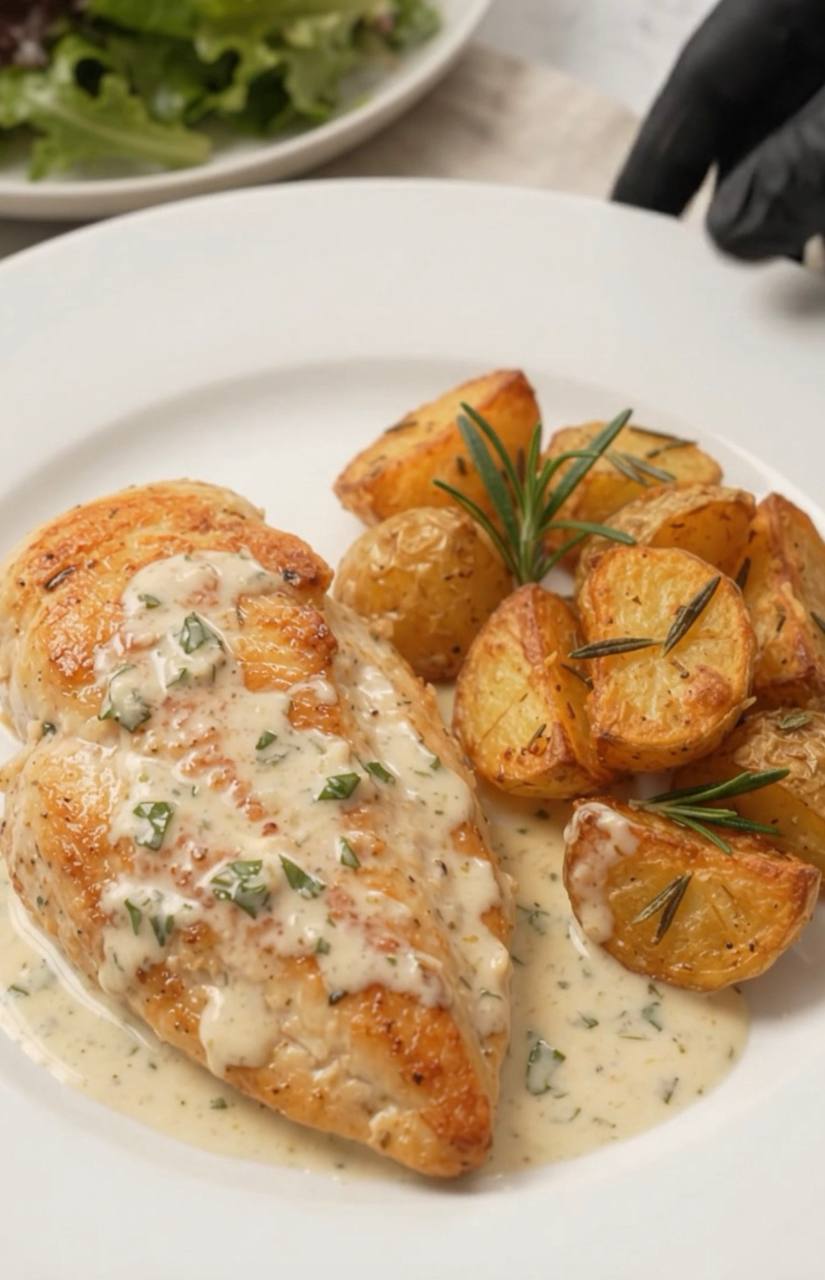
- To serve, place a chicken breast on each plate, spooning a generous amount of the creamy herb sauce over it. Arrange a portion of the roasted rosemary potatoes alongside the chicken.
- Garnish with fresh rosemary sprigs and a sprinkle of extra chopped parsley or chives for a fresh finish. Serve immediately and enjoy!
Cooking Tips and Variations
For the Juiciest Chicken: Pounding your chicken breasts to an even thickness (about 3/4 inch) is crucial for uniform cooking. This prevents thinner parts from drying out while thicker parts finish cooking. Also, use an instant-read meat thermometer to ensure your chicken reaches an internal temperature of 165°F (74°C). Once it hits this temperature, remove it from the heat immediately to prevent overcooking. Allowing the chicken to rest for 5 minutes after cooking will also help redistribute the juices, keeping it tender and moist.
Achieving Crispy Potatoes: The key to crispy roasted potatoes lies in a few steps. First, ensure your potatoes are completely dry before tossing with oil and seasonings; any moisture will steam them instead of crisping them. Second, don’t overcrowd the baking sheet. Give each potato piece enough space to breathe and allow hot air to circulate around it. If your baking sheet is too full, divide the potatoes between two sheets. Roasting at a high temperature (400-425°F/200-220°C) is also essential for developing that coveted golden-brown, crispy exterior.
Enhancing Sauce Flavor: Always use the same pan you seared the chicken in to make the sauce. The browned bits (fond) left in the pan are packed with flavor. Deglazing the pan with chicken broth (or even a splash of dry white wine) helps release these flavorful bits, which then become incorporated into your sauce, adding incredible depth. Fresh herbs are non-negotiable for this recipe; they provide a brightness and aromatic complexity that dried herbs simply can’t match. Taste and adjust your seasoning frequently throughout the sauce-making process.
Herb Substitutions: Feel free to experiment with other fresh herbs. For the sauce, tarragon adds a lovely anise-like note, or you could use a mix of sage and rosemary for a more robust, earthy flavor. For the potatoes, oregano or even a pinch of smoked paprika could be interesting additions alongside the rosemary.
Adding Vegetables: To make this an even more complete meal, consider roasting other vegetables alongside the potatoes or adding them to the sauce. Asparagus spears, green beans, or broccoli florets can be tossed with a little olive oil, salt, and pepper and roasted on a separate baking sheet during the last 15-20 minutes of the potato cooking time. Spinach or kale can be wilted directly into the creamy sauce at the very end.
Making it a “One-Pan” Meal: While technically a two-pan meal (skillet for chicken/sauce, baking sheet for potatoes), you can streamline it. If your skillet is large enough and oven-safe, you can sear the chicken, then remove it, make the sauce, and then briefly return the chicken to the sauce while the potatoes finish in a separate pan. For a true one-pan approach, you could chop the potatoes very small and cook them in the same skillet before or after the chicken, then make the sauce. However, this often compromises potato crispiness.
Dairy-Free Variation: To make the sauce dairy-free, you can substitute heavy cream with full-fat coconut milk (for a subtle coconut flavor) or a dairy-free cooking cream alternative (such as oat or cashew-based cream). Ensure your butter substitute is also dairy-free. The flavor profile will change slightly, but it can still be delicious.
Spice It Up: For those who enjoy a bit of heat, a pinch of red pepper flakes added to the sauce along with the garlic will give it a pleasant kick. You could also add a dash of cayenne pepper.
Thickening the Sauce: If your sauce isn’t thickening enough, you can create a quick slurry by whisking 1 teaspoon of cornstarch with 1 tablespoon of cold water. Stir this into the simmering sauce a little at a time until it reaches your desired consistency. Be careful not to add too much at once.
Lemon Zest Brightness: A final squeeze of fresh lemon juice or a sprinkle of lemon zest over the finished dish can add a wonderful brightness that cuts through the richness of the cream sauce, elevating the overall flavor.
Storage and Reheating
Storage: This Creamy Herb Chicken with Roasted Rosemary Potatoes stores well, making it a great option for meal prep. Allow the chicken, sauce, and potatoes to cool completely before transferring them to an airtight container. If possible, store the chicken and sauce together in one container and the roasted potatoes in a separate container. This helps maintain the texture of the potatoes. Refrigerate for up to 3-4 days.
Reheating:
- Oven (Recommended for best results): Preheat your oven to 350°F (175°C). Spread the roasted potatoes on a baking sheet in a single layer. Place the chicken and sauce in an oven-safe dish. Heat both for 15-20 minutes, or until thoroughly heated through and the potatoes are crisp again. If the sauce seems too thick, you can add a splash of chicken broth or milk before reheating.
- Stovetop (for chicken and sauce): Gently reheat the chicken and sauce in a skillet over medium-low heat, stirring occasionally, until warmed through. Add a splash of broth or milk if the sauce has thickened too much.
- Microwave (Quickest option, but texture may vary): Place individual servings of chicken, sauce, and potatoes on a microwave-safe plate. Heat on medium power for 2-3 minutes, stirring halfway through, until hot. Be aware that potatoes may lose some of their crispiness in the microwave, and chicken can sometimes dry out if overheated.
Frequently Asked Questions
How do I ensure the chicken stays juicy and doesn’t dry out?
The key to juicy chicken is not to overcook it. Pounding the chicken breasts to an even thickness (about 3/4 inch) ensures they cook uniformly. Sear them until golden brown on both sides, then either finish them quickly in the oven or ensure they reach an internal temperature of 165°F (74°C) using an instant-read thermometer. Remove them from the heat as soon as they hit this temperature, and let them rest for 5-10 minutes before slicing. The resting period allows the juices to redistribute, keeping the meat moist and tender.
Can I prepare any components of this dish ahead of time?
Absolutely! You can wash and cut the potatoes a day in advance and store them in an airtight container in the refrigerator (you might want to pat them dry again before roasting). The fresh herbs can be chopped ahead of time and stored in a damp paper towel in a sealed bag. The creamy herb sauce can also be made a day in advance and stored in the refrigerator; you may just need to thin it with a little chicken broth or milk when reheating.
What are some good side dishes to serve with this meal?
While the roasted potatoes make this a complete meal, a simple green salad with a light vinaigrette would be a refreshing complement. Other great options include steamed or roasted green vegetables like asparagus, broccoli, or green beans, which add color and additional nutrients. A crusty bread or garlic bread is also excellent for soaking up every last bit of that delicious creamy sauce.
My sauce isn’t thickening, what can I do?
If your sauce isn’t thickening to your desired consistency, there are a couple of tricks. First, ensure it’s simmering gently; continued simmering will naturally reduce and thicken the sauce. If it still needs help, whisk together 1 teaspoon of cornstarch with 1 tablespoon of cold water to create a slurry. Gradually whisk this slurry into the simmering sauce, stirring constantly, until it reaches your desired thickness. Be careful not to add too much at once, as it will thicken as it heats.