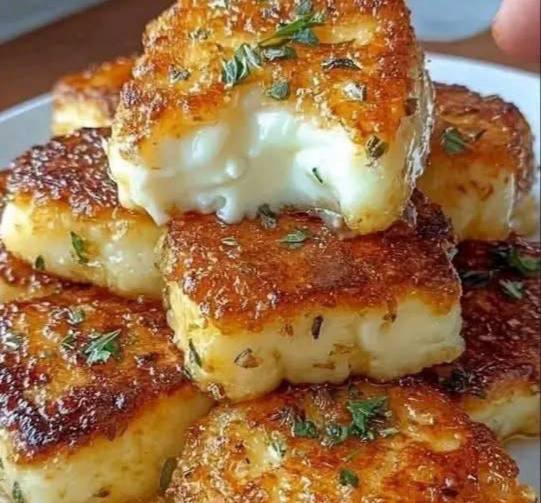
Instructions
- Prepare the Halloumi: Remove the halloumi block from its packaging and pat it thoroughly dry with paper towels. This step is crucial for achieving a crispy crust. Slice the halloumi into even pieces, about 1/2 to 3/4 inch thick. You can cut them into rectangular planks or smaller cubes, depending on your preference. Consistent thickness ensures even cooking.
- Heat the Pan: Place a non-stick or cast-iron skillet over medium-high heat. Add the olive oil and allow it to heat up until it shimmers slightly. A properly preheated pan is key to preventing sticking and developing a good crust.
- Fry the Halloumi: Carefully place the halloumi slices into the hot pan in a single layer. Do not overcrowd the pan; if necessary, cook in batches to ensure each piece has enough space to brown properly.
- Cook Until Golden: Cook for 2-4 minutes per side, or until each side is beautifully golden-brown and crispy. Use tongs or a spatula to flip the pieces. The halloumi should develop a dark golden crust, and you’ll notice it softening slightly in the center.
- Season and Serve: Once all sides are golden, sprinkle the dried herbs evenly over the halloumi while it’s still in the hot pan or immediately after removing it. If using chili flakes, add them now.
- Serve Immediately: Transfer the pan-fried halloumi to a serving plate. It is best enjoyed hot and fresh, when it’s at its crispiest and most delightfully gooey. For an extra burst of flavor, serve with fresh lemon wedges for squeezing or a light drizzle of honey. Garnish with fresh herbs if desired.
Cooking Tips and Variations
Achieving the perfect pan-fried halloumi is all about a few key techniques. Firstly, always pat your halloumi dry with paper towels before frying. Excess moisture will steam the cheese instead of allowing it to crisp up, preventing that beautiful golden crust we’re after. Secondly, don’t overcrowd the pan. If you try to cook too many pieces at once, the temperature of the pan will drop, and the halloumi will steam rather than fry. Cook in batches if necessary, allowing each piece enough space to achieve that coveted crispy exterior. Maintain a medium-high heat; too low, and it won’t brown; too high, and it might burn before the inside softens.
For preventing sticking, ensure your pan is adequately preheated and you’ve used enough cooking fat. A good quality non-stick pan or a well-seasoned cast iron skillet will also make a significant difference. If you’re using olive oil, make sure it’s shimmering but not smoking before adding the cheese.
The beauty of this recipe lies in its simplicity, but it’s also incredibly adaptable to different flavor profiles. For an aromatic twist, try adding a pinch of garlic powder or smoked paprika to your halloumi during the last minute of cooking. A drizzle of balsamic glaze after frying adds a lovely sweet and tangy contrast. If you prefer a sweeter note, a touch of honey or maple syrup drizzled over the hot halloumi is absolutely divine, especially when paired with a sprinkle of fresh mint. For a spicier kick, increase the amount of chili flakes or add a tiny dash of cayenne pepper.
The serving possibilities are endless! Beyond an appetizer, pan-fried halloumi makes an excellent addition to salads, offering a satisfying chew and salty punch. Toss it into a vibrant Mediterranean salad with tomatoes, cucumbers, olives, and a lemon-herb dressing. It’s also fantastic alongside scrambled or fried eggs for a hearty breakfast or brunch. For a unique lunch, use it as a filling for wraps or sandwiches, perhaps with roasted red peppers and arugula. You can even cube it and serve it on skewers with cherry tomatoes and zucchini for a grilled variation. Don’t be afraid to experiment and make this versatile cheese your own!
Storage and Reheating
While pan-fried halloumi is undeniably at its best served immediately, when it’s perfectly crispy on the outside and soft on the inside, you can store leftovers. Allow any cooked halloumi to cool completely before transferring it to an airtight container. Store it in the refrigerator for up to 2-3 days. Be aware that the texture will change upon cooling; it will lose its crispness and become firmer.
To reheat, the best method is to use a dry non-stick skillet over medium heat. Place the halloumi pieces in the pan and heat for a few minutes per side until warmed through and the exterior has regained some of its crispness. You can also reheat it in an air fryer at 350°F (175°C) for 3-5 minutes, which is excellent for restoring crispiness. Avoid reheating in the microwave, as this will likely result in a rubbery texture. While reheated halloumi won’t be quite as glorious as fresh-from-the-pan, it’s still delicious and perfectly enjoyable.
Frequently Asked Questions
What is halloumi cheese and why doesn’t it melt easily?
Halloumi is a semi-hard, unripened brined cheese traditionally made from a mixture of goat’s and sheep’s milk, and sometimes cow’s milk. It originates from Cyprus. Its unique characteristic of not melting easily when heated is due to the way it’s produced. After the curds are formed, they are heated to a high temperature, which changes the protein structure, making it resistant to melting. This allows it to be grilled, fried, or baked, developing a delicious crispy crust without losing its shape.
Can I use a different type of oil for frying?
Absolutely! While olive oil is a classic choice for its flavor and Mediterranean connection, you can certainly use other cooking fats. Butter will add a rich, nutty flavor, but be mindful of its lower smoke point. Neutral oils like canola oil, vegetable oil, or grapeseed oil are also excellent options as they have a high smoke point and won’t impart a strong flavor, allowing the halloumi to shine. Just ensure you use enough oil to coat the pan and prevent sticking.
What if my halloumi is sticking to the pan?
If your halloumi is sticking, there are a few likely culprits. First, ensure your pan is properly preheated before adding the cheese; a cold pan will cause sticking. Second, make sure you’ve used enough cooking fat to create a barrier between the cheese and the pan. Third, avoid overcrowding the pan, as this can lower the pan’s temperature and promote sticking. Finally, ensure the halloumi is patted very dry before it hits the pan; excess moisture can make it more prone to sticking. If using a cast iron skillet, ensure it is well-seasoned.
Can I make this recipe in an air fryer instead of pan-frying?
Yes, absolutely! Air frying is a fantastic alternative for making crispy halloumi with even less oil. To air fry, slice the halloumi as directed, then lightly toss it with about 1 teaspoon of olive oil (just enough to coat) and your chosen herbs. Arrange the halloumi in a single layer in your air fryer basket, ensuring not to overcrowd it. Air fry at 375°F (190°C) for 8-12 minutes, flipping halfway through, until golden brown and crispy. Keep an eye on it, as air fryer times can vary.