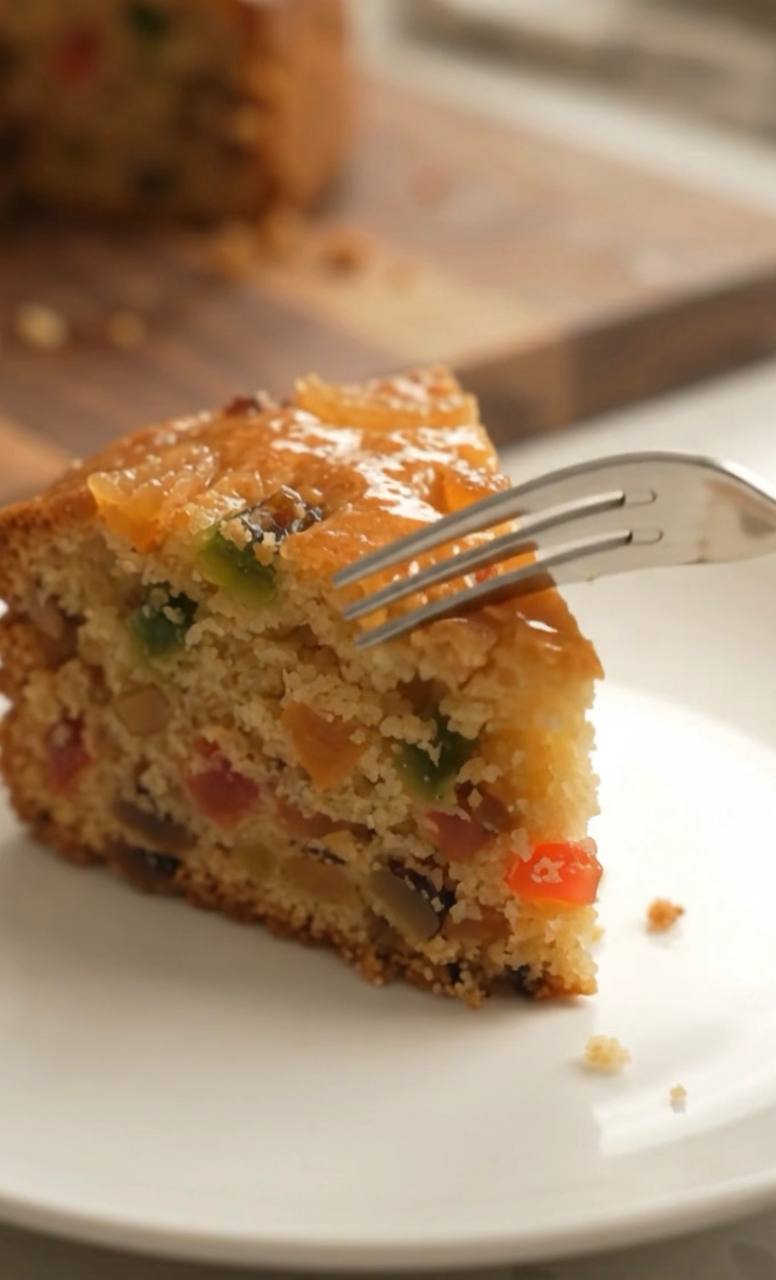
Instructions
- Prepare the Fruit: If desired, place the maraschino cherries, raisins, green candied fruit, and orange/yellow candied fruit in a bowl. Pour the brandy, rum, or orange juice over them and let soak for at least 30 minutes, or preferably overnight, stirring occasionally. This adds moisture and flavor. Drain any excess liquid before using.
- Preheat Oven and Prepare Pan: Preheat your oven to 325°F (160°C). Grease and flour a 9×5-inch loaf pan or a 9-inch round cake pan. You can also line the pan with parchment paper, leaving an overhang on the sides for easy lifting.
- Combine Dry Ingredients: In a medium bowl, whisk together the 2 ½ cups all-purpose flour, baking powder, and salt. Set aside.
- Cream Butter and Sugar: In a large mixing bowl, using an electric mixer, cream together the softened butter and granulated sugar until light and fluffy, about 3-5 minutes.
- Add Eggs and Vanilla: Beat in the eggs one at a time, mixing well after each addition. Scrape down the sides of the bowl as needed. Stir in the vanilla extract.
- Alternate Wet and Dry Ingredients: Gradually add the dry ingredients to the wet ingredients, alternating with the milk. Begin and end with the dry ingredients (e.g., add ⅓ of the flour mixture, mix, add ½ of the milk, mix, add ⅓ of the flour mixture, mix, add remaining milk, mix, add remaining flour mixture, mix). Mix until just combined; be careful not to overmix.
- Prepare and Fold in Fruit: In a separate small bowl, toss the drained fruit mixture with the remaining 2 tablespoons of all-purpose flour. This helps prevent the fruit from sinking to the bottom of the cake. Gently fold the floured fruit into the cake batter until evenly distributed.
- Fill Pan and Bake: Pour the batter into the prepared pan and spread evenly. Bake for 60-75 minutes for a loaf cake, or 50-60 minutes for a round cake, or until a wooden skewer inserted into the center comes out clean.
- Cool the Cake: Once baked, remove the cake from the oven and let it cool in the pan for 15-20 minutes. Then, carefully invert the cake onto a wire rack to cool completely.
- Prepare the Glaze: While the cake is cooling, prepare the glaze. In a small bowl, whisk together the powdered sugar and lemon juice (or water) until smooth and pourable. Adjust consistency by adding more sugar for a thicker glaze or more liquid for a thinner glaze.
- Glaze the Cake: Once the cake is completely cool, drizzle or brush the glaze evenly over the top. If desired, sprinkle with the finely chopped candied fruit for extra decoration. Allow the glaze to set before slicing and serving.
Cooking Tips and Variations
For the most delectable Golden Fruit Cake, attention to a few details can make all the difference. First and foremost, ensure all your cold ingredients, especially butter and eggs, are at room temperature. This allows them to emulsify better, resulting in a smoother batter and a more tender, even crumb. When creaming the butter and sugar, don’t rush the process; allow it to become truly light and fluffy, as this incorporates air, contributing to the cake’s texture. Overmixing the batter after adding flour is a common pitfall; mix only until the ingredients are just combined to avoid developing too much gluten, which can lead to a tough cake. The step of tossing the fruit in flour is crucial for even distribution; without it, the dense fruits tend to sink to the bottom during baking. If you’re not soaking the fruit in spirits or juice, make sure your dried fruits are as fresh and plump as possible for the best texture and flavor. To achieve that perfect golden-brown crust without overbaking the interior, you might need to loosely tent the cake with aluminum foil during the last 15-20 minutes of baking.
Variations on this classic recipe are endless and allow for wonderful personalization. For a more complex flavor profile, consider adding a teaspoon of ground cinnamon, nutmeg, or allspice to the dry ingredients. A pinch of ground cloves or ginger can also add a delightful warmth. To enhance the “golden” aspect, you could incorporate a teaspoon of orange zest or lemon zest into the batter. For those who love nuts, ½ to 1 cup of chopped pecans, walnuts, or almonds can be folded in with the fruit. If maraschino cherries aren’t your preference, feel free to substitute with an equal amount of red glace cherries, dried cranberries, or chopped dried apricots. For the glaze, instead of lemon juice, you could use orange juice for a citrusy kick, or even a tablespoon of the soaking liquid from the fruit for a boozy glaze. For a richer, more decadent cake, consider brushing the cooled cake with additional brandy or rum before glazing, then wrapping it tightly and allowing it to “age” for a few days; fruit cakes often improve with time as the flavors meld and deepen.
Storage and Reheating
Proper storage is key to maintaining the moistness and flavor of your Golden Fruit Cake, especially since it’s a dessert that often improves with a little time. Once completely cooled, wrap the cake tightly in plastic wrap, then an additional layer of aluminum foil. This double-layer protection is essential to prevent it from drying out. Store the wrapped cake in an airtight container at room temperature for up to 1 week. For longer storage, you can refrigerate it for up to 2-3 weeks. If you’ve brushed the cake with spirits (like brandy or rum), it tends to keep even longer due to the preservative qualities of alcohol; in this case, it can last for several weeks at room temperature, or even months in the refrigerator, “feeding” it with an occasional tablespoon of spirits every week or so. For truly extended storage, fruit cake freezes beautifully. Wrap individual slices or the whole cake (if it fits) in plastic wrap, then foil, and place in a freezer-safe bag or container. It can be frozen for up to 3-6 months. Thaw frozen fruit cake overnight in the refrigerator or at room temperature for a few hours before serving.
Reheating fruit cake is generally not necessary, as it’s typically enjoyed at room temperature. However, if you prefer a warm slice, you can gently heat it. For a whole slice, place it on a microwave-safe plate and microwave on medium power for 15-30 seconds, or until just warmed through. Be careful not to overheat, as this can dry out the cake. Alternatively, you can warm slices in a preheated oven at 300°F (150°C) for about 5-10 minutes, or until warm. This method can help crisp up the edges slightly. Always check that the cake is heated evenly before serving. A warm slice of fruit cake pairs wonderfully with a dollop of whipped cream, a scoop of vanilla ice cream, or a warm cup of tea or coffee.
Frequently Asked Questions
Why did my fruit sink to the bottom of the cake?
Fruit sinking to the bottom is a common issue, usually because the fruit is too heavy for the batter or wasn’t properly prepared. Our recipe addresses this by having you toss the drained fruit in 2 tablespoons of flour before folding it into the batter. This light coating of flour helps the fruit adhere to the batter and prevents it from sinking. Ensuring your batter isn’t too thin also helps; if it’s too runny, the fruit will inevitably sink.
Can I make this fruit cake in advance?
Absolutely! Fruit cakes are notoriously good for making ahead, and often, their flavors improve with age as they meld and deepen. You can bake this cake up to several weeks in advance. After baking and cooling, wrap it tightly in plastic wrap and then aluminum foil. Store it at room temperature or in the refrigerator. If you desire a more traditional “aged” fruit cake, you can periodically “feed” it by brushing it with a tablespoon or two of brandy, rum, or orange juice every week or so before re-wrapping.
What can I substitute for maraschino cherries?
If maraschino cherries aren’t to your taste or aren’t available, you have several excellent substitution options. Red glace cherries (which are less artificially flavored than maraschino cherries) are a direct swap. Alternatively, you can use dried cranberries, chopped dried apricots, or even chopped dried figs for a different flavor and texture profile. The key is to use an equal amount by volume to maintain the fruit-to-cake ratio.
My cake seems a bit dry. What went wrong?
A dry fruit cake is typically a result of overbaking. Ovens can vary, so it’s crucial to start checking for doneness at the lower end of the baking time range. Use the skewer test: insert a wooden skewer into the center of the cake; it should come out clean. Another factor could be insufficient moisture in the batter itself; ensure your butter and eggs are at room temperature and that you’re using the correct liquid measurements. Soaking the dried fruits beforehand (as suggested in the recipe) also significantly contributes to a moister final product.