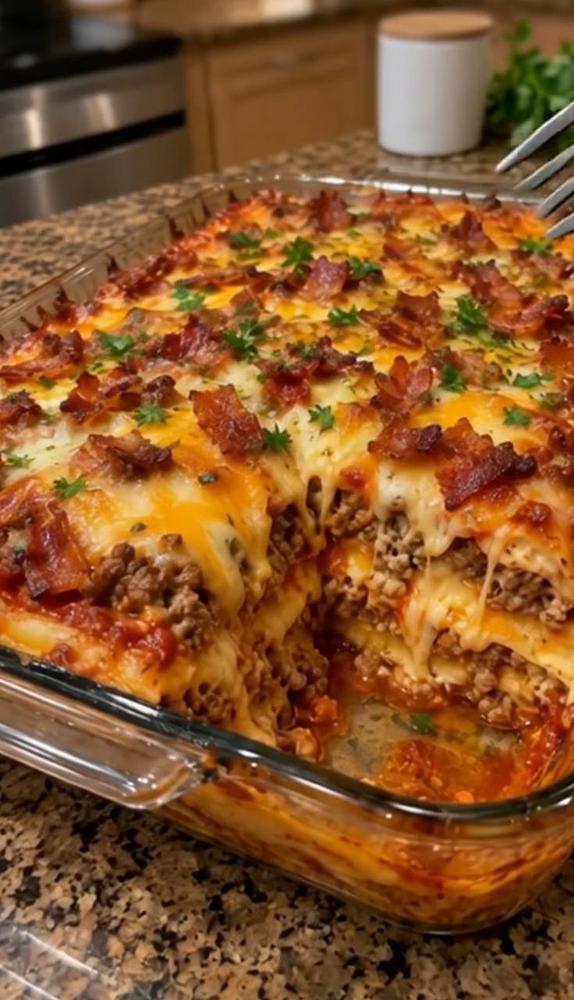
Instructions
- Preheat your oven to 375°F (190°C).
- Prepare the Bacon: In a large skillet, cook the chopped bacon over medium heat until crispy. Remove the bacon with a slotted spoon, reserving 2-3 tablespoons of bacon fat in the skillet. Place the crispy bacon on a paper towel-lined plate to drain. Once cooled, crumble it.
- Brown the Meats: Add the ground beef and Italian sausage to the same skillet with the reserved bacon fat. Cook over medium-high heat, breaking up the meat with a spoon, until browned and no longer pink. Drain off any excess grease.
- Sauté Aromatics: Add the chopped onion to the skillet with the browned meat. Cook until softened, about 5-7 minutes. Stir in the minced garlic and cook for another minute until fragrant.
- Build the Meat Sauce: Stir in the crushed tomatoes, tomato sauce, tomato paste, beef broth (or red wine, if using), oregano, basil, red pepper flakes (if using), 2 teaspoons salt, and 1 teaspoon black pepper. Bring the sauce to a simmer, then reduce heat to low, cover, and let it cook for at least 30 minutes, or up to an hour, stirring occasionally. The longer it simmers, the more flavorful it will be. Taste and adjust seasonings as needed.
- Prepare the Cheese Mixture: While the sauce simmers, in a medium bowl, combine the ricotta cheese, 1/2 cup Parmesan cheese, egg, 1/4 cup chopped fresh parsley, 1 teaspoon salt, and 1/2 teaspoon black pepper. Mix well until everything is thoroughly combined.
- Prepare Noodles (if using traditional): If using traditional lasagna noodles, cook them according to package directions until al dente. Drain and rinse with cold water to prevent sticking. If using oven-ready noodles, no pre-cooking is necessary.
- Assemble the Lasagna: Spread about 1 cup of meat sauce on the bottom of a 9×13 inch baking dish.
- Arrange a single layer of lasagna noodles over the sauce. (Break noodles if necessary to fit.)
- Spread half of the ricotta cheese mixture evenly over the noodles.
- Sprinkle about one-third of the shredded mozzarella cheese and one-third of the shredded cheddar cheese over the ricotta layer.
- Spoon about 1.5-2 cups of meat sauce over the cheese layer.
- Sprinkle about one-third of the crumbled crispy bacon over the sauce.
- Repeat the layering process: noodles, remaining ricotta mixture, another third of mozzarella and cheddar, more meat sauce, and another third of the crumbled bacon.
- Place the final layer of noodles.
- Top with the remaining meat sauce, ensuring the noodles are fully covered.
- Generously sprinkle the remaining mozzarella and cheddar cheese over the top, along with a final dusting of Parmesan cheese.
- Bake the Lasagna: Cover the baking dish tightly with aluminum foil. Bake for 25 minutes.
- Remove the foil and continue baking for another 20-30 minutes, or until the cheese is bubbly, golden brown, and the lasagna is heated through. If the top is browning too quickly, you can loosely tent it with foil.
- Rest and Serve: This step is crucial! Remove the lasagna from the oven and let it rest for at least 15-20 minutes before slicing and serving. This allows the layers to set and prevents the lasagna from falling apart when you cut into it.
- Garnish with extra fresh parsley and a sprinkle of remaining crispy bacon, if desired, and serve warm.
Cooking Tips and Variations
Achieving a perfect Bacon Cheesy Lasagna is all about attention to detail and embracing flexibility. Here are some tips to ensure your lasagna is a masterpiece every time, along with ideas to customize it to your taste.
Tips for Best Results
- Don’t Skimp on Simmer Time: The longer your meat sauce simmers, the more complex and rich its flavor will become. Aim for at least 30 minutes, but an hour or even two will yield incredible depth.
- Crispy Bacon is Key: Ensure your bacon is cooked until truly crispy before crumbling. This provides that essential textural contrast against the soft pasta and creamy cheese. Avoid rubbery bacon at all costs!
- Al Dente Noodles (if traditional): If you’re using traditional lasagna noodles, boil them just until al dente. They will continue to cook in the oven, and you want them to be tender, not mushy.
- The Power of Resting: This is arguably the most important tip. Allowing the lasagna to rest for 15-20 minutes after baking allows the layers to set and the cheese to firm up slightly. This prevents a soupy, messy slice and ensures beautiful, defined layers.
- Cover and Uncover Baking: Covering the lasagna with foil for the initial bake helps to steam the noodles and cook the internal layers without burning the top. Removing the foil allows the cheese to melt, bubble, and achieve that irresistible golden-brown crust.
- Cheese Blend for Optimal Melt and Flavor: Don’t be afraid to experiment with your cheese blend. Mozzarella provides the stretch and melt, while cheddar adds a sharp, savory kick. Parmesan offers a salty, nutty depth. Provolone or Fontina could also be delicious additions.
- Don’t Overfill: While it’s tempting to cram in as much as possible, leaving a little space at the top of your baking dish prevents bubbling sauce from overflowing in your oven.
- Fresh Herbs Make a Difference: While dried herbs are excellent for the sauce, a sprinkle of fresh parsley or basil at the end adds a vibrant burst of flavor and visual appeal.
Recipe Variations
- Different Meats: While ground beef and Italian sausage are a classic combination, feel free to substitute. You could use all ground beef, all Italian sausage, ground turkey, or even a blend of beef, pork, and veal for a richer flavor profile.
- Spice it Up: For those who love a little heat, increase the red pepper flakes in the sauce. A pinch of cayenne pepper could also add a fiery kick.
- Vegetarian Option (without bacon): While this recipe champions bacon, you can adapt the core lasagna. Load up on sautéed vegetables like spinach, mushrooms, zucchini, or bell peppers in place of the meat sauce.
- Different Cheeses: Explore other cheeses! Smoked mozzarella would enhance the smoky bacon flavor. A layer of provolone adds a sharper tang. A creamy goat cheese could also be interesting in the ricotta mixture.
- Add Vegetables to the Sauce: Boost the nutritional content and flavor by adding finely diced carrots, celery, or bell peppers to your meat sauce along with the onion. Sauté them until tender before adding the meat.
- Wine in the Sauce: A splash of dry red wine (like Merlot or Cabernet Sauvignon) simmered with the meat sauce adds incredible depth and complexity.
- No-Boil Noodles: For a quicker assembly, use oven-ready or “no-boil” lasagna noodles. Just be sure your sauce is sufficiently moist, as these noodles absorb more liquid during baking.
- Garlic Bread Crumbs: For an extra crunchy topping, mix some Panko breadcrumbs with melted butter and garlic powder, then sprinkle over the top cheese layer during the last 10-15 minutes of baking.
Storage and Reheating
Lasagna is one of those magical dishes that often tastes even better the next day! Proper storage and reheating will ensure you can enjoy your delicious Bacon Cheesy Lasagna for days to come.
Storage
- Refrigeration: Once the lasagna has cooled completely, cover the baking dish tightly with plastic wrap or aluminum foil. Alternatively, cut the lasagna into individual portions and store them in airtight containers. It will keep well in the refrigerator for 3-4 days.
- Freezing (Whole Lasagna): To freeze an entire lasagna, allow it to cool completely after baking. Cover the baking dish tightly with a layer of plastic wrap, then a layer of heavy-duty aluminum foil. Label with the date. It can be stored in the freezer for up to 3 months.
- Freezing (Individual Portions): For convenient meal prep, cut the cooled lasagna into individual servings. Wrap each slice tightly in plastic wrap, then in aluminum foil, or place in freezer-safe containers. This method allows you to pull out just what you need. Freeze for up to 3 months.
Reheating
- From Refrigerator (Whole Lasagna): Preheat oven to 350°F (175°C). Cover the lasagna loosely with foil to prevent the top from drying out. Bake for 25-35 minutes, or until heated through to the center. Remove foil for the last 5-10 minutes if you want to re-crisp the cheese.
- From Refrigerator (Individual Slices):
- Oven: Place a slice on an oven-safe plate or small baking dish. Cover loosely with foil. Bake at 350°F (175°C) for 15-20 minutes, or until hot.
- Microwave: Place a slice on a microwave-safe plate. Cover with a damp paper towel or microwave-safe lid. Heat on high for 2-4 minutes, checking periodically, until thoroughly heated. Be careful not to overcook, as this can make the noodles tough.
- From Freezer (Whole Lasagna):
- Thaw First: For best results, thaw the frozen lasagna in the refrigerator overnight. Then, follow the instructions for reheating from the refrigerator.
- Bake from Frozen: If baking directly from frozen, preheat oven to 375°F (190°C). Keep the lasagna covered with foil and bake for 1 hour to 1 hour 15 minutes. Remove foil and bake for another 15-25 minutes, or until heated through and bubbly. Total baking time can be up to 1.5-2 hours.
- From Freezer (Individual Slices):
- Oven: Thaw in the refrigerator overnight, then reheat as above. Alternatively, unwrap and place on an oven-safe plate, cover with foil, and bake at 375°F (190°C) for 30-40 minutes, or until hot.
- Microwave: Unwrap and place on a microwave-safe plate. Cover and microwave on 50% power for 5-7 minutes, then on high for 2-4 minutes, or until heated through.
Frequently Asked Questions
Can I make this lasagna ahead of time?
Absolutely! Lasagna is an excellent make-ahead dish. You can assemble the entire lasagna (without baking) up to 24 hours in advance. Cover it tightly with plastic wrap and refrigerate. When ready to bake, let it sit at room temperature for about 30 minutes while your oven preheats, then bake as directed, adding an extra 10-15 minutes to the covered baking time.
What kind of lasagna noodles should I use?
You have options! Traditional lasagna noodles need to be boiled al dente before layering. “Oven-ready” or “no-boil” noodles are a convenient choice as they cook right in the oven by absorbing moisture from the sauce. If using oven-ready, ensure your sauce is sufficiently moist. Either option works well for this recipe.
How do I prevent my lasagna from being watery?
Several factors contribute to a watery lasagna. First, ensure your ricotta mixture isn’t too wet; if your ricotta seems very liquidy, you can drain it in a fine-mesh sieve for 15-30 minutes. Second, don’t overcook your traditional noodles – al dente is key. Third, and most importantly, allow the lasagna to rest for at least 15-20 minutes after baking. This crucial step allows the liquids to reabsorb and the layers to set, resulting in a firm, sliceable lasagna.
Can I use different cheeses for the cheese layers?
Yes, feel free to customize the cheese! While mozzarella, cheddar, and Parmesan are classic, you can experiment. Provolone adds a sharper, more piquant flavor, while Fontina or Gruyère offer a nutty, earthy note. A little smoked mozzarella could also beautifully complement the bacon. Just ensure you have a good melting cheese (like mozzarella) for that gooey pull.