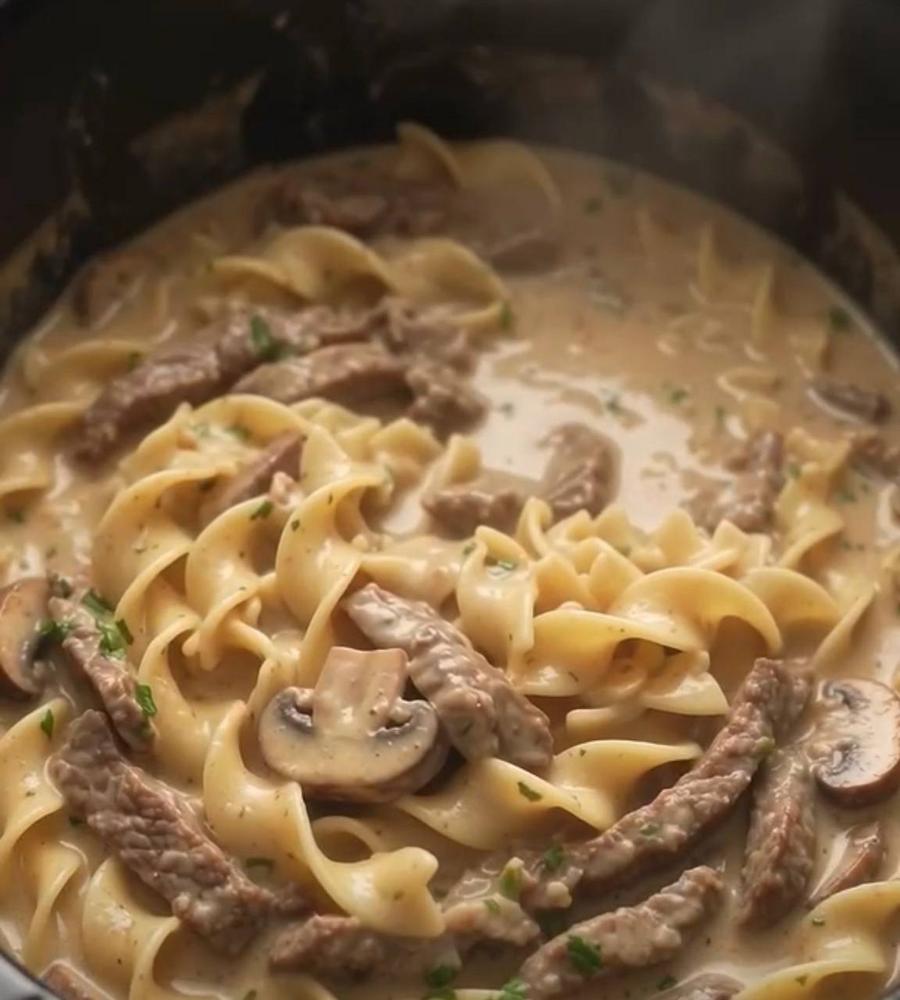
Instructions
- Prepare the Beef: Pat the beef strips dry with paper towels. Season generously with salt and freshly ground black pepper.
- Brown the Beef: Heat the olive oil in a large skillet or Dutch oven over medium-high heat. Working in batches to avoid overcrowding, add the beef and sear for 2-3 minutes per side until deeply browned. Do not cook through; you’re just looking for a good sear. Remove the seared beef to a plate and set aside.
- Sauté Aromatics and Mushrooms: Reduce the heat to medium. Add the butter to the same skillet. Add the sliced onion and sauté for 5-7 minutes until softened and translucent. Add the sliced mushrooms and cook for another 7-10 minutes, stirring occasionally, until they are deeply browned and have released their liquid. Add the minced garlic and cook for 1 minute until fragrant.
- Build the Sauce Base: If using, pour in the dry white wine (or extra beef broth) and scrape up any browned bits from the bottom of the pan with a wooden spoon. Let it simmer for 2-3 minutes until the liquid has mostly evaporated.
- Thicken the Sauce: Sprinkle the flour over the onions and mushrooms. Cook, stirring constantly, for 1-2 minutes to cook out the raw flour taste.
- Add Liquids and Flavorings: Gradually whisk in the beef broth, ensuring no lumps form. Stir in the Worcestershire sauce and Dijon mustard. Bring the mixture to a gentle simmer, stirring frequently, until the sauce begins to thicken, about 5-7 minutes.
- Return Beef to Skillet: Add the seared beef (and any accumulated juices from the plate) back into the skillet. Reduce the heat to low, cover, and simmer for 15-20 minutes, or until the beef is tender.
- Prepare the Noodles: While the beef simmers, bring a large pot of salted water to a rolling boil. Add the wide egg noodles and cook according to package directions until al dente. Drain well.
- Finish the Sauce: Remove the skillet from the heat. In a small bowl, whisk together the sour cream and heavy cream (if using) until smooth. Slowly temper the sour cream mixture by whisking in a ladleful or two of the hot sauce from the skillet. This prevents the sour cream from curdling.
- Combine and Serve: Gently stir the tempered sour cream mixture into the skillet with the beef and sauce. Do not boil after adding the sour cream. Taste and adjust seasoning with additional salt and pepper if needed. Add the drained egg noodles directly to the skillet with the Stroganoff and toss gently to coat, or serve the Stroganoff over individual portions of noodles.
- Garnish and Enjoy: Garnish generously with fresh chopped parsley or chives before serving.
Cooking Tips and Variations
Achieving the perfect Beef Stroganoff is all about a few key techniques and ingredient choices. First and foremost, the beef. Using a tender cut like sirloin or tenderloin and slicing it thinly against the grain is crucial for that melt-in-your-mouth texture. When browning the beef, resist the urge to overcrowd the pan; searing in batches ensures a beautiful, deep brown crust, which translates to incredible flavor. Overcrowding will steam the beef instead of browning it, leading to a less flavorful and potentially tougher result. For the mushrooms, allow them ample time to brown and release their moisture. This process concentrates their umami flavor, adding significant depth to the sauce. Don’t rush it!
The sauce is the heart of Stroganoff, and preventing the sour cream from curdling is a common concern. The trick is to temper it: remove the skillet from the heat, then gradually whisk a bit of the hot sauce into the sour cream mixture before stirring it back into the main pot. This slowly raises the temperature of the sour cream, preventing it from shocking and separating. If you prefer a richer sauce, a splash of heavy cream along with the sour cream works wonders. For an even deeper flavor profile, consider adding a teaspoon of smoked paprika or a bay leaf during the simmering stage, removing the bay leaf before serving. A touch of beef bouillon paste or a splash of red wine (instead of white) can also enhance the savory notes.
For variations, if you can’t find egg noodles, wide fettuccine or even mashed potatoes make excellent accompaniments. For a gluten-free version, use cornstarch instead of flour to thicken the sauce (make a slurry with cold water before adding) and serve with gluten-free pasta or rice. If you’re looking for a dairy-free option, coconut cream can be used in place of sour cream, though it will impart a slightly different flavor. This recipe is also adaptable for a slow cooker, though the noodles should always be cooked separately and added at the very end to prevent them from becoming mushy. Sauté the beef and vegetables first for maximum flavor before transferring to the slow cooker, then add the sour cream at the very end of cooking.
Storage and Reheating
Proper storage is key to enjoying your delicious Beef Stroganoff leftovers. Once cooled, transfer any remaining Stroganoff to an airtight container. It will keep well in the refrigerator for up to 3-4 days. For longer storage, you can freeze Beef Stroganoff, but there are a few considerations. The sour cream-based sauce can sometimes separate or become grainy after freezing and thawing. To minimize this, you might consider freezing the beef and mushroom mixture in the sauce (before adding sour cream) and then stirring in fresh sour cream after thawing and reheating. If freezing the complete dish, ensure it’s in an airtight, freezer-safe container. It can be stored for up to 2-3 months. Thaw frozen Stroganoff in the refrigerator overnight before reheating.
When reheating, gently is the keyword. For refrigerated leftovers, transfer the Stroganoff to a saucepan or skillet and reheat over low to medium-low heat, stirring occasionally. You may need to add a splash of beef broth or water to thin the sauce if it has become too thick. Avoid boiling, especially if the sour cream has already been added, as this can cause it to separate. If reheating in the microwave, use short intervals (30-60 seconds) and stir between each, until heated through. Again, a little extra liquid might be needed to restore the sauce consistency. If you’ve frozen the dish without the sour cream, add freshly whisked, room-temperature sour cream to the reheated mixture just before serving for the best texture and flavor. Always ensure the internal temperature reaches 165°F (74°C) for safe consumption.
Frequently Asked Questions
Why is my beef tough in Beef Stroganoff?
Tough beef in Stroganoff is often due to two main reasons: using the wrong cut of beef or not cooking it long enough. For the best results, use tender cuts like sirloin, tenderloin, or even chuck steak cut against the grain. If using a tougher cut, ensure you give it ample time to simmer in the sauce until it becomes fork-tender. Also, avoid overcrowding the pan when browning, as this can steam the beef instead of searing it, leading to a tougher texture.
How can I prevent my sour cream sauce from curdling?
The key to preventing sour cream from curdling is to temper it before adding it to the hot sauce. Remove the skillet from the heat, then take a small amount of the hot sauce and whisk it into the room-temperature sour cream until well combined. This gradually raises the temperature of the sour cream. Once tempered, gently stir the sour cream mixture back into the main sauce. Also, avoid boiling the sauce after the sour cream has been added.
Can I make Beef Stroganoff ahead of time?
Yes, you can prepare parts of Beef Stroganoff ahead of time. You can cook the beef and mushroom sauce base (before adding sour cream) a day or two in advance. Store it in the refrigerator. When ready to serve, gently reheat the sauce base, temper and stir in the sour cream, and cook fresh egg noodles. Adding the noodles and sour cream just before serving ensures the best texture and prevents the noodles from becoming mushy and the sauce from separating.
What can I use instead of egg noodles?
While classic Beef Stroganoff is traditionally served with wide egg noodles, there are several delicious alternatives. Mashed potatoes provide a wonderfully creamy base that soaks up the sauce beautifully. Other pasta shapes like fettuccine, tagliatelle, or even penne can work well. For a lighter or gluten-free option, you could serve it over rice, quinoa, or even zucchini noodles.