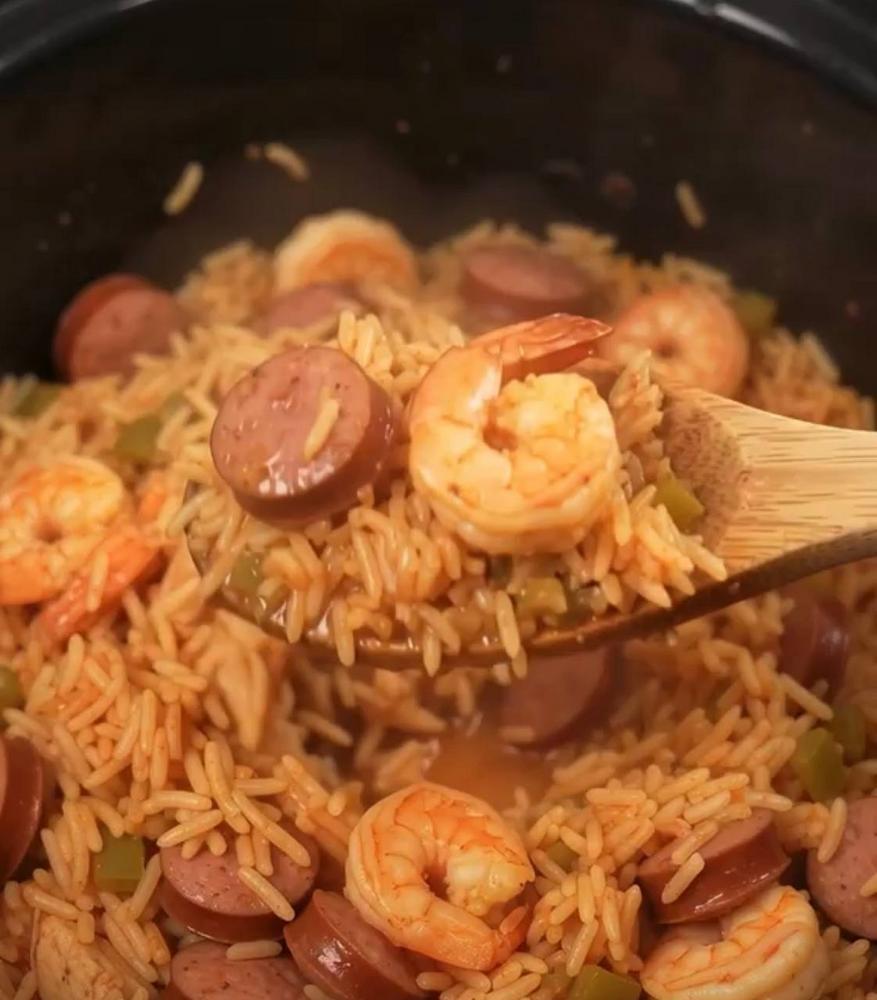
Instructions
- Heat the olive oil in a large Dutch oven or heavy-bottomed pot over medium-high heat. Add the sliced Andouille sausage and cook until browned and crispy on all sides, about 5-7 minutes. Remove the sausage with a slotted spoon and set aside, leaving the rendered fat in the pot.
- If using chicken, add the chicken pieces to the pot and cook until browned on all sides, about 6-8 minutes. Remove the chicken with a slotted spoon and set aside with the sausage.
- Reduce the heat to medium. Add the chopped onion, green bell pepper, and celery (the “holy trinity”) to the pot. Sauté, stirring occasionally, until the vegetables are softened and the onion is translucent, about 8-10 minutes. Scrape up any browned bits from the bottom of the pot as you stir.
- Add the minced garlic, dried thyme, dried oregano, cayenne pepper, smoked paprika, salt, and black pepper to the pot. Cook for 1 minute more, stirring constantly, until fragrant.
- Stir in the uncooked long-grain rice, coating it thoroughly with the vegetables and seasonings. Cook for 2-3 minutes, stirring occasionally, to lightly toast the rice.
- Pour in the chicken broth and add the diced tomatoes (if using). Bring the mixture to a boil, stirring once or twice to combine everything.
- Return the cooked sausage and chicken (if using) to the pot. Reduce the heat to low, cover the pot tightly, and simmer for 20-25 minutes, or until most of the liquid has been absorbed by the rice. Avoid lifting the lid during this time, as it releases essential steam.
- After 20-25 minutes, gently stir in the peeled and deveined shrimp. Re-cover the pot and continue to cook for another 5-7 minutes, or until the shrimp are pink and cooked through and the rice is tender. Do not overcook the shrimp, as they can become rubbery.
- Remove the pot from the heat and let it rest, covered, for 5-10 minutes. This allows the flavors to meld and the rice to fully absorb any remaining moisture.
- Fluff the jambalaya gently with a fork. Taste and adjust seasonings as needed. Garnish with fresh chopped parsley and serve hot, with hot sauce on the side if desired.
Cooking Tips and Variations
For truly authentic Cajun flavor, the browning of your meats is paramount. Don’t rush this step! Those browned bits, known as “fond,” are packed with flavor that will be released into your sauce when you add the vegetables. When sautéing the “holy trinity,” ensure they are well softened and fragrant; this forms the aromatic heart of your jambalaya. A key to perfectly cooked, separate rice grains is to avoid over-stirring once the liquid is added and the pot is covered. Excessive stirring can release starches, leading to a mushy texture. Instead, let the rice do its work absorbing the liquid undisturbed.
Toasting the rice for a few minutes before adding the liquid can also contribute to more distinct grains and a nuttier flavor. When it comes to seasoning, don’t be afraid to adjust the cayenne pepper to your preferred spice level. For a milder dish, reduce it; for more heat, add a pinch more or serve with extra hot sauce. If you prefer a richer, darker color without relying on tomatoes, you can add a tablespoon of tomato paste to the “holy trinity” and cook it down for a few minutes before adding broth.
For protein variations, consider adding diced ham or even duck for a richer flavor. If you’re looking for a vegetarian option, you can omit the meats and use vegetable broth, adding hearty vegetables like kidney beans, corn, or mushrooms. Just be sure to still build a strong flavor base with the “holy trinity” and spices. Another popular variation is to add a small amount of file powder (ground sassafras leaves) at the very end of cooking, after the heat is off, for an earthy, distinct Louisiana flavor. Remember to add the shrimp last; they cook quickly and can become tough if overcooked.
Storage and Reheating
Cajun Jambalaya is a fantastic dish for meal prepping as it often tastes even better the next day when the flavors have had more time to meld. To store, allow the jambalaya to cool completely to room temperature within two hours of cooking. Transfer it to an airtight container and refrigerate for up to 3-4 days.
For reheating, individual portions can be gently warmed in the microwave. Add a tablespoon or two of chicken broth or water to the container before microwaving to help reintroduce moisture and prevent the rice from drying out. Heat on medium power, stirring occasionally, until heated through. For larger quantities, transfer the jambalaya to a pot on the stovetop over low heat. Add a splash of broth or water, cover, and stir occasionally until thoroughly warmed. Be careful not to overheat, as this can dry out the rice and toughen the shrimp.
Jambalaya can also be frozen for longer storage. Once cooled, place portions in freezer-safe airtight containers or heavy-duty freezer bags. It can be stored in the freezer for up to 2-3 months. Thaw frozen jambalaya overnight in the refrigerator before reheating using the stovetop or microwave methods described above. The texture of the shrimp might change slightly after freezing and thawing, but the overall flavor of the dish will remain excellent.
Frequently Asked Questions
What is the difference between Cajun and Creole Jambalaya?
The primary difference lies in the use of tomatoes. Cajun Jambalaya, like this recipe, typically has a browner base, relying on a rich roux or simply the browning of meats and vegetables for its color and depth of flavor. Creole Jambalaya, often referred to as “red jambalaya,” includes tomatoes (often canned diced or crushed tomatoes) and sometimes tomato paste, giving it a more reddish hue and a brighter, tangier flavor profile. Both are delicious, but they offer distinct culinary experiences.
Can I make Jambalaya ahead of time?
Absolutely! Jambalaya is an excellent make-ahead dish. In fact, many people believe the flavors deepen and improve after a day in the refrigerator. Prepare the entire dish as instructed, then allow it to cool completely before storing it in an airtight container in the refrigerator for up to 3-4 days. Reheat gently on the stovetop or in the microwave, adding a splash of broth or water to prevent dryness.
What kind of rice is best for Jambalaya?
Long-grain white rice is traditionally preferred for Jambalaya. Its lower starch content compared to short-grain rice helps ensure that the grains remain distinct and fluffy rather than becoming sticky or mushy. Basmati or Jasmine rice can also work, but a standard long-grain white rice is ideal for achieving the classic texture.
Why is my Jambalaya mushy?
Mushy Jambalaya is often a result of too much liquid, overcooking, or stirring too frequently while the rice is simmering. To prevent this, ensure you use the correct liquid-to-rice ratio, avoid lifting the lid frequently during the simmering process (which releases steam and heat), and resist the urge to stir the rice too much once the liquid has been added and the pot is covered. Gentle fluffing at the end is all that’s needed.