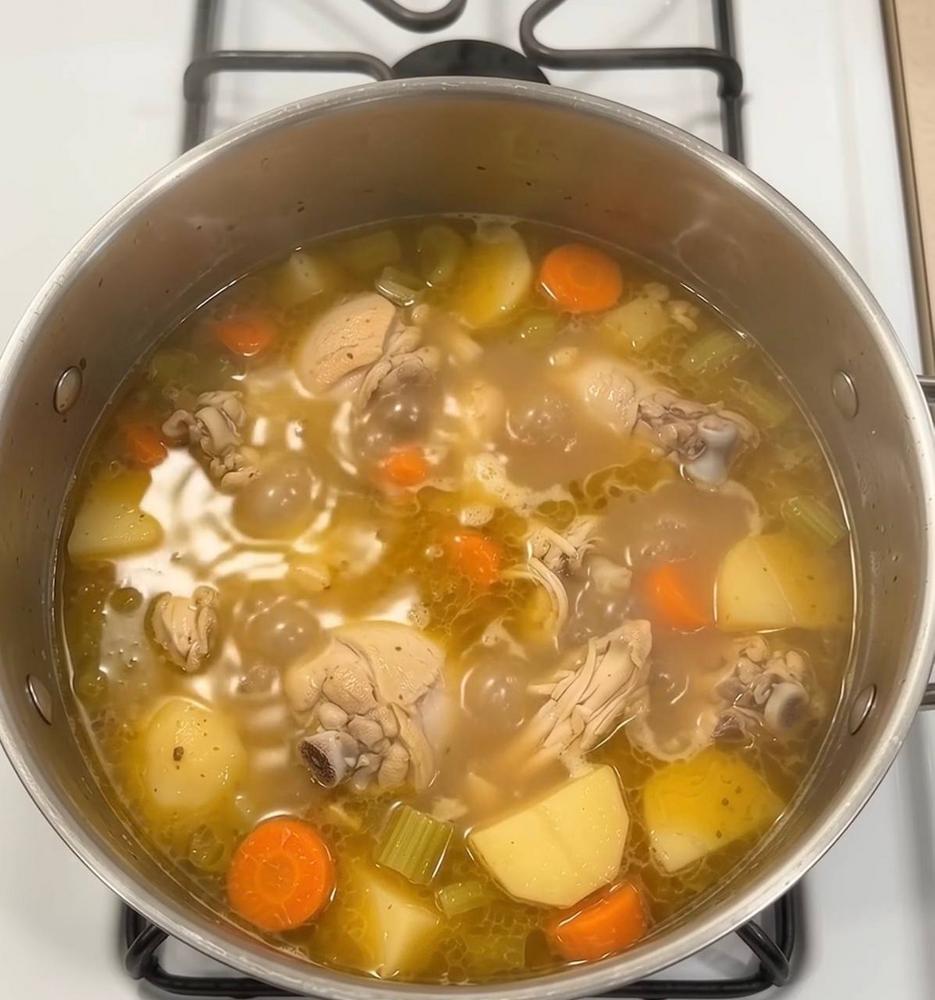
Instructions
- Prepare the Chicken: Pat the chicken pieces dry with paper towels. Season generously with salt and pepper.
- Brown the Chicken: Heat the olive oil in a large Dutch oven or heavy-bottomed pot over medium-high heat. Add the chicken pieces, skin-side down first, and cook for 5-7 minutes per side, until deeply golden brown. You may need to do this in batches to avoid overcrowding the pot. Remove the chicken from the pot and set aside.
- Sauté Aromatics: Reduce the heat to medium. Add the chopped onion to the pot, scraping up any browned bits from the bottom. Cook for 5-7 minutes until softened and translucent. Add the minced garlic, carrots, and celery. Cook for another 3-5 minutes, stirring occasionally, until the vegetables start to soften slightly.
- Deglaze and Simmer: Pour in the chicken broth, stirring to scrape up any remaining browned bits from the bottom of the pot. Return the browned chicken pieces to the pot. Add the dried thyme and bay leaf. Bring the mixture to a boil over medium-high heat.
- Add Potatoes: Once boiling, reduce the heat to low, cover the pot, and let it simmer for 20 minutes.
- Cook Until Tender: After 20 minutes, add the potato chunks to the pot. Continue to simmer, covered, for another 20-30 minutes, or until the chicken is cooked through (internal temperature of 165°F/74°C) and the potatoes are fork-tender.
- Shred Chicken (Optional): Carefully remove the chicken pieces from the pot. Once cool enough to handle, remove the skin and bones, and shred the meat into bite-sized pieces. Discard the skin and bones. Return the shredded chicken to the pot.
- Season and Serve: Remove and discard the bay leaf. Taste the soup and adjust seasoning with additional salt and pepper as needed. Ladle the hot soup into bowls. Garnish with fresh chopped parsley, if desired.
Cooking Tips and Variations
Tips for Success:
- Don’t Overcrowd the Pot: When browning the chicken, work in batches if necessary. Overcrowding will steam the chicken instead of browning it, preventing that delicious deep flavor.
- Taste and Adjust Seasoning: Always taste your soup before serving and adjust salt and pepper. Broths vary in sodium content, so it’s best to add salt incrementally.
- Prevent Mushy Potatoes: Add the potatoes at the recommended time in the recipe (after the initial simmer with the chicken). Adding them too early can result in them breaking down too much by the time the chicken is cooked. Using waxy or all-purpose potatoes like Yukon Gold or red potatoes also helps them hold their shape better than starchy varieties.
- Skimming Fat (Optional): If you prefer a less rich soup, you can skim some of the fat globules from the surface of the soup before serving. A simple way to do this is to refrigerate the soup overnight; the fat will solidify on top and can be easily lifted off.
- Make Ahead for Better Flavor: Like many soups, this chicken and potato soup often tastes even better the next day as the flavors have more time to meld and deepen.
Variations to Try:
- Herb Power: Experiment with different fresh or dried herbs. Rosemary, sage, and a pinch of marjoram would all be wonderful additions. Add fresh herbs towards the end of cooking for brighter flavor.
- Vegetable Boost: Enhance the nutritional value and texture by adding other vegetables. Peas, corn, green beans, leeks, parsnips, or even a handful of spinach (stirred in at the very end until wilted) are great options.
- Hearty Grains or Pasta: For an even more substantial meal, consider adding ¼ to ½ cup of small pasta (like ditalini or elbow macaroni), rice, or pearl barley during the last 15-20 minutes of cooking, ensuring there’s enough liquid.
- Creamy Indulgence: For a richer, creamier soup, stir in ½ cup of heavy cream or a splash of milk during the last 5 minutes of cooking. Do not boil the soup once cream is added.
- Spicy Kick: If you enjoy a bit of heat, add a pinch of red pepper flakes along with the garlic and onions.
- Different Chicken Cuts: While bone-in, skin-on chicken adds the most flavor, you can use boneless, skinless chicken breasts or thighs. Adjust cooking time accordingly; they will cook faster. You can also use leftover cooked chicken, adding it at the end to simply warm through.
- Lemon Brightness: A squeeze of fresh lemon juice stirred in at the very end can brighten all the flavors of the soup.
Storage and Reheating
Storage:
Once cooled, transfer leftover chicken and potato soup to airtight containers. It can be stored in the refrigerator for up to 3-4 days. For longer storage, the soup freezes exceptionally well. Portion it into freezer-safe containers or heavy-duty freezer bags, leaving a little headspace for expansion. Frozen soup will keep for up to 3 months. When freezing, note that potatoes can sometimes become a bit softer or slightly mealy in texture after thawing, but the flavor will still be excellent.
Reheating:
- On the Stovetop: The best way to reheat chicken and potato soup is gently on the stovetop. Pour the desired amount into a saucepan over medium-low heat. Stir occasionally until heated through, about 5-10 minutes. If the soup has thickened too much, you can add a splash of chicken broth or water to reach your desired consistency.
- In the Microwave: For individual servings, transfer the soup to a microwave-safe bowl. Heat on high for 2-3 minutes, stirring halfway through, until thoroughly warmed. Be careful as the bowl may be hot.
- From Frozen: If reheating from frozen, it’s best to thaw the soup in the refrigerator overnight first. Alternatively, you can reheat directly from frozen on the stovetop over low heat, stirring frequently and breaking up the frozen block as it thaws, until heated through.
Frequently Asked Questions
Can I use boneless, skinless chicken for this soup?
Yes, you absolutely can! While bone-in, skin-on chicken adds more depth of flavor to the broth, boneless, skinless chicken breasts or thighs work perfectly well for convenience. If using boneless chicken, you can brown it quickly for a few minutes per side before adding the broth and vegetables. Be mindful that boneless chicken cooks faster, so add it to the pot about 15-20 minutes before the potatoes are tender to prevent it from becoming dry or overcooked. You can also shred it once cooked.
My soup seems too thin/thick. How can I adjust the consistency?
If your soup is too thin, you can simmer it uncovered for a longer period to allow some of the liquid to evaporate and concentrate the flavors. Alternatively, you can create a slurry by whisking 1-2 tablespoons of cornstarch with an equal amount of cold water, then slowly stir this into the simmering soup until it reaches your desired thickness. If your soup is too thick, simply add more chicken broth or water, a little at a time, until it reaches your preferred consistency.
What kind of potatoes are best for this soup?
Waxy or all-purpose potatoes like Yukon Gold, red potatoes, or new potatoes are generally best for soup. They tend to hold their shape well during simmering and don’t break down into a mushy texture. Starchy potatoes like Russets can work, but they are more likely to fall apart and make the soup cloudy, which some people prefer for a thicker consistency, but they might not give you distinct potato chunks.
Can I make this soup in a slow cooker?
Yes, this soup adapts well to a slow cooker! To do so, you can still brown the chicken and sauté the aromatics on the stovetop first for best flavor, then transfer everything to the slow cooker. Or, for a truly hands-off approach, simply add the raw chicken, chopped vegetables (except potatoes), broth, and seasonings to the slow cooker. Cook on low for 6-8 hours or on high for 3-4 hours. Add the potatoes during the last 1.5-2 hours of cooking on low, or the last hour on high, to ensure they are tender but not mushy. Shred the chicken before serving.