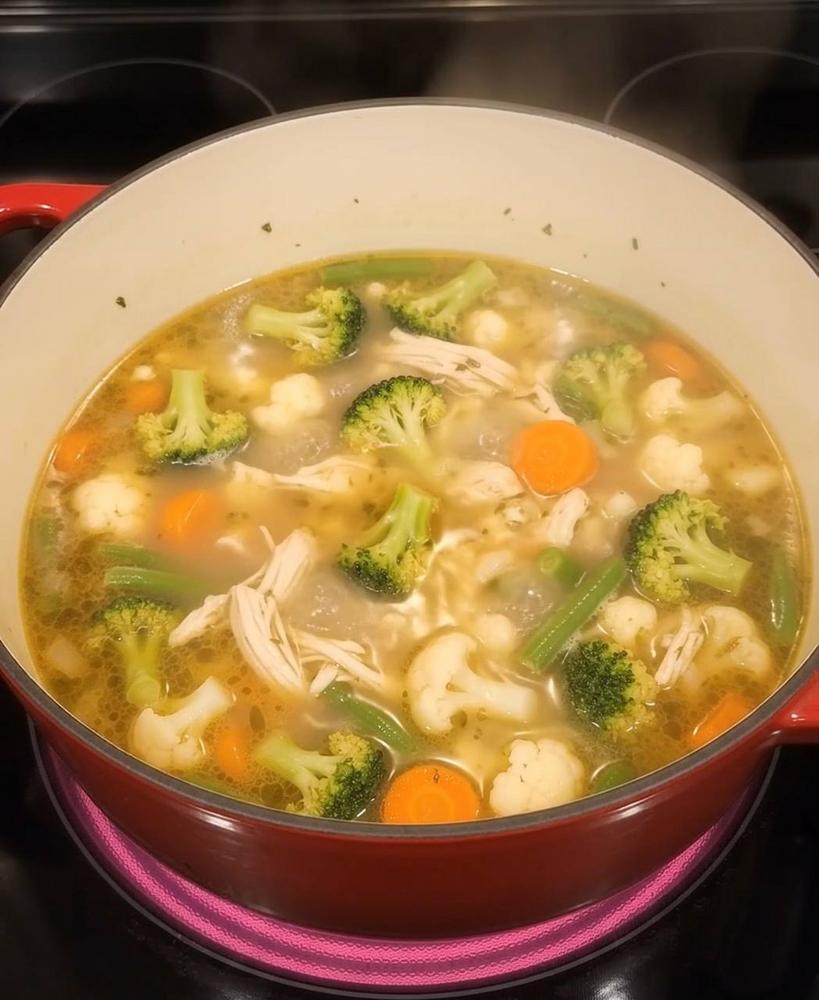
Instructions
- Prepare the Chicken: Heat the olive oil in a large Dutch oven or heavy-bottomed pot over medium-high heat. Add the chicken pieces and cook, stirring occasionally, until lightly browned on all sides and cooked through, about 5-7 minutes. Remove the chicken from the pot and set aside on a plate.
- Sauté Aromatics: Reduce the heat to medium. Add the chopped onion to the pot and cook, stirring occasionally, until softened and translucent, about 5-7 minutes. Add the minced garlic and cook for another 1 minute until fragrant, being careful not to burn it.
- Build the Broth: Pour in the chicken broth, scraping the bottom of the pot with a wooden spoon to release any browned bits (this adds flavor!). Add the sliced carrots, dried Italian seasoning, dried thyme, and black pepper. Bring the mixture to a boil.
- Simmer and Cook Vegetables: Once boiling, reduce the heat to low, cover the pot, and let it simmer for 10-15 minutes, or until the carrots are starting to soften.
- Add Remaining Vegetables and Chicken: Uncover the pot. Add the broccoli florets, cauliflower florets, and green beans to the simmering soup. Return the cooked chicken to the pot. Stir gently.
- Finish Cooking: Continue to simmer for another 5-7 minutes, or until all the vegetables are tender-crisp (cooked through but still holding their shape and having a slight bite). Avoid overcooking the vegetables to maintain their vibrant color and texture.
- Season and Serve: Taste the soup and season with salt as needed. If desired, stir in a squeeze of fresh lemon juice for an extra bright flavor. Ladle the hot soup into bowls. Garnish with fresh chopped parsley, if using, before serving.
Cooking Tips and Variations
To truly elevate your Chicken and Vegetable Soup, start with the best possible ingredients. A high-quality chicken broth makes a world of difference; if you have homemade stock, this is its moment to shine. If using store-bought, opt for a low-sodium variety so you can control the salt content yourself. Don’t be afraid to brown your chicken pieces well before adding the broth – those browned bits (fond) stuck to the bottom of the pot are packed with flavor that will enrich your soup. When sautéing your aromatics like onion and garlic, take your time. Allowing the onion to fully soften and become translucent, and the garlic to become fragrant, lays a crucial foundation for the soup’s overall taste profile. For the vegetables, remember that timing is everything. Heartier vegetables like carrots can go in earlier, while more delicate ones like broccoli, cauliflower, and green beans should be added towards the end to ensure they are tender-crisp, not mushy. This preserves their vibrant color, texture, and nutritional value. A good rule of thumb is to add them about 5-7 minutes before you plan to serve. Finally, always taste and adjust your seasonings just before serving. A little extra salt, pepper, or a fresh squeeze of lemon juice can brighten and balance all the flavors beautifully. Fresh herbs like parsley or dill stirred in at the very end or sprinkled on top as a garnish provide a burst of freshness that dried herbs simply can’t replicate.
Ingredient Substitutions and Additions
- Protein Power: While chicken is classic, feel free to substitute with turkey, especially great for using up Thanksgiving leftovers. For a vegetarian option, simply omit the chicken and use vegetable broth, perhaps adding canned chickpeas or white beans for protein.
- Vegetable Medley: This soup is incredibly forgiving. Feel free to swap or add other vegetables based on what you have and what’s in season. Consider diced celery, bell peppers (any color), zucchini, corn, peas, spinach (stirred in at the very end), or even diced potatoes or sweet potatoes for a heartier texture. Mushrooms also make a fantastic addition, adding an umami depth.
- Grains and Pasta: To make this soup a more substantial meal, you can add small pasta shapes like ditalini, orzo, or egg noodles during the last 10-15 minutes of simmering (check package directions for cooking times). Cooked rice or quinoa can also be stirred in at the end, or served separately with the soup ladled over it.
- Spice It Up: For a little kick, add a pinch of red pepper flakes along with the dried herbs. A dash of smoked paprika can also add a delightful smoky depth.
- Herb Garden: Experiment with different dried or fresh herbs. Bay leaves can be added to the broth at the beginning and removed before serving. Fresh dill or chives are wonderful garnishes.
Flavor Enhancements
- Umami Boost: A splash of Worcestershire sauce or a teaspoon of soy sauce (or tamari for gluten-free) can add a subtle umami depth to the broth without overpowering the other flavors.
- Roasted Vegetables: For an even deeper flavor, consider roasting some of your hardier vegetables (like carrots or bell peppers) before adding them to the soup. Roasting brings out their natural sweetness and adds a beautiful caramelized note.
- Garnish Galore: Don’t underestimate the power of a good garnish. Beyond fresh parsley, consider a swirl of pesto, a dollop of sour cream or Greek yogurt, a sprinkle of grated Parmesan cheese, or crunchy croutons for added texture and flavor.
Making it Ahead
Chicken and Vegetable Soup is an excellent candidate for meal prep. The flavors often deepen and meld beautifully overnight, making it even more delicious the next day. You can prepare the entire soup in advance and simply reheat it when you’re ready to eat. If you plan to add pasta or rice, it’s often best to cook these separately and add them to individual servings just before eating, as they can absorb a lot of broth and become mushy if left in the soup for too long.
Serving Suggestions
This soup is wonderful on its own, but it truly shines when paired with a few simple accompaniments. A crusty loaf of bread or warm rolls are perfect for soaking up every last drop of the flavorful broth. A simple side salad with a light vinaigrette can also complement the soup beautifully, adding a fresh, crisp contrast. For a heartier meal, serve it alongside a grilled cheese sandwich or a simple quesadilla.
Storage and Reheating
Proper storage is key to enjoying your homemade Chicken and Vegetable Soup for days to come, and it also freezes beautifully, making it perfect for future quick meals.
Refrigeration
Once your soup has cooled down to room temperature (this is important for food safety, never put hot soup directly into the fridge), transfer it to airtight containers. You can store the soup in individual portions for easy grab-and-go lunches, or in a larger container. Stored properly in the refrigerator, the soup will remain fresh and delicious for 3-4 days. The flavors tend to meld and deepen over time, often making it taste even better the next day!
Freezing
Chicken and Vegetable Soup is an excellent candidate for freezing. Again, ensure the soup has cooled completely before freezing. Pour the soup into freezer-safe containers or heavy-duty freezer bags. If using freezer bags, lay them flat in the freezer until solid to save space. Label the containers or bags with the date. The soup can be stored in the freezer for up to 3 months. When freezing, it’s worth noting that certain vegetables with high water content (like zucchini or potatoes, if you’ve added them) might become slightly softer in texture after thawing. However, the overall quality and flavor of the soup will still be excellent.
Reheating
- From the Refrigerator: For refrigerated soup, simply transfer the desired amount to a saucepan and reheat gently over medium-low heat on the stovetop, stirring occasionally, until heated through. You can also reheat individual portions in the microwave in a microwave-safe bowl. Cover loosely and heat in 1-2 minute intervals, stirring in between, until hot.
- From the Freezer: To reheat frozen soup, the best method is to thaw it overnight in the refrigerator first. Once thawed, reheat on the stovetop or in the microwave as described above. If you’re in a hurry, you can reheat frozen soup directly on the stovetop over very low heat, stirring occasionally to break up the frozen block and prevent scorching, until completely thawed and heated through. Alternatively, transfer the frozen soup to a microwave-safe container and use the defrost setting, then continue heating until hot.
When reheating, if the soup seems a bit thick or if some broth has evaporated, you can add a splash of extra chicken broth or water to reach your desired consistency. Taste and adjust seasonings if necessary, as flavors can sometimes mellow out after freezing and reheating.
Frequently Asked Questions
What kind of chicken is best for this soup?
Boneless, skinless chicken breasts or thighs work equally well. Chicken breasts will give you a leaner, white meat option, while thighs will provide a slightly richer flavor and juicier texture. If you have leftover cooked chicken (like rotisserie chicken), this recipe is perfect for using it up – just add it towards the end of the cooking process with the other vegetables to warm through.
Can I make this soup vegetarian or vegan?
Absolutely! To make it vegetarian, simply omit the chicken and use vegetable broth instead of chicken broth. For a vegan version, ensure your vegetable broth is vegan-certified and consider adding canned chickpeas, white beans, or lentils for a boost of protein and heartiness. You can also add more root vegetables like diced potatoes or sweet potatoes to make it more filling.
How can I make the broth even more flavorful?
The key to a deeply flavorful broth starts with quality ingredients. Use a good low-sodium chicken broth, or even better, homemade chicken stock. Don’t skip browning the chicken and sautéing the onions and garlic well, as these steps build a strong flavor base. You can also add a bay leaf to the broth while it simmers (remember to remove it before serving) or a parmesan rind for extra umami. A final squeeze of fresh lemon juice at the end can brighten all the flavors beautifully.
My vegetables are getting mushy. What went wrong?
The most common reason for mushy vegetables is overcooking. To prevent this, add your more delicate vegetables (like broccoli, cauliflower, and green beans) towards the end of the simmering process, typically in the last 5-7 minutes. You want them to be tender-crisp, meaning they are cooked through but still retain some bite and their vibrant color. Harder vegetables like carrots can be added earlier, as they take longer to soften.