Instructions
- Prepare the Chicken: Pat the chicken strips dry with paper towels. In a medium bowl, toss the chicken with 1 tablespoon of olive oil, 1 teaspoon of chili powder, 1/2 teaspoon of ground cumin, 1/2 teaspoon of smoked paprika, 1/4 teaspoon of garlic powder, 1/4 teaspoon of onion powder, 1/8 teaspoon of cayenne pepper (if using), 1/4 teaspoon of dried oregano, 1/2 teaspoon of salt, and 1/4 teaspoon of black pepper. Mix well to ensure the chicken is evenly coated. Set aside to marinate for at least 15-20 minutes at room temperature, or up to 30 minutes in the refrigerator.
- Prepare the Vegetables: While the chicken marinates, prepare all the bell peppers and onion by slicing them uniformly. In a separate large bowl, toss the sliced bell peppers and onion with the remaining 1 tablespoon of olive oil, the remaining 1 teaspoon of chili powder, 1 teaspoon of ground cumin, 1/2 teaspoon of smoked paprika, 1/4 teaspoon of garlic powder, 1/4 teaspoon of onion powder, 1/8 teaspoon of cayenne pepper (if using), 1/4 teaspoon of dried oregano, 1/2 teaspoon of salt, and 1/4 teaspoon of black pepper. Mix thoroughly to coat the vegetables.
- Cook the Chicken: Heat a large cast-iron skillet or heavy-bottomed pan over medium-high heat until very hot. Add the marinated chicken strips in a single layer, making sure not to overcrowd the pan. You may need to cook the chicken in two batches. Cook for 3-4 minutes per side, or until the chicken is golden brown and cooked through. The internal temperature should reach 165°F (74°C). Remove the cooked chicken from the skillet and set it aside on a plate.
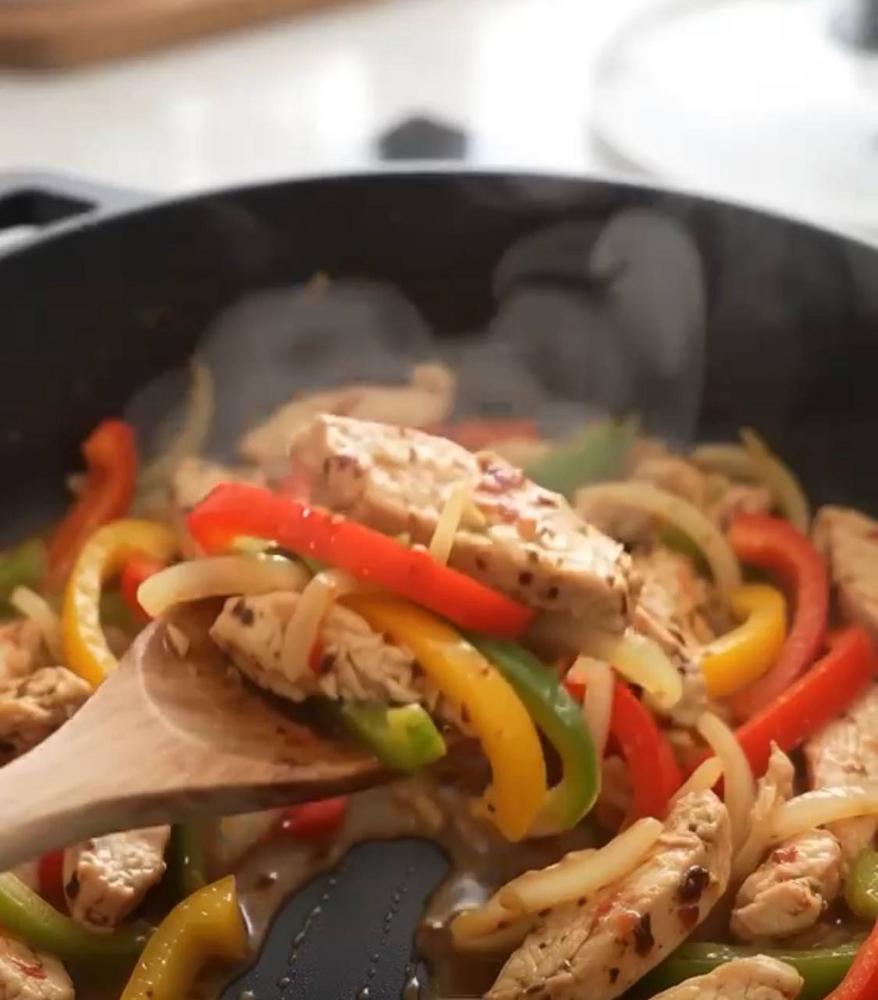
- Cook the Vegetables: Add the seasoned bell peppers and onions to the same hot skillet (no need to clean it). Sauté, stirring frequently, for 7-10 minutes, or until the vegetables are tender-crisp and slightly charred. You want them to retain a bit of their crunch but also have some softened edges and a hint of sweetness from caramelization.
- Combine and Finish: Return the cooked chicken to the skillet with the vegetables. Toss everything together to combine, ensuring the chicken is thoroughly warmed through with the vegetables. Squeeze the fresh lime juice over the entire mixture and toss once more. Taste and adjust seasoning if necessary, adding more salt, pepper, or spices to your preference.
- Serve: Transfer the sizzling chicken fajita filling to a serving platter. Garnish with fresh chopped cilantro, if desired. Serve immediately with warm tortillas, salsa, guacamole, sour cream, and any other desired toppings.
Cooking Tips and Variations
Don’t Overcrowd the Pan: This is perhaps the most crucial tip for perfect fajitas. Cooking in batches ensures that the chicken and vegetables sear beautifully and develop that desirable char, rather than steaming and becoming soggy. If your pan is too full, the temperature will drop, and you won’t achieve the crisp-tender texture you’re looking for.
High Heat is Key: Fajitas thrive on high heat. A screaming hot skillet (preferably cast iron) is essential for getting a good sear on the chicken and a slight caramelization on the vegetables quickly. This quick cooking preserves the texture of the vegetables and keeps the chicken juicy.
Uniform Slicing: Slice your chicken and vegetables as uniformly as possible. This ensures even cooking, so everything is perfectly tender at the same time. Aim for 1/2-inch strips for chicken and 1/4-inch strips for vegetables.
Homemade vs. Store-Bought Seasoning: While a good quality store-bought fajita seasoning can be convenient, making your own blend allows for complete control over the flavor profile and spice level. Our recipe includes a fantastic homemade blend, but feel free to experiment with your favorite ratios of chili powder, cumin, paprika, garlic powder, onion powder, oregano, and cayenne.
Marinade for Flavor & Tenderness: Marinating the chicken for at least 15-20 minutes, or even up to an hour, infuses it with deep flavor and helps tenderize the meat. For an even deeper flavor, you can add a tablespoon of lime juice or a splash of orange juice to your chicken marinade.
Add a Smoky Element: For an extra layer of smoky flavor, consider adding a pinch of chipotle powder to your seasoning blend. If you have a grill, cooking the chicken and vegetables on a hot grill grate can impart an incredible smoky char.
Vegetable Variations: While bell peppers and onions are classic, feel free to experiment with other quick-cooking vegetables. Sliced mushrooms, zucchini, or even corn kernels can be delicious additions. Add them in during the last few minutes of cooking the peppers and onions.
Spice It Up (or Down): Adjust the amount of cayenne pepper to suit your preference for heat. For a milder version, omit it entirely. For more kick, add an extra pinch or even a finely diced jalapeño or serrano pepper along with the other vegetables.
Fresh Herbs Finish: A generous sprinkle of fresh cilantro at the end brightens the entire dish. Don’t underestimate the power of fresh herbs to elevate the flavor.
Rest the Chicken: After cooking, let the chicken rest for a few minutes before combining it with the vegetables. This allows the juices to redistribute, resulting in more tender and flavorful chicken.
Storage and Reheating
Storage: Leftover chicken fajita filling can be stored in an airtight container in the refrigerator for up to 3-4 days. Ensure it has cooled completely before transferring it to the container to prevent condensation.
Freezing: For longer storage, the cooked chicken fajita filling can be frozen. Place the cooled filling in a freezer-safe bag or airtight container. It can be stored in the freezer for up to 2-3 months. Thaw overnight in the refrigerator before reheating.
Reheating on the Stovetop: This is the best method for reheating to maintain texture. Heat a tablespoon of olive oil in a skillet over medium heat. Add the fajita filling and sauté, stirring occasionally, until heated through and slightly sizzling again, about 5-7 minutes. If the mixture seems a bit dry, you can add a splash of chicken broth or water.
Reheating in the Microwave: While convenient, reheating in the microwave may result in slightly softer vegetables and chicken. Place a single serving in a microwave-safe dish, cover loosely, and heat on high for 1-2 minutes, stirring halfway through, until thoroughly hot. Be careful not to overcook, as this can dry out the chicken.
Reheating in the Oven: Preheat your oven to 350°F (175°C). Spread the fajita filling in a single layer on a baking sheet. Cover loosely with foil to prevent drying. Heat for 10-15 minutes, or until warmed through. This method works well for larger quantities.
Frequently Asked Questions
Can I use chicken thighs instead of chicken breasts?
Absolutely! Chicken thighs are an excellent alternative. They tend to be more forgiving and retain moisture better, resulting in an even juicier fajita filling. Slice them into similar 1/2-inch strips and cook for a similar amount of time, ensuring they are cooked through.
How can I make this dish spicier?
To increase the heat, you have several options. You can add more cayenne pepper to the seasoning blend, include a finely diced jalapeño or serrano pepper when sautéing the vegetables, or serve with a spicy salsa or hot sauce on the side.
What are the best toppings for chicken fajitas?
Classic toppings include warm flour or corn tortillas, salsa (pico de gallo or a roasted salsa), guacamole or sliced avocado, sour cream or Greek yogurt, shredded cheese (cheddar or Monterey Jack), and fresh cilantro and lime wedges. Don’t forget refried beans or black beans and rice as great side dishes!
Can I prepare the ingredients ahead of time?
Yes, you can definitely do some prep work in advance! Slice the chicken and vegetables and store them separately in airtight containers in the refrigerator for up to 1-2 days. You can also mix the seasoning blend ahead of time. Marinate the chicken no more than a few hours before cooking for best results, or just before you’re ready to cook.