Instructions
- Prepare Your Ingredients: Begin by gathering and preparing all your vegetables. Chop the onion, slice the carrots into uniform rounds, and chop the celery. Mince the garlic. If you’re cooking chicken from scratch, boil or poach your chicken breasts/thighs until cooked through, then shred them with two forks.
- Sauté the Aromatics: Heat the olive oil or butter in a large Dutch oven or heavy-bottomed pot over medium heat. Add the chopped onion, carrots, and celery. Sauté for 8-10 minutes, stirring occasionally, until the vegetables begin to soften and the onion becomes translucent.
- Add Garlic and Herbs: Stir in the minced garlic, dried thyme, and dried rosemary. Cook for another 1-2 minutes, until fragrant, being careful not to burn the garlic.
- Introduce Broth and Chicken: Pour in the 8 cups of chicken broth. Add the shredded chicken, black pepper, and salt. If using, add a bay leaf. Bring the soup to a gentle boil, then reduce the heat to low, cover, and let it simmer for at least 15-20 minutes to allow the flavors to meld beautifully. The longer it simmers, the richer the taste.
- Cook the Noodles: Increase the heat to medium-high and bring the soup back to a rolling boil. Add the wide egg noodles. Cook according to package directions (usually 7-10 minutes), or until the noodles are tender but still have a slight bite (al dente). Be careful not to overcook them, as they will continue to soften in the hot broth.
- Finish and Season: Remove the bay leaf (if used). Stir in the fresh chopped parsley. Taste the soup and adjust seasoning with additional salt and pepper if needed. Remember that broth sodium levels can vary, so always taste before adding more salt.
- Serve and Garnish: Ladle the hot soup into bowls. Garnish each serving with an extra sprinkle of fresh parsley, if desired. Serve immediately and enjoy the ultimate comfort!
Cooking Tips and Variations
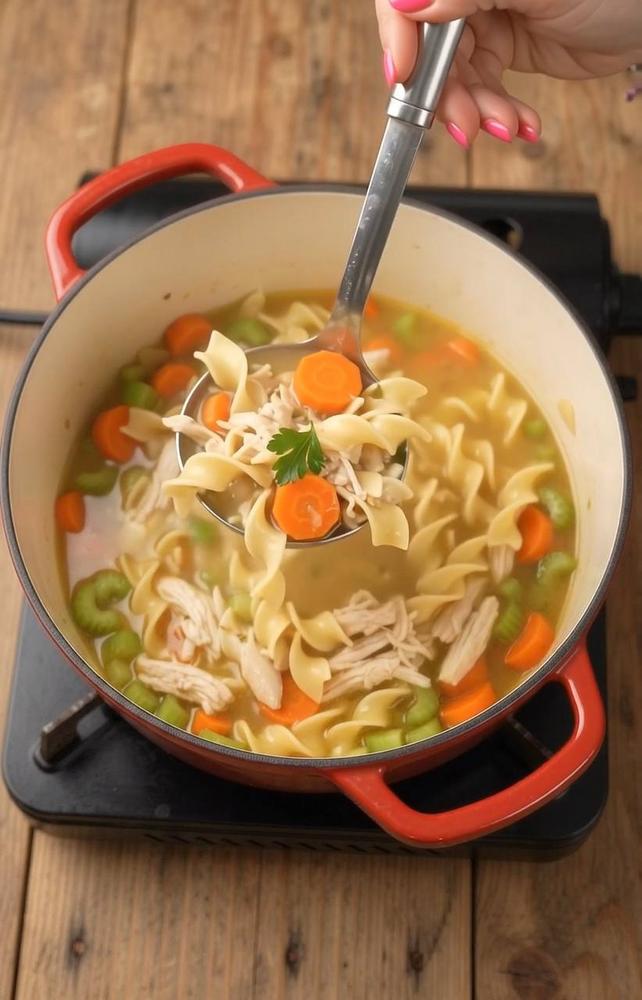
Achieving the perfect bowl of Classic Chicken Noodle Soup is all about quality ingredients and a few key techniques. For the best flavor, prioritize a good chicken broth. Homemade broth will always yield the most superior results, but if you’re using store-bought, opt for a low-sodium, high-quality brand. The clear, golden broth visible in the image is a testament to this principle. When it comes to noodles, timing is crucial. To prevent them from becoming mushy and absorbing too much broth, add them towards the end of the cooking process, allowing them to cook directly in the soup for just the recommended time on the package. The wide, flat egg noodles shown are excellent for this, as they hold their shape well.
Don’t be afraid to customize! While this is a classic recipe, you can easily adapt it. For extra flavor and nutrients, consider adding other vegetables like diced potatoes, peas, corn, or spinach during the last few minutes of cooking. A pinch of red pepper flakes can add a subtle warmth, or a squeeze of fresh lemon juice at the very end can brighten all the flavors. If you’re short on time, a pre-cooked rotisserie chicken is a fantastic shortcut for the shredded chicken component. For a richer, deeper chicken flavor, you could even roast your chicken bones with some vegetables before making your broth. Remember to always taste and adjust seasoning throughout the cooking process – a little extra salt or pepper can make all the difference.
Storage and Reheating
Classic Chicken Noodle Soup is often even better the next day, as the flavors have more time to meld. To store, allow the soup to cool completely to room temperature. Transfer it to an airtight container and refrigerate for up to 3-4 days. For longer storage, you can freeze the soup for up to 2-3 months. However, a word of caution: if you plan to freeze the soup, it’s best to cook the noodles separately or add them only when reheating, as they can become very mushy and break down after freezing and thawing.
When reheating, if the noodles were cooked with the soup, you might find they’ve absorbed a lot of the broth. You can always add a splash of extra chicken broth or water to thin it out to your desired consistency. Reheat gently on the stovetop over medium-low heat, stirring occasionally, until heated through. Avoid boiling vigorously, especially if noodles are already present, to prevent them from disintegrating. You can also reheat individual portions in the microwave, stirring halfway through, until steaming hot.
Frequently Asked Questions
How can I make my chicken noodle soup broth extra flavorful?
The key to a super flavorful broth is starting with high-quality chicken broth, ideally homemade. If using store-bought, look for low-sodium options and consider simmering it with a chicken carcass, onion halves, carrots, celery, and a bay leaf for an hour before adding other ingredients. Don’t skimp on sautéing the aromatics (onions, carrots, celery, garlic) until softened and fragrant; this builds a strong flavor base. Fresh herbs, particularly parsley and dill, added at the end, also brighten the overall taste.
What kind of noodles are best for chicken noodle soup?
Wide egg noodles, like those visible in the image, are a classic and popular choice because they have a lovely texture and absorb flavor well. Other good options include thin spaghetti broken into pieces, ditalini, or even small shells. The most important tip is to add the noodles towards the end of the cooking process to prevent them from becoming overcooked and mushy, especially if you plan on having leftovers.
Can I use pre-cooked chicken for this recipe?
Absolutely! Using pre-cooked chicken is a fantastic time-saver. A rotisserie chicken is perfect for this recipe – simply shred the meat and add it to the soup along with the broth. You can also use leftover cooked chicken from a previous meal. Just ensure the chicken is fully cooked before adding it to the soup for simmering.
How do I prevent my noodles from getting soggy?
To avoid soggy noodles, add them to the soup only during the last 7-10 minutes of cooking (or whatever the package directions state for al dente). Cook them just until tender, then remove the soup from the heat. If you anticipate having a lot of leftovers, you can even cook the noodles separately and add them to individual bowls of soup just before serving. This ensures they maintain their perfect texture.
Serve and Savor
There’s nothing quite like a steaming bowl of Classic Chicken Noodle Soup to bring warmth and comfort to any day. From the first fragrant whiff to the last spoonful, this homemade version embodies everything we cherish about this timeless dish. It’s more than just a meal; it’s a feeling, a memory, and a promise of nourishment.
So, gather your loved ones, ladle out generous portions of this golden elixir, and savor every moment. Whether you’re sharing stories around the dinner table or simply enjoying a quiet moment of solace, this soup is meant to be savored and enjoyed. We hope this recipe becomes a cherished staple in your kitchen, bringing comfort and joy for years to come. Happy cooking, and even happier eating!