Instructions
- Preheat your oven to 375°F (190°C). Lightly grease a 9×13-inch baking dish.
- Cook the egg noodles according to package directions until al dente. Drain well and set aside. Do not overcook, as they will continue to cook in the oven.
- While the noodles are cooking, prepare the sauce. In a large saucepan or Dutch oven, melt 2 tablespoons of butter over medium heat. Add the chopped onion and celery and cook, stirring occasionally, until softened, about 5-7 minutes.
- Sprinkle the flour over the softened vegetables and cook, stirring constantly, for 1-2 minutes to create a roux.
- Gradually whisk in the warmed milk and chicken broth, a little at a time, ensuring no lumps form. Continue to whisk until the sauce thickens and comes to a gentle simmer.
- Stir in the Dijon mustard, garlic powder, black pepper, and salt. Taste and adjust seasoning as needed. Remove the sauce from the heat.
- Add the drained and flaked tuna, thawed green peas, and 1/2 cup of the shredded cheddar cheese to the sauce. Stir gently to combine.
- Add the cooked and drained egg noodles to the sauce mixture. Fold everything together until the noodles are evenly coated.
- Pour the noodle mixture into the prepared 9×13-inch baking dish, spreading it evenly.
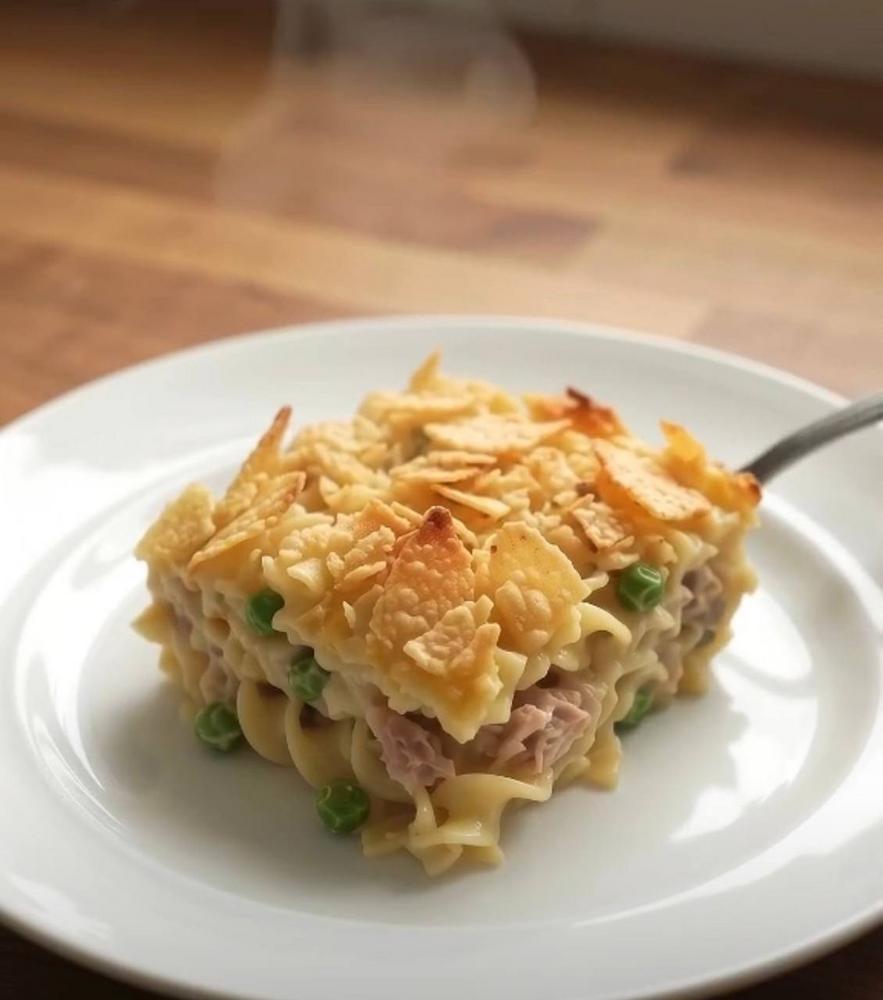
- In a small bowl, combine the melted butter with the crushed cornflakes. Sprinkle this mixture evenly over the top of the casserole. If desired, sprinkle the remaining 1/2 cup of shredded cheddar cheese over the cornflake topping for an extra cheesy crust.
- Bake for 25-30 minutes, or until the casserole is bubbly around the edges and the topping is golden brown and crispy.
- Remove from the oven and let rest for 5-10 minutes before serving. This allows the casserole to set slightly and makes for easier serving.
Cooking Tips and Variations
For the ultimate creamy texture, ensure your milk is warmed before adding it to the roux; this helps prevent lumps and creates a smoother sauce. Don’t overcook your noodles initially; they should be al dente, as they will continue to cook and absorb sauce in the oven, preventing a mushy texture. If you prefer a richer flavor, consider using a combination of whole milk and heavy cream for the sauce. For an extra punch of umami, a teaspoon of Worcestershire sauce or a pinch of smoked paprika can elevate the sauce’s depth. To customize your casserole, feel free to add other vegetables like sautéed mushrooms, diced bell peppers, or even a can of drained corn. If you’re not a fan of cornflakes, crushed Ritz crackers, Panko breadcrumbs (tossed with a little melted butter), or even crushed potato chips make excellent crispy toppings. For a cheesier experience, mix some grated Parmesan or Gruyere into the sauce along with the cheddar, or add a layer of sliced cheese under the cornflake topping. A sprinkle of fresh parsley or chives after baking adds a pop of color and freshness.
Storage and Reheating
To store leftover tuna noodle casserole, allow it to cool completely before transferring it to an airtight container. It can be refrigerated for up to 3-4 days. For longer storage, the casserole can be frozen for up to 2-3 months. If freezing, it’s best to do so before baking the topping, or freeze the topping separately and add it fresh when reheating. To reheat from the refrigerator, cover the casserole with foil and bake at 350°F (175°C) for 20-30 minutes, or until heated through. For a crispy topping, remove the foil for the last 5-10 minutes of reheating. If reheating a frozen casserole, thaw it in the refrigerator overnight first, then follow the same instructions for refrigerated leftovers. Alternatively, individual portions can be reheated in the microwave, though the topping may lose some of its crispness. For microwave reheating, use medium power and stir occasionally until heated through.
Frequently Asked Questions
How can I prevent my tuna noodle casserole from being dry?
The key to a moist casserole lies in a well-made sauce and not overcooking the noodles. Ensure your sauce is thick enough to coat, but still pourable. Using whole milk or a combination with cream adds richness. Also, cook your noodles only to al dente before mixing; they will absorb more liquid during baking, keeping the casserole moist. If your casserole seems a bit dry before baking, you can add a splash more milk or broth to the mixture.
Can I make this casserole ahead of time?
Yes, tuna noodle casserole is an excellent make-ahead dish! You can assemble the entire casserole, including the sauce, noodles, tuna, and peas, and place it in the baking dish. Cover it tightly with plastic wrap or foil and refrigerate for up to 24 hours. When ready to bake, add the buttered cornflake topping and bake as directed, adding an extra 10-15 minutes to the baking time since it will be starting from cold. You can also prepare the sauce and cook the noodles separately and combine them just before baking.
What kind of tuna is best for tuna noodle casserole?
For classic tuna noodle casserole, albacore tuna packed in water is generally preferred. It has a milder flavor and a firmer, flakier texture that holds up well in the casserole. You can also use chunk light tuna if you prefer, but albacore provides a more substantial presence. Always make sure to drain the tuna very well before flaking and adding it to the sauce to avoid a watery casserole.