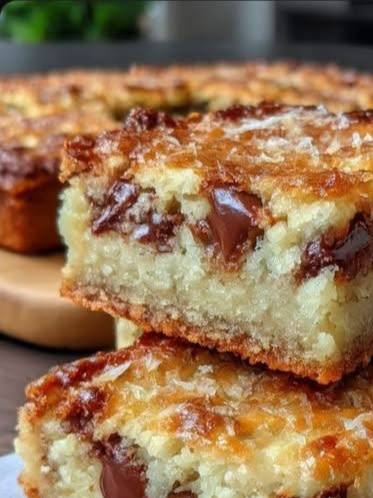
Instructions
- Preheat your oven to 350°F (175°C). Grease and flour a 9×13 inch baking pan, or line it with parchment paper, leaving an overhang on the sides to easily lift the bars out later.
- In a large mixing bowl, combine the melted butter and packed light brown sugar. Whisk vigorously until well combined and smooth.
- Add the two large eggs to the butter and sugar mixture, one at a time, whisking well after each addition until fully incorporated. Stir in the vanilla extract. The mixture should be smooth and a light caramel color.
- In a separate medium bowl, whisk together the all-purpose flour, baking powder, and salt. This helps to distribute the leavening agents evenly throughout the dry ingredients.
- Gradually add the dry ingredients to the wet ingredients, mixing on low speed with an electric mixer or by hand with a spatula until just combined. Be careful not to overmix; overmixing can lead to tough bars. A few streaks of flour are acceptable at this stage.
- Fold in 1 cup of the chocolate chips into the batter. Ensure they are evenly distributed throughout the mixture.
- Pour the batter into the prepared 9×13 inch baking pan. Use a spatula to spread it evenly to all corners of the pan.
- Sprinkle the remaining ½ cup of chocolate chips over the top of the batter. If desired, gently press some of them down slightly into the batter.
- Bake for 25-30 minutes, or until the edges are golden brown and a wooden skewer or toothpick inserted into the center comes out with moist crumbs attached, but not wet batter. The center should still look slightly soft and gooey; they will firm up as they cool. Do not overbake!
- Remove the pan from the oven and place it on a wire rack to cool completely. This is a crucial step for clean cuts and the best texture. Attempting to cut them while warm can result in crumbly, messy bars.
- Once completely cooled, use the parchment paper overhang to lift the entire slab of Congo Bars out of the pan. Place them on a cutting board and cut into 24 squares or 18 larger bars.
- Serve and enjoy!
Cooking Tips and Variations
For the absolute best Congo Bars, heed these tips! First and foremost, do not overbake. The key to their signature chewy, moist texture is to pull them from the oven when the center is still slightly soft and gooey. The residual heat of the pan will continue to cook them as they cool, leading to perfect doneness without being dry. A golden-brown edge and a skewer that comes out with moist crumbs are your indicators. Another crucial tip is proper pan preparation. Lining your 9×13 inch baking pan with parchment paper, leaving an overhang on the two longer sides, is a game-changer. It makes lifting the entire slab out incredibly easy and ensures clean, neat cuts once cooled. And speaking of cooling, allow the bars to cool completely before attempting to cut them. Warm bars will crumble and tear; patience will be rewarded with perfectly formed squares.
When it comes to ingredients, use packed brown sugar. This ensures you get the right amount of moisture and the deep, caramel-like flavor that is characteristic of Congo Bars. For the chocolate, while semi-sweet chips are classic, feel free to experiment. High-quality chocolate chunks, especially a mix of milk and dark, can elevate the flavor and provide beautiful pools of melted chocolate throughout. If you’re feeling adventurous, try adding a sprinkle of flaky sea salt on top of the bars immediately after baking to enhance the chocolate and caramel notes.
The beauty of Congo Bars lies in their versatility, making them perfect for fun variations. For a delightful crunch, add 1 cup of chopped nuts, such as walnuts or pecans, along with the chocolate chips. These add a wonderful textural contrast and a nutty depth of flavor. If you’re a peanut butter lover, consider swirling in about ½ cup of melted peanut butter into the batter before adding the chocolate chips, or drizzle it artfully over the top before baking. For a different chocolate experience, try using white chocolate chips, butterscotch chips, or a combination. You could even fold in some shredded coconut for a tropical twist, or a handful of dried cranberries for a tart counterpoint to the sweetness. The possibilities are endless, so feel free to get creative and make these bars your own!
Storage and Reheating
Proper storage is key to keeping your Congo Bars fresh and delicious. Once completely cooled, store the bars in an airtight container at room temperature. They will maintain their best quality for up to 3-4 days. To prevent them from sticking together, you can place a piece of parchment paper or wax paper between layers if stacking them. If you live in a particularly warm or humid climate, or if you want to extend their shelf life, you can store them in the refrigerator for up to a week. Just be aware that refrigeration can sometimes alter the texture slightly, making them a bit firmer.
Congo Bars also freeze exceptionally well, making them perfect for meal prepping desserts or having a sweet treat on hand for unexpected guests. To freeze, wrap individual bars tightly in plastic wrap, then place them in a freezer-safe bag or container. They can be stored in the freezer for up to 3 months. When you’re ready to enjoy, simply thaw them at room temperature for a few hours. There’s usually no need to reheat them, as they are fantastic at room temperature. However, if you prefer a warm, gooey bar with melty chocolate, you can gently warm an individual bar in the microwave for 10-15 seconds, or in a preheated oven at 250°F (120°C) for 5-7 minutes. Be careful not to overheat, as this can dry them out.
Frequently Asked Questions
What’s the difference between a Congo Bar and a blondie?
While very similar, the main distinction often lies in the inclusion of brown sugar and sometimes the variety of mix-ins. Congo Bars almost exclusively use brown sugar, giving them a deeper, more caramel-like flavor and a chewier texture. They traditionally include chocolate chips, but don’t always contain nuts. Blondies, on the other hand, can sometimes use a mix of white and brown sugar, might have a slightly lighter flavor profile, and are more broadly defined as a “brownie without cocoa,” often featuring a wider array of mix-ins like nuts, white chocolate, or butterscotch chips.
Can I use all white sugar instead of brown sugar?
While you technically can, it’s highly recommended to stick with brown sugar for authentic Congo Bars. Brown sugar is crucial for their signature moistness, chewiness, and rich, caramel-like flavor. Using all white sugar would result in a drier, crispier bar with a less complex sweetness, altering the classic Congo Bar experience significantly. If you’re short on brown sugar, you could try a 50/50 mix, but the best results come from using packed brown sugar as specified.
How do I know when my Congo Bars are done baking?
The best indicator is when the edges are set and golden brown, and the center still looks slightly soft and gooey. When you insert a wooden skewer or toothpick into the center, it should come out with moist crumbs attached, but not wet batter. If it comes out completely clean, your bars are likely overbaked and will be dry. Remember, they continue to cook slightly as they cool in the pan, so it’s better to underbake them slightly than to overbake.
My Congo Bars are crumbly, what went wrong?
The most common reasons for crumbly Congo Bars are overbaking, which dries out the batter, or cutting them before they’ve had a chance to cool completely. Make sure to follow the baking time guidelines and look for the visual cues of doneness mentioned above. Also, patience is a virtue when it comes to cutting; allow them to cool fully on a wire rack before slicing for clean, intact bars.