Instructions
- In a large mixing bowl, using an electric mixer or stand mixer with the paddle attachment, cream together the softened butter, granulated sugar, and salt until light and fluffy, about 2-3 minutes. If using, add the almond or vanilla extract and mix until just combined.
- Gradually add the all-purpose flour to the butter mixture, mixing on low speed until just combined. Be careful not to overmix; the dough will be crumbly at first but will come together.
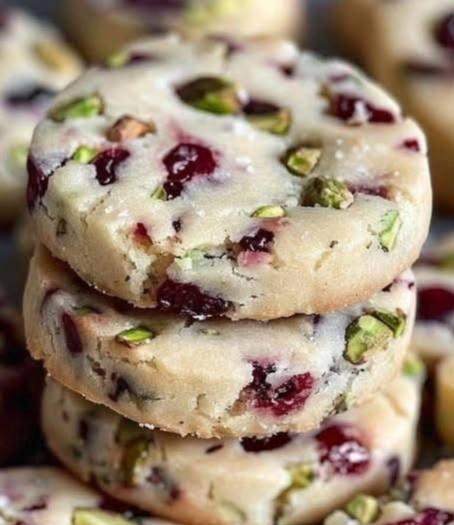
- Fold in the chopped dried cranberries and chopped pistachios by hand until they are evenly distributed throughout the dough.
- Turn the dough out onto a clean surface. Divide the dough in half. Shape each half into a log, approximately 1 ½ to 2 inches in diameter. Wrap each log tightly in plastic wrap.
- Refrigerate the dough logs for at least 30-60 minutes, or up to 2-3 days. Chilling the dough is crucial for easy slicing and to prevent the cookies from spreading too much during baking.
- Preheat your oven to 350°F (175°C). Line two baking sheets with parchment paper.
- Remove one dough log from the refrigerator. Using a sharp knife, slice the dough into ¼-inch thick rounds.
- Place the sliced cookie dough rounds about 1 inch apart on the prepared baking sheets. If desired, lightly sprinkle the tops of the cookies with flaky sea salt.
- Bake for 12-15 minutes, or until the edges are lightly golden and the centers are just set. Shortbread cookies should remain relatively pale.
- Remove the cookies from the oven and let them cool on the baking sheets for 5 minutes before transferring them to a wire rack to cool completely.
- Repeat with the second dough log until all cookies are baked.
Cooking Tips and Variations
Achieving perfect shortbread is all about technique and ingredient quality. Always start with good quality unsalted butter at room temperature; it creams better and contributes to the rich flavor and tender texture. Avoid overworking the dough once the flour is added, as this can develop the gluten and result in tough cookies rather than the desired crumbly shortbread. Chilling the dough is non-negotiable for shortbread; it solidifies the butter, which helps the cookies hold their shape and prevents excessive spreading, ensuring those beautiful, clean edges. When slicing your dough logs, aim for uniform thickness to ensure even baking. You’ll know your shortbread is done when the edges are lightly golden, but the centers remain pale; overbaking will dry them out. A sprinkle of flaky sea salt on top before baking not only adds visual appeal but also enhances all the flavors beautifully.
For variations, consider adding the zest of one orange or lemon to the dough for a bright citrusy note that pairs wonderfully with cranberries. White chocolate chips can be folded in alongside the cranberries and pistachios for an extra layer of sweetness and creaminess. Feel free to experiment with other nuts like chopped pecans or walnuts, or even a mix. For different shapes, instead of slicing logs, you can roll out the chilled dough to about ¼-inch thickness and use cookie cutters to create festive shapes. Just be sure to gather and re-roll scraps gently to avoid overworking the dough. You can also experiment with different extracts, such as a touch of almond or even a hint of cardamom, to add unique aromatic dimensions to your shortbread.
Storage and Reheating
Proper storage is key to maintaining the freshness and deliciousness of your Cranberry Pistachio Shortbread Cookies. Once completely cooled, store the cookies in an airtight container at room temperature. They will stay fresh and delicious for up to one week. To prevent them from becoming stale or absorbing other flavors, you can place a piece of parchment paper between layers of cookies in the container. Avoid storing them in the refrigerator, as this can dry out shortbread cookies.
If you’re looking to enjoy these cookies over a longer period, they freeze beautifully. For baked cookies, arrange them in a single layer on a baking sheet and freeze until solid, then transfer them to a freezer-safe airtight container or bag. They can be frozen for up to 2-3 months. Thaw frozen cookies at room temperature for a few hours before serving. You can also freeze the unbaked dough logs. Wrap them tightly in plastic wrap, then again in aluminum foil, and store in the freezer for up to 3 months. When ready to bake, simply remove from the freezer, let thaw slightly at room temperature for about 15-20 minutes (just enough to make slicing easier), then slice and bake as directed, adding a minute or two to the baking time if needed.
Frequently Asked Questions
Why did my shortbread cookies spread too much?
The most common reason for shortbread spreading is not chilling the dough long enough, or using butter that was too warm. Chilling solidifies the butter, which helps the cookies hold their shape in the oven. Ensure your butter is at room temperature when mixing, but then chill the formed dough logs thoroughly for at least 30-60 minutes before slicing and baking.
Can I make these cookies gluten-free?
Yes, you can often substitute a good quality 1:1 gluten-free all-purpose flour blend for the regular flour in shortbread recipes. Look for blends that contain xanthan gum, or add ¼ teaspoon per cup of flour if your blend does not. The texture might be slightly different, but the flavor will still be delicious.
What’s the best way to chop dried cranberries and pistachios for this recipe?
For the best distribution and texture, roughly chopping them is ideal. You can do this by hand with a sharp knife, or pulse them a few times in a food processor. Be careful not to over-process them into a paste or too fine a crumb, as you want distinct pieces in the cookies.
My cookies are crumbly and fall apart easily. What went wrong?
Shortbread is meant to be crumbly and tender, but if they are excessively falling apart, it might be due to too little butter, too much flour, or overbaking. Ensure you’re measuring your ingredients accurately, especially the flour (using a kitchen scale is best). Also, avoid overbaking; shortbread should only be lightly golden at the edges, not deeply browned.