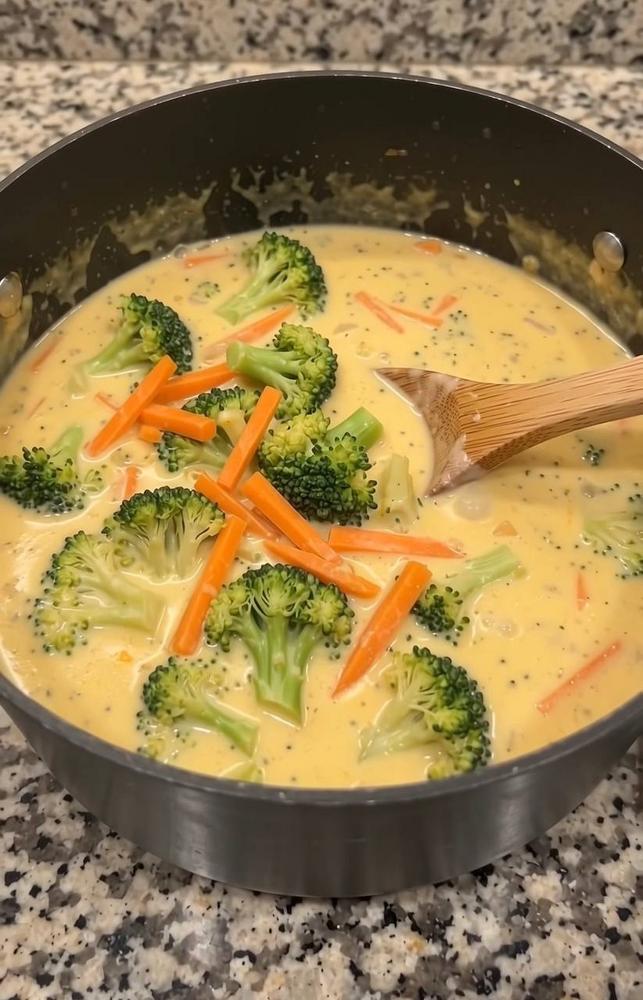
Instructions
- Prepare Your Ingredients: Before you begin cooking, ensure all your vegetables are prepped. Finely dice the yellow onion, mince the garlic, chop the broccoli florets into small, consistent sizes, and julienne or finely shred the carrot. Grate your cheddar cheese. Grating your own cheese from a block is crucial for the best melting and creamiest texture, as pre-shredded cheeses often contain anti-caking agents that can make your soup grainy.
- Sauté the Aromatics: In a large, heavy-bottomed pot or Dutch oven, melt the unsalted butter over medium heat. Once the butter is melted and shimmering, add the finely diced onion. Cook, stirring occasionally, for 5-7 minutes until the onion softens and becomes translucent, but do not allow it to brown. Add the minced garlic and cook for another minute until fragrant, being careful not to burn it.
- Make the Roux: Sprinkle the all-purpose flour over the softened onions and garlic. Stir continuously with a wooden spoon or whisk for 2-3 minutes. This step is vital for cooking out the raw flour taste and creating the base for your thick, creamy soup. The mixture will become a thick paste, often referred to as a roux.
- Whisk in Liquids: Gradually whisk in the chicken or vegetable broth, a little at a time, ensuring each addition is fully incorporated before adding more. This prevents lumps from forming. Once all the broth is added and the mixture is smooth, slowly whisk in the whole milk. Bring the mixture to a gentle simmer, stirring constantly, until it begins to thicken. It should coat the back of a spoon.
- Add Vegetables: Once the soup base has thickened, add the chopped broccoli florets and julienned carrots to the pot. Reduce the heat to medium-low, cover the pot, and let the vegetables simmer gently for 10-15 minutes, or until the broccoli is tender-crisp. You want the broccoli to be tender but still retain its vibrant green color and a slight bite, so avoid overcooking.
- Incorporate Cheese and Cream: Remove the pot from the heat. This is a critical step to prevent the cheese from curdling. Gradually add the freshly grated sharp cheddar cheese to the soup, a handful at a time, stirring constantly until each batch is completely melted and smoothly incorporated before adding more. Once all the cheese is melted and the soup is beautifully cheesy, stir in the heavy cream.
- Season and Finish: Stir in the Dijon mustard (if using), black pepper, and ground nutmeg (if using). Taste the soup and season generously with salt. Remember, the salt content of your broth and cheese can vary, so always taste and adjust to your preference. Continue to stir until all the flavors are well combined and the soup is heated through, but do not bring it back to a rolling boil after adding the cheese and cream, as this can cause the dairy to separate.
- Serve: Ladle the hot Creamy Broccoli Cheddar Soup into bowls. Garnish with additional shredded cheddar, fresh chives, or parsley, and serve immediately with crusty bread, bread bowls, or croutons for a truly comforting meal.
Cooking Tips and Variations
Achieving Optimal Creaminess: The secret to a velvety smooth broccoli cheddar soup lies in a well-made roux and proper cheese incorporation. Ensure your roux (butter and flour mixture) cooks for at least 2-3 minutes to eliminate any raw flour taste. When adding the cheese, always remove the pot from direct heat. Add the freshly grated cheddar in small handfuls, stirring constantly until each batch is fully melted before adding more. This slow, gradual melting at a lower temperature prevents the cheese from clumping or becoming grainy. Using whole milk and heavy cream, rather than lower-fat alternatives, will also contribute significantly to the soup’s luxurious texture.
Don’t Overcook the Broccoli: For vibrant color and a pleasant texture, add the broccoli florets and carrots after the soup base has thickened. Simmer them just until they are tender-crisp, usually 10-15 minutes. Overcooked broccoli turns mushy and loses its bright green hue, which detracts from the soup’s overall appeal. If you prefer a smoother soup, you can blend a portion of the soup (about 1-2 cups) with an immersion blender or in a regular blender (carefully!) before adding the remaining vegetables.
Cheese Selection Matters: While the recipe calls for sharp cheddar, feel free to experiment with other cheeses. A blend of sharp cheddar and a milder cheese like Monterey Jack or Gruyere can add complexity. Always grate your own cheese from a block; pre-shredded cheeses often contain anti-caking agents like cellulose that can prevent smooth melting and result in a slightly gritty texture.
Flavor Enhancements: A teaspoon of Dijon mustard, as suggested, can surprisingly elevate the soup’s flavor, adding a subtle tang that balances the richness of the cheese. A pinch of ground nutmeg is another secret ingredient that often pairs beautifully with cheese, enhancing its savory notes without being overtly noticeable. For an extra layer of flavor, consider adding a bay leaf to the broth as it simmers, removing it before serving. A dash of Worcestershire sauce can also add umami depth.
Adjusting Consistency: If your soup is too thick, you can thin it out by adding a little more warm broth or milk until it reaches your desired consistency. If it’s too thin, you can continue to simmer it gently (before adding cheese and cream) to allow some liquid to evaporate, or you can make a small slurry of cornstarch and cold water (1 tablespoon cornstarch to 2 tablespoons cold water) and whisk it into the simmering soup, allowing it to cook for a few minutes to thicken.
Serving Suggestions: While delicious on its own, Creamy Broccoli Cheddar Soup is fantastic served in a crusty bread bowl, with a side of garlic bread, or with a simple green salad. A sprinkle of fresh chives or chopped parsley as a garnish adds a burst of freshness and color. Homemade croutons or a swirl of extra heavy cream can also elevate the presentation.
Dietary Variations:
- Vegetarian: Ensure you use a good quality vegetable broth instead of chicken broth.
- Gluten-Free: Substitute the all-purpose flour with a gluten-free all-purpose flour blend (ensure it contains xanthan gum) or use cornstarch as a thickener. For a cornstarch slurry, whisk 2-3 tablespoons of cornstarch with an equal amount of cold water until smooth, then whisk into the simmering broth mixture and cook until thickened before adding vegetables and cheese.
- Dairy-Free (Challenging but Possible): Achieving the same creamy texture and cheesy flavor without dairy is difficult but not impossible. You would need to use plant-based milks (like unsweetened cashew or oat milk), dairy-free cream cheese, and nutritional yeast for a cheesy flavor, along with a dairy-free butter substitute for the roux. The texture and taste will be different from the traditional recipe.
Storage and Reheating
Storage: Creamy Broccoli Cheddar Soup stores beautifully, often tasting even better the next day as the flavors have more time to meld. Once the soup has cooled to room temperature (within two hours of cooking), transfer it to an airtight container. It can be stored in the refrigerator for up to 3-4 days. For longer storage, you can freeze the soup, though the texture of dairy-based soups can sometimes change slightly upon thawing. If freezing, allow the soup to cool completely before transferring it to freezer-safe containers or heavy-duty freezer bags. It can be stored in the freezer for up to 2-3 months. When freezing, leave about an inch of headspace in containers to allow for expansion.
Reheating:
- From the Refrigerator: The best way to reheat Creamy Broccoli Cheddar Soup is gently on the stovetop. Transfer the desired amount of soup to a saucepan or pot. Reheat over low to medium-low heat, stirring frequently, until it is heated through. Avoid bringing it to a rapid boil, as high heat can cause the cheese and cream to separate and become grainy. If the soup has thickened too much in the refrigerator, you can thin it out with a splash of milk, broth, or water while reheating.
- From the Freezer: For best results, thaw frozen soup overnight in the refrigerator before reheating. Once thawed, reheat gently on the stovetop as described above. If you’re in a hurry, you can reheat directly from frozen in a pot over very low heat, stirring frequently and breaking up the frozen block as it thaws. This method requires more patience to prevent scorching the bottom.
- Microwave Reheating: While possible, reheating in the microwave is not ideal for dairy-based soups as it can sometimes lead to uneven heating and a slightly separated texture. If using a microwave, reheat in short intervals (1-2 minutes at a time), stirring well after each interval, until heated through.
After reheating, if the soup’s texture seems a little off or if it appears slightly separated, whisk it vigorously for a minute or two. Sometimes, adding a tiny splash of fresh milk or cream and whisking can help bring it back to its creamy consistency. Always taste and adjust seasonings (salt and pepper) after reheating, as flavors can sometimes mellow in storage.
Frequently Asked Questions
Can I use frozen broccoli instead of fresh?
Yes, you can use frozen broccoli, but be mindful of the cooking time. Frozen broccoli tends to cook faster and can become mushy if overcooked. Add it directly from frozen to the simmering soup base and cook for 5-7 minutes, or until tender-crisp. You might also notice a slight difference in texture and color compared to fresh broccoli.
Why did my cheese curdle or become grainy?
Cheese curdling or becoming grainy is a common issue when making cheese soups. It typically happens when the cheese is added to liquid that is too hot, or if it’s subjected to high heat after being added. To prevent this, always remove the pot from the heat before stirring in the cheese. Add the grated cheese gradually, in small batches, stirring constantly until each batch is fully melted before adding more. Also, using freshly grated cheese from a block (not pre-shredded) is crucial, as pre-shredded cheeses often contain anti-caking agents that hinder smooth melting.
Can I make this soup ahead of time?
Absolutely! This Creamy Broccoli Cheddar Soup is an excellent make-ahead meal. In fact, many people find that the flavors deepen and improve after a day or two in the refrigerator. Prepare the soup as directed, allow it to cool completely, then store it in an airtight container in the refrigerator for up to 3-4 days. Reheat gently on the stovetop over low heat, stirring frequently, and add a splash of milk or broth if needed to thin it out.
What’s the best way to clean my pot after making this soup?
Creamy, cheesy soups can sometimes leave a residue on the bottom of the pot. To make cleanup easier, fill the pot with hot, soapy water immediately after serving and let it soak for at least 30 minutes, or even overnight. This will help loosen any stuck-on bits, making scrubbing much simpler.