Instructions
- Prepare the Chicken: Pat chicken breasts dry with paper towels. Season generously on both sides with 0.5 teaspoon salt, 0.25 teaspoon black pepper, 0.25 teaspoon garlic powder, and 0.5 teaspoon Italian seasoning.
- Heat 1 tablespoon of olive oil in a large skillet or cast-iron pan over medium-high heat. Once hot, add the chicken in a single layer, being careful not to overcrowd the pan (cook in batches if necessary).
- Sear the chicken for 4-6 minutes per side, or until golden brown, cooked through, and internal temperature reaches 165°F (74°C). Remove chicken from the pan and set aside on a cutting board to rest for 5-10 minutes. Once rested, slice the chicken into desired pieces (strips or cubes).
- Cook the Pasta: While the chicken cooks, bring a large pot of salted water to a rolling boil. Add the fettuccine pasta and cook according to package directions until al dente (firm to the bite).
- Before draining, reserve about 1 cup of the starchy pasta water. Drain the pasta and set aside.
- Make the Alfredo Sauce: In the same skillet used for the chicken (no need to clean it, the browned bits add flavor!), melt 4 tablespoons of unsalted butter over medium heat.
- Add the minced garlic and cook for 1 minute until fragrant, being careful not to burn it.
- Slowly pour in the heavy cream, stirring constantly. Bring the mixture to a gentle simmer, then reduce heat to low.
- Gradually add 1.5 cups of freshly grated Parmesan cheese, whisking continuously until the cheese is melted and the sauce is smooth and thick. If the sauce becomes too thick, add a splash of the reserved pasta water, a tablespoon at a time, until desired consistency is reached.
- Season the sauce with the remaining 0.5 teaspoon salt and 0.25 teaspoon black pepper. Taste and adjust seasonings as needed.
- Combine and Serve: Add the cooked and drained fettuccine pasta to the skillet with the Alfredo sauce. Use tongs to gently toss the pasta, coating it completely with the creamy sauce.
- Add the sliced cooked chicken to the pasta and toss again to combine.
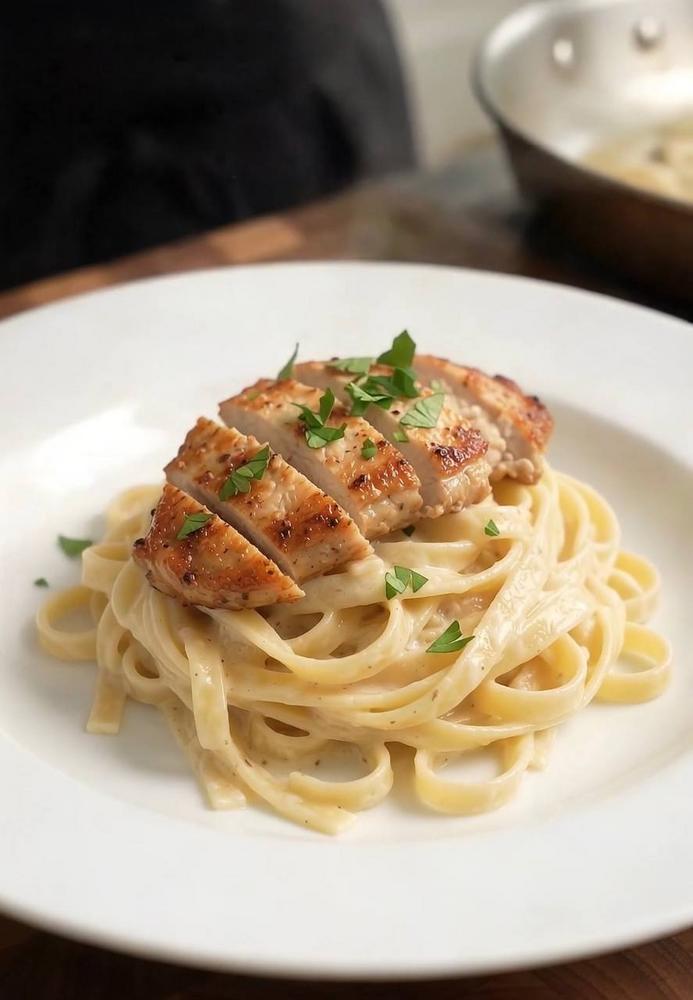
- Serve immediately, garnished with extra freshly grated Parmesan cheese and a sprinkle of fresh chopped parsley.
Cooking Tips and Variations
For the ultimate Creamy Chicken Alfredo, attention to a few key details can make all the difference. Always use freshly grated Parmesan cheese, not the pre-shredded kind that often contains anti-caking agents and doesn’t melt as smoothly. The flavor difference is also immense. When cooking your chicken, ensure your pan is hot enough to get a good sear, creating that delicious golden-brown crust, but don’t overcrowd the pan, which can steam the chicken instead of searing it. Cooking the chicken in batches if necessary guarantees perfectly tender and juicy results. The secret weapon for a truly luscious sauce is reserved pasta water; the starch in it helps emulsify the sauce, making it incredibly smooth and allowing it to cling beautifully to the pasta. Don’t overcook your pasta; al dente is key for texture and preventing it from becoming mushy in the rich sauce. Finally, Alfredo sauce is best enjoyed immediately after preparation, as its texture can change upon standing.
Looking to switch things up? This recipe is incredibly versatile! For a boost of vegetables, consider adding steamed broccoli florets, sautéed mushrooms, or fresh spinach during the last few minutes of cooking the sauce. If you prefer a different protein, shrimp or even thinly sliced steak can be fantastic substitutes for chicken. For a spicier kick, a pinch of red pepper flakes can be added to the sauce along with the garlic. You can also experiment with different types of pasta; while fettuccine is classic, linguine or even penne can work well. For a lighter version, some people opt for a blend of half-and-half and chicken broth instead of all heavy cream, though this will alter the richness significantly. You could also incorporate sun-dried tomatoes for a burst of tangy flavor, or a dash of nutmeg in the sauce for a traditional Italian touch that enhances the creamy notes.
Storage and Reheating
Creamy Chicken Alfredo is best enjoyed fresh, as the sauce can thicken considerably and the pasta can soften upon cooling. However, if you have leftovers, store them in an airtight container in the refrigerator for up to 2-3 days. When reheating, it’s crucial to do so gently to prevent the sauce from separating or becoming oily. The best method is to reheat on the stovetop over low heat, adding a splash of milk, cream, or chicken broth (1-2 tablespoons per serving) to help loosen the sauce and restore its creaminess. Stir frequently until heated through. You can also microwave individual portions on medium power, stirring every minute or so, until warm. Avoid high heat, as this can cause the dairy to curdle. Do not freeze Creamy Chicken Alfredo, as the dairy-based sauce will almost certainly separate and become grainy upon thawing.
Frequently Asked Questions
How do I prevent my Alfredo sauce from separating or becoming grainy?
The key to a smooth Alfredo sauce is using freshly grated Parmesan cheese, adding it gradually to the warm cream mixture, and whisking constantly over low to medium-low heat. Avoid boiling the cream once the cheese is added, as high heat can cause the cheese and cream to separate. If it seems too thick, use a little reserved pasta water to thin it out, as the starch helps to emulsify the sauce.
Can I use pre-cooked chicken for this recipe?
Yes, you can definitely use pre-cooked chicken, such as rotisserie chicken, to save time. Simply shred or dice the cooked chicken and add it to the sauce along with the pasta during the final combining step to warm through. If using pre-cooked chicken, you might miss out on some of the flavorful pan drippings that contribute to the sauce’s depth, but it will still be delicious.
What if my sauce is too thick or too thin?
If your Alfredo sauce is too thick, gradually whisk in small amounts of reserved pasta water (1-2 tablespoons at a time) until it reaches your desired consistency. The starch in the pasta water helps to bind the sauce. If your sauce is too thin, you can try simmering it gently for a few more minutes to allow it to reduce and thicken, or add a little more freshly grated Parmesan cheese, whisking until melted and incorporated.
Is it necessary to use heavy cream, or can I use a lighter alternative?
While heavy cream provides the signature richness and luxurious texture of classic Alfredo sauce, you can experiment with alternatives. Using half-and-half will result in a lighter sauce, but it may not be as thick or as stable as heavy cream, and it has a higher tendency to curdle if overheated. Whole milk is generally too thin and more prone to separation. For the best, most authentic results, heavy cream is recommended.