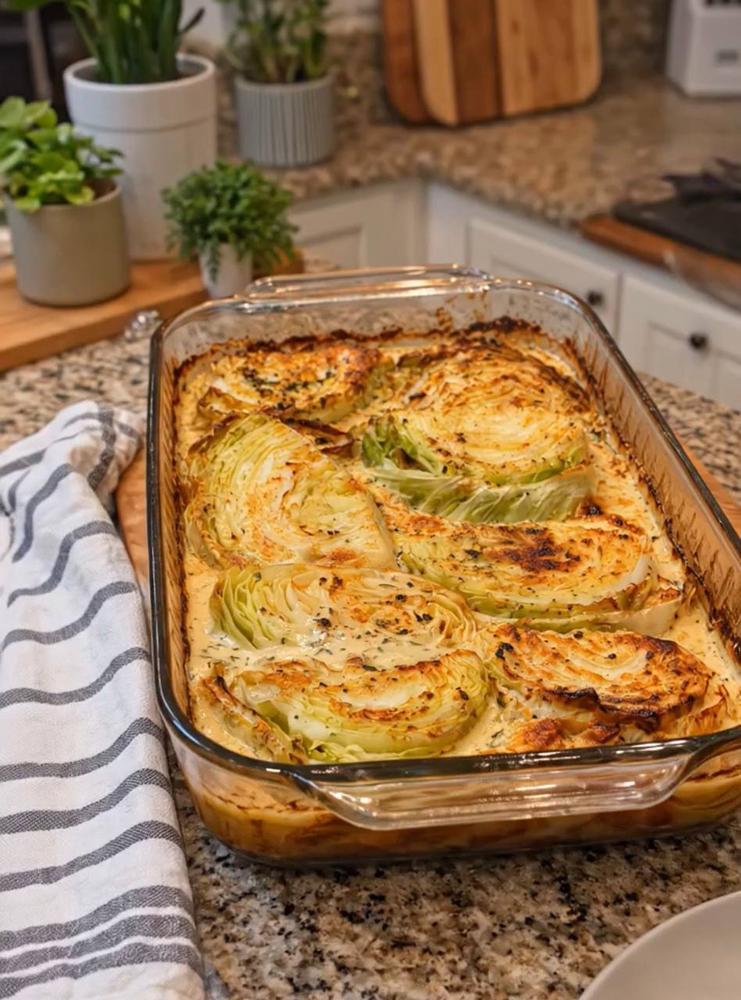
Instructions
- Preheat your oven to 375°F (190°C). Lightly grease a 9×13 inch baking dish or a similar-sized oven-safe dish.
- Prepare the cabbage: Remove any loose or damaged outer leaves from the cabbage. Place the cabbage on a cutting board with the core side down. Carefully cut the cabbage in half through the core, then cut each half into 4-6 wedges, depending on the size of your cabbage and desired portion size. Ensure that a portion of the core remains attached to each wedge to help hold the leaves together during cooking.
- Blanch the cabbage (optional, but recommended for tenderness): Bring a large pot of salted water to a rolling boil. Carefully add the cabbage wedges to the boiling water and blanch for 3-4 minutes, or until the cabbage just begins to soften but is still firm. This step helps ensure the cabbage becomes wonderfully tender in the oven. Remove the cabbage wedges with tongs and drain them thoroughly on a clean kitchen towel or paper towels.
- Sauté the garlic: In a medium saucepan, heat the olive oil over medium heat. Add the minced garlic and cook for about 1 minute, stirring constantly, until fragrant. Be careful not to burn the garlic.
- Make the cream sauce: Pour in the heavy cream and whole milk into the saucepan with the garlic. Stir in 0.5 cup of grated Parmesan cheese, Italian seasoning, salt, black pepper, and the pinch of nutmeg (if using). Bring the mixture to a gentle simmer, stirring occasionally. Reduce the heat to low and let it simmer for 2-3 minutes, allowing the sauce to slightly thicken and the flavors to meld. Taste and adjust seasoning as needed.
- Assemble the dish: Arrange the blanched cabbage wedges in a single layer in the prepared baking dish. They can overlap slightly if necessary, but try to keep them as flat as possible.
- Pour the cream sauce evenly over the cabbage wedges, ensuring that the sauce gets in between the layers and coats all the cabbage.
- Sprinkle the remaining 2 tablespoons of grated Parmesan cheese over the top of the cabbage and sauce.
- Bake to perfection: Place the baking dish in the preheated oven. Bake for 30-40 minutes, or until the cabbage is fork-tender and the sauce is bubbly and golden brown on top. If the top is browning too quickly, you can loosely tent it with foil. For an extra golden and crispy top, you can broil for the last 2-3 minutes, watching carefully to prevent burning.
- Rest and serve: Once baked, remove the dish from the oven and let it rest for 5-10 minutes before serving. This allows the sauce to set slightly. Garnish with fresh chopped parsley, if desired. Serve hot and enjoy!
Cooking Tips and Variations
To achieve the best Creamy Garlic Parmesan Cabbage, start with a fresh, firm head of green cabbage. When cutting the wedges, make sure a piece of the core is attached to each wedge; this keeps the layers intact during baking. The blanching step, while optional, is highly recommended as it jumpstarts the cooking process and ensures the cabbage is wonderfully tender without being mushy. Don’t over-blanch; you want it slightly softened, not fully cooked. For the creamiest sauce, use good quality heavy cream. Freshly grated Parmesan cheese will melt smoother and provide a superior flavor compared to pre-grated varieties. A little pinch of nutmeg in the cream sauce might sound unusual, but it subtly enhances the savory, creamy notes beautifully.
For variations, consider adding cooked, crumbled bacon or pancetta to the sauce for a smoky, salty kick. Sautéed mushrooms can also be a fantastic addition, adding an earthy depth. Feel free to experiment with other cheeses; Gruyere, white cheddar, or even a touch of smoked gouda could add interesting dimensions. If you like a bit of heat, a pinch of red pepper flakes in the sauce would be delicious. For a richer, more herb-forward flavor, consider adding fresh thyme or rosemary sprigs to the sauce as it simmers, removing them before pouring over the cabbage. You can also make this a heartier meal by adding cooked, shredded chicken or ham to the dish before baking. For a slightly lighter version, you can substitute some of the heavy cream with half-and-half, though it will be less rich.
Storage and Reheating
Creamy Garlic Parmesan Cabbage makes for delicious leftovers, though the texture of the cabbage will soften further upon reheating. To store, allow the dish to cool completely to room temperature. Transfer any leftovers to an airtight container and refrigerate promptly. It will keep well in the refrigerator for up to 3-4 days. For optimal freshness and safety, avoid leaving it at room temperature for more than two hours.
When reheating, there are a few options. For individual portions, the microwave works well. Place a serving in a microwave-safe dish, cover loosely, and heat on medium power for 1-2 minutes, stirring halfway through, until heated through. Be careful not to overheat, as this can cause the sauce to separate. For larger portions or to retain some of that lovely baked texture, reheat in the oven. Preheat your oven to 300°F (150°C). Place the leftovers in an oven-safe dish, you may want to add a splash of milk or cream if the sauce seems too thick. Cover loosely with foil to prevent drying out and bake for 15-25 minutes, or until thoroughly heated. Remove the foil for the last few minutes if you want to crisp up the top again. While technically freezable, the texture of the cabbage can become very soft and watery after freezing and thawing, and dairy-based sauces can sometimes separate. Therefore, it’s best enjoyed fresh or within a few days from the refrigerator.
Frequently Asked Questions
Can I use a different type of cabbage for this recipe?
While green cabbage is traditional and works beautifully for its tender yet sturdy texture, you could experiment with savoy cabbage, which has a slightly milder flavor and more crinkled leaves. Red cabbage might work, but it can leach color into the cream sauce, turning it a purplish hue, which some people might find unappealing. Napa cabbage is generally too delicate for this baking method and might become too watery.
How can I make this dish lighter?
To reduce the richness, you can substitute some of the heavy cream with half-and-half or even whole milk, though this will result in a thinner sauce. You could also use a smaller amount of cheese. Keep in mind that altering the fat content will change the overall texture and richness of the dish, so experiment to find your preferred balance.
My sauce seems too thin/thick. What can I do?
If your sauce seems too thin after simmering, you can let it simmer gently for a few more minutes to reduce and thicken. Alternatively, you can whisk in a very small amount of cornstarch (1 teaspoon mixed with 1 tablespoon of cold water) into the simmering sauce and stir until it thickens. If it’s too thick, simply whisk in a splash more milk or cream until it reaches your desired consistency before pouring it over the cabbage.
Can I prepare this dish ahead of time?
You can certainly do some prep work in advance. You can cut and blanch the cabbage wedges a day ahead and store them in an airtight container in the refrigerator. The cream sauce can also be made a day in advance and stored in the refrigerator; you might need to gently reheat and whisk it before pouring over the cabbage. Assemble the entire dish and bake just before serving for the best results, as baking it from chilled will require a longer cooking time and may affect the final texture slightly.