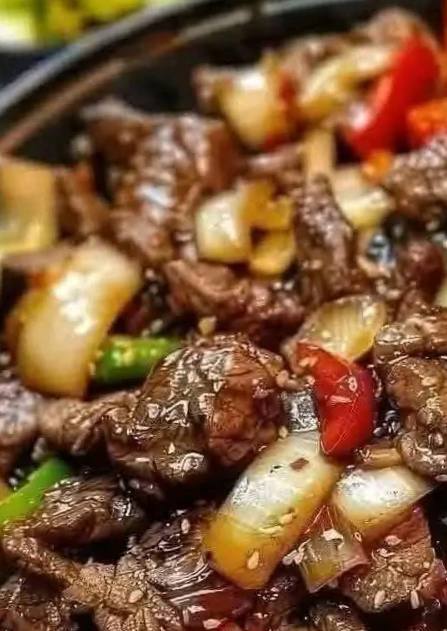
Instructions
- Prepare the Beef: Place the thinly sliced beef in a medium bowl. Add 1 tablespoon soy sauce, 1 teaspoon cornstarch, and 1 tablespoon vegetable oil. Toss to coat evenly. Let marinate at room temperature for at least 15 minutes, or refrigerate for up to 30 minutes. This quick marinade helps tenderize the beef and gives it a head start on flavor.
- Prepare the Sauce: In a small bowl, whisk together the beef broth, 1/4 cup soy sauce, oyster sauce (if using), honey or brown sugar, and sesame oil. In a separate very small bowl, whisk together 1 tablespoon cornstarch and 2 tablespoons cold water until smooth to create a slurry. Set both aside.
- Heat the Wok or Skillet: Heat 2 tablespoons of vegetable oil in a large wok or a large, heavy-bottomed skillet over high heat until shimmering and almost smoking. This high heat is crucial for achieving a good sear on the beef and crisp-tender vegetables.
- Cook the Beef: Add half of the marinated beef to the hot wok in a single layer. Do not overcrowd the pan, as this will steam the beef instead of searing it. Cook for 1-2 minutes per side, until browned and cooked through. Remove the cooked beef from the wok and set aside on a plate. Repeat with the remaining beef, adding a little more oil if needed.
- Sauté Aromatics and Vegetables: Reduce the heat to medium-high. Add the chopped onion and red bell pepper to the wok. Stir-fry for 2-3 minutes until they start to soften slightly but still have a bite. Add the green beans and continue to stir-fry for another 2-3 minutes, until bright green and crisp-tender.
- Add Garlic and Ginger: Push the vegetables to one side of the wok. Add the minced garlic and grated ginger to the empty space. Stir-fry for about 30 seconds until fragrant, being careful not to burn them.
- Combine and Sauce: Return the cooked beef to the wok with the vegetables, tossing to combine everything. Give the prepared sauce mixture a quick whisk, then pour it over the beef and vegetables. Bring to a simmer.
- Thicken the Sauce: Stir the cornstarch slurry once more, then slowly pour it into the simmering sauce while stirring constantly. Continue to stir until the sauce thickens and becomes glossy, usually within 1-2 minutes.
- Serve: Remove the stir-fry from the heat. Taste and adjust seasonings if necessary. Garnish generously with toasted sesame seeds. Serve immediately over hot cooked rice or noodles.
Cooking Tips and Variations
Achieving a truly outstanding stir-fry relies on a few key techniques and knowing how to customize it to your taste. Here are some tips and variations to make your Easy Beef Stir-Fry the best it can be:
Beef Selection & Preparation:
- Cut Matters: Flank steak, sirloin, and top round are excellent choices for stir-fries because they are relatively lean and become tender when sliced thinly and cooked quickly. If you want a more luxurious option, beef tenderloin works beautifully.
- Slice Against the Grain: This is perhaps the most crucial tip for tender beef. Look at the muscle fibers in your steak; you want to cut perpendicular to these lines. This shortens the fibers, making the beef much more tender and less chewy.
- Thin Slices: Aim for slices about 1/8 to 1/4 inch thick. Thinner slices cook faster and absorb the marinade better. For easier slicing, partially freeze the beef for 20-30 minutes before cutting.
- The Marinade is Key: Even a short marinade with cornstarch, soy sauce, and oil works wonders. The cornstarch creates a protective coating that keeps the beef moist and helps it brown, while the soy sauce adds flavor and the oil helps conduct heat.
Cooking Technique:
- High Heat is Non-Negotiable: A stir-fry is meant to be cooked quickly at very high heat. This creates a beautiful sear on the beef and keeps the vegetables crisp-tender. If your pan isn’t hot enough, ingredients will steam instead of fry, resulting in a watery, less flavorful dish.
- Don’t Overcrowd the Pan: This is another common mistake. When you add too much food to the wok, the temperature drops significantly. Cook the beef in batches, and if your skillet is smaller, consider cooking vegetables in batches too. Give everything space to sear and caramelize.
- Wok vs. Skillet: While a traditional wok is ideal for stir-frying due to its sloped sides and even heat distribution, a large, heavy-bottomed skillet (cast iron or stainless steel) will work perfectly well. Just ensure it can handle high heat.
- Add Vegetables in Stages: Different vegetables have different cooking times. Add harder vegetables (like carrots or broccoli florets) first, then medium-firm ones (onions, bell peppers), and finally quick-cooking ones (green beans, snow peas, leafy greens).
Sauce Customization:
- Adjust Sweetness: The amount of honey or brown sugar can be adjusted to your preference. If you like a sweeter stir-fry, add a bit more. For a less sweet, more savory profile, reduce it.
- Spice It Up: For a touch of heat, add a pinch of red pepper flakes to the sauce, or a few slices of fresh chili pepper along with the garlic and ginger. A dash of sriracha or chili garlic sauce can also be stirred in at the end.
- Umami Boost: Oyster sauce provides fantastic depth and umami. If you don’t have it, a small amount of fish sauce or a dash of mushroom powder can offer a similar savory punch. For a vegetarian version, use a vegetarian oyster sauce or simply omit it.
- Thickening: The cornstarch slurry is key to a glossy, clingy sauce. Make sure to whisk the slurry again right before adding it to the simmering sauce, as cornstarch can settle at the bottom. Add it slowly and stir until you reach your desired consistency.
Vegetable Variations:
- Broccoli: Cut into small florets. Add after onions and bell peppers.
- Carrots: Thinly slice or julienne. Add with onions and bell peppers.
- Mushrooms: Sliced cremini or shiitake mushrooms are great. Add with onions and bell peppers.
- Snow Peas or Snap Peas: Add towards the end of the vegetable cooking, as they cook very quickly.
- Bok Choy or Spinach: Add at the very end, just before the sauce, and stir-fry until just wilted.
- Water Chestnuts or Bamboo Shoots: For added crunch, these can be added with the sauce.
Garnish & Serving:
- Toasted Sesame Seeds: Don’t skip these! They add a wonderful nutty flavor and visual appeal.
- Scallions: Sliced green onions (scallions) make a fresh, colorful garnish.
- Serving Suggestions: While traditionally served with steamed white rice, this stir-fry is also delicious over brown rice, cauliflower rice for a low-carb option, or even tossed with cooked noodles.
Storage and Reheating
This Easy Beef Stir-Fry makes for fantastic leftovers, often tasting even better the next day as the flavors have more time to meld. Proper storage and reheating will ensure your meal remains delicious and safe to eat.
Storage:
- Cool Completely: Before storing, allow the stir-fry to cool down to room temperature (within 2 hours of cooking). This prevents condensation from forming in the container, which can lead to sogginess and bacterial growth.
- Airtight Container: Transfer the cooled stir-fry to an airtight food storage container. This minimizes exposure to air, which helps maintain freshness and prevents odors from spreading in your refrigerator.
- Refrigeration: Store the stir-fry in the refrigerator for up to 3-4 days.
- Freezing (Optional): While stir-fries are best enjoyed fresh or from the fridge, you can freeze leftovers for longer storage. Place the cooled stir-fry in a freezer-safe airtight container or heavy-duty freezer bag. It can be frozen for up to 2-3 months. Note that the texture of the vegetables (especially bell peppers and onions) might become slightly softer after freezing and thawing, but the flavor will still be good.
Reheating:
- Microwave: This is the quickest and easiest method. Place a single serving of stir-fry in a microwave-safe dish. Add a tablespoon or two of water or beef broth, cover loosely with a lid or microwave-safe plastic wrap (vented), and microwave on high for 1-2 minutes, stirring halfway through, until heated through. The added liquid helps create steam and prevents the dish from drying out.
- Stovetop: For best results, especially if you want to revive some of the crispiness, reheat on the stovetop. Heat a non-stick skillet or wok over medium heat. Add a teaspoon of oil (or water/broth) if the stir-fry looks dry. Add the leftover stir-fry and toss frequently for 3-5 minutes, until thoroughly heated. If reheating from frozen, it’s best to thaw it in the refrigerator overnight first, then reheat on the stovetop or in the microwave.
- Oven (for larger batches): If you have a large amount of stir-fry to reheat, you can use the oven. Preheat your oven to 300°F (150°C). Spread the stir-fry in an oven-safe dish, add a splash of water or broth, and cover with foil. Heat for 15-20 minutes, or until warmed through. This method is less common for stir-fry but works well for bulk reheating.
Tips for Reheating:
- Add Moisture: Stir-fries can sometimes dry out when reheated. Adding a little water, broth, or even a touch more soy sauce or sesame oil can help revive the sauce and keep the beef tender.
- Avoid Overheating: Overheating can make the beef tough and the vegetables mushy. Heat just until warmed through.
- Serve with Fresh Rice: While you can reheat leftover rice, serving your reheated stir-fry with a fresh batch of steamed rice often yields the best overall texture and flavor experience.
Frequently Asked Questions
What kind of beef is best for stir-fry?
For the best results in stir-fry, lean cuts of beef that cook quickly are ideal. Flank steak, sirloin, top round, and even beef tenderloin are excellent choices. The key is to slice them very thinly against the grain to ensure tenderness. Avoiding fattier cuts that require longer cooking times will prevent your stir-fry from becoming greasy or tough.
Can I make this stir-fry vegetarian or vegan?
Absolutely! This recipe is incredibly versatile. To make it vegetarian, simply replace the beef with firm tofu (pressed and cubed), tempeh, or a variety of mushrooms (like shiitake or oyster mushrooms). For a vegan version, also ensure your oyster sauce is a vegetarian mushroom-based oyster sauce, and swap any honey for maple syrup or brown sugar. The sauce base and vegetables remain delicious, offering a flavorful plant-based meal.
How can I prevent my stir-fry from being watery?
A watery stir-fry is a common issue, but easily preventable. The main culprits are not enough heat and overcrowding the pan. Ensure your wok or skillet is screaming hot before adding ingredients. Cook the beef in batches to allow it to sear and brown, rather than steam. Similarly, don’t overload the pan with vegetables; cook them in batches if necessary. The high heat evaporates moisture quickly, and the cornstarch slurry in the sauce is crucial for thickening it to a glossy consistency.
What are some other vegetable combinations I can use?
The beauty of stir-fry is its flexibility with vegetables. Feel free to experiment with whatever you have on hand or what’s in season. Great additions include broccoli florets, sliced carrots, snow peas, snap peas, sliced mushrooms (cremini, shiitake), baby corn, bamboo shoots, and even leafy greens like bok choy or spinach (add these at the very end as they wilt quickly). Just remember to cut vegetables into similar sizes for even cooking and add harder vegetables before softer ones.