Instructions
Step 1: Marinate the Chicken
- Pat the chicken tenderloins dry with paper towels.
- In a large bowl or a resealable plastic bag, combine the buttermilk and hot sauce (if using).
- Add the chicken tenders to the buttermilk mixture, ensuring they are fully submerged.
- Cover the bowl or seal the bag and refrigerate for at least 30 minutes, or preferably 2-4 hours. For maximum tenderness and flavor, you can marinate overnight.
Step 2: Prepare the Breading Mixture
- In a wide, shallow dish or pie plate, whisk together the all-purpose flour, cornstarch, smoked paprika, garlic powder, onion powder, dried oregano, black pepper, and 1 teaspoon of salt. Mix thoroughly until all ingredients are well combined.
Step 3: Bread the Chicken
- Remove the chicken tenders from the buttermilk mixture, allowing any excess buttermilk to drip off, but do not pat them dry. The wetness is crucial for the breading to adhere.
- Working with one tender at a time, dredge it in the flour mixture, pressing firmly to ensure the coating sticks to all surfaces.
- Carefully lift the tender and gently shake off any excess flour.
- For an extra-crispy, craggy coating, dip the flour-coated tender back into the buttermilk mixture very briefly, just enough to moisten the surface.
- Immediately return the tender to the flour mixture for a second coating, pressing firmly again to build up a thick, textured crust.
- Place the breaded tenders on a wire rack set over a baking sheet. Repeat with the remaining chicken tenders.
- Allow the breaded tenders to rest on the wire rack for at least 15-20 minutes at room temperature. This resting period helps the breading adhere better and prevents it from falling off during frying.
Step 4: Prepare the Creamy Dipping Sauce
- While the chicken is resting, prepare the dipping sauce. In a medium bowl, combine the mayonnaise, sour cream (or Greek yogurt), chopped chives/parsley, Dijon mustard, apple cider vinegar (or lemon juice), garlic powder, onion powder, black pepper, and cayenne pepper (if using).
- Whisk all ingredients together until smooth and well combined.
- Taste and adjust seasoning with salt as needed.
- Cover and refrigerate the sauce until ready to serve, allowing the flavors to meld.
Step 5: Fry the Chicken Tenders
- Pour enough vegetable, canola, or peanut oil into a heavy-bottomed pot or Dutch oven to reach a depth of about 2-3 inches.
- Heat the oil over medium-high heat until it reaches 350-375°F (175-190°C). Use a candy or deep-fry thermometer to monitor the temperature; maintaining the correct oil temperature is key to crispiness and even cooking.
- Carefully place 3-4 breaded chicken tenders into the hot oil, ensuring not to overcrowd the pot. Overcrowding will lower the oil temperature and result in soggy chicken.
- Fry the tenders for 4-6 minutes, flipping them occasionally, until they are golden brown, crispy, and cooked through. The internal temperature should reach 165°F (74°C).
- Using tongs, carefully remove the cooked tenders from the oil and place them on a clean wire rack set over a baking sheet to drain excess oil. Immediately sprinkle lightly with additional salt to taste.
- Repeat the frying process with the remaining chicken tenders, allowing the oil to come back up to temperature between batches.
Step 6: Serve
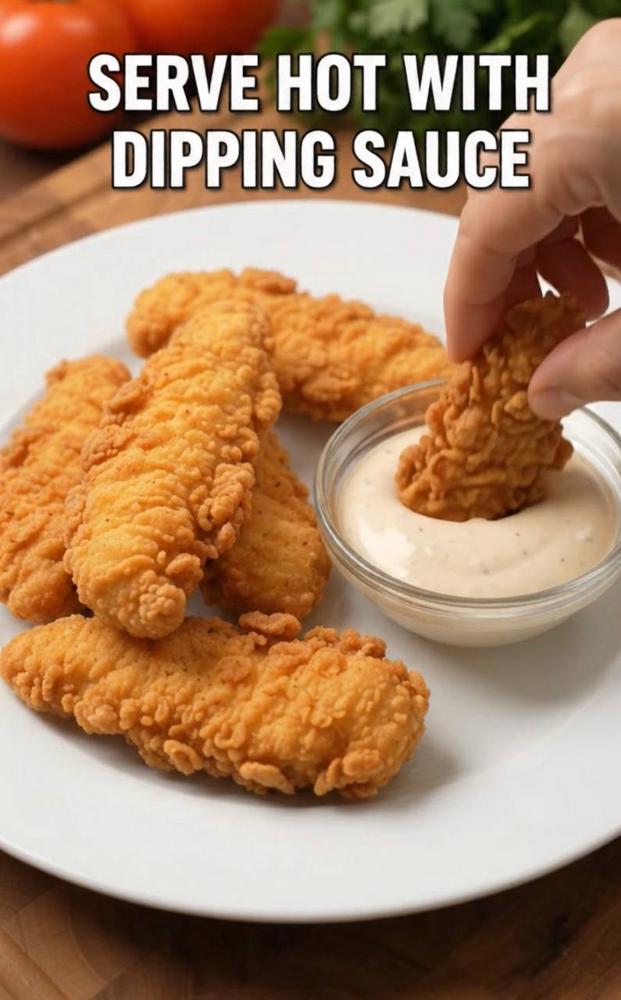
- Serve the extra-crispy chicken tenders hot, alongside the chilled creamy dipping sauce.
Cooking Tips and Variations
Tips for Best Results:
- Buttermilk is Key: Don’t skip the buttermilk soak! It tenderizes the chicken and creates the perfect tacky surface for the breading to stick, leading to a much crispier crust.
- The Double Dredge: Our recipe uses a double dredge method (wet-dry-wet-dry). This is the secret to those incredibly craggy, extra-crispy tenders. The first dip in flour and then back into buttermilk before a second flour coating builds up layers of crunch.
- Cornstarch for Ultimate Crisp: Adding cornstarch to the flour mixture inhibits gluten development and helps create a lighter, crispier coating that stays crunchy longer.
- Rest the Breading: After breading, letting the tenders rest for 15-20 minutes allows the moisture from the chicken and buttermilk to fully hydrate the flour mixture, creating a “glue” that prevents the breading from falling off during cooking.
- Maintain Oil Temperature: This is perhaps the most critical tip for frying. If the oil is too cool, the chicken will absorb too much oil and become greasy. If it’s too hot, the outside will burn before the inside cooks. A thermometer is your best friend here.
- Don’t Overcrowd the Pot: Fry in small batches to keep the oil temperature stable and ensure each tender has enough space to cook evenly and get properly crispy.
- Drain on a Wire Rack: Never drain fried chicken on paper towels directly, as this will trap steam and make the bottom soggy. A wire rack allows air circulation, keeping them crispy.
- Season Immediately: Sprinkle with a little extra salt right when they come out of the oil. The hot oil helps the salt adhere and enhances the flavor.
Variations:
- Spicy Tenders: Increase the hot sauce in the buttermilk marinade and add a teaspoon of cayenne pepper to the flour mixture for a fiery kick. You can also add more cayenne or a dash of your favorite hot sauce to the dipping sauce.
- Herby Tenders: Incorporate more dried herbs like thyme, rosemary, or sage into the flour mixture for a more aromatic flavor profile.
- Lemon Pepper Tenders: Add 2 teaspoons of lemon pepper seasoning to the flour mixture and a squeeze of fresh lemon juice to the buttermilk marinade.
- Garlic Parmesan Tenders: Mix 1/4 cup of grated Parmesan cheese into the flour mixture for a savory, cheesy crust.
- Air Fryer Method: For a healthier alternative, preheat your air fryer to 375°F (190°C). Lightly spray the breaded tenders with cooking spray (this is crucial for crispiness). Air fry in a single layer, without overcrowding, for 10-15 minutes, flipping halfway through, until golden brown and cooked through. You may need to work in batches.
- Baked Method: Preheat oven to 400°F (200°C). Place the breaded tenders on a wire rack set over a baking sheet. Lightly spray the tenders with cooking spray or drizzle with a little oil. Bake for 20-25 minutes, flipping halfway, until golden brown and cooked through. For extra crispiness, you can broil for the last 1-2 minutes, watching carefully to prevent burning.
- Dipping Sauce Variations:
- Honey Mustard: Combine mayonnaise, Dijon mustard, honey, and a splash of apple cider vinegar.
- Ranch: Use a packet of ranch seasoning mixed with sour cream and mayonnaise.
- BBQ Ranch: Mix your creamy dipping sauce base with your favorite BBQ sauce.
- Spicy Mayo: Add sriracha or chili garlic sauce to mayonnaise for a simple, spicy dip.
Storage and Reheating
Storage:
Once cooled to room temperature, store leftover chicken tenders in an airtight container in the refrigerator for up to 3-4 days. Store the creamy dipping sauce separately in an airtight container in the refrigerator for up to 5-7 days.
Reheating:
To restore their crispiness, avoid reheating chicken tenders in the microwave, as this will make them soggy.
- Oven: Preheat your oven to 375°F (190°C). Place the tenders on a wire rack set over a baking sheet and heat for 10-15 minutes, or until heated through and crispy.
- Air Fryer: Preheat your air fryer to 350°F (175°C). Place the tenders in a single layer and air fry for 5-8 minutes, or until hot and crispy.
- Skillet: Heat a small amount of oil in a skillet over medium heat. Add the tenders and cook for 2-3 minutes per side, until heated through and re-crisped.
Frequently Asked Questions
Can I use chicken breast instead of tenderloins?
Absolutely! If using chicken breast, slice it into 1-inch thick strips to mimic the tenderloin shape and ensure even cooking. The cooking time might be slightly longer for thicker pieces.
Why is my chicken not getting crispy?
The most common reasons for lack of crispiness are oil temperature being too low, overcrowding the pot, or not allowing the breading to rest before frying. Ensure your oil is consistently between 350-375°F (175-190°C), fry in small batches, and give the breaded chicken at least 15-20 minutes to rest.
Can I prepare the chicken tenders ahead of time?
You can marinate the chicken in buttermilk overnight. You can also bread the chicken tenders up to 1-2 hours in advance and keep them refrigerated on a wire rack, uncovered, to prevent the breading from getting soggy. For best results, fry them fresh right before serving.
What kind of oil is best for deep frying?
For deep frying, choose oils with a high smoke point and neutral flavor, such as vegetable oil, canola oil, peanut oil, or sunflower oil. These oils can withstand the high temperatures required for frying without burning or imparting off-flavors.