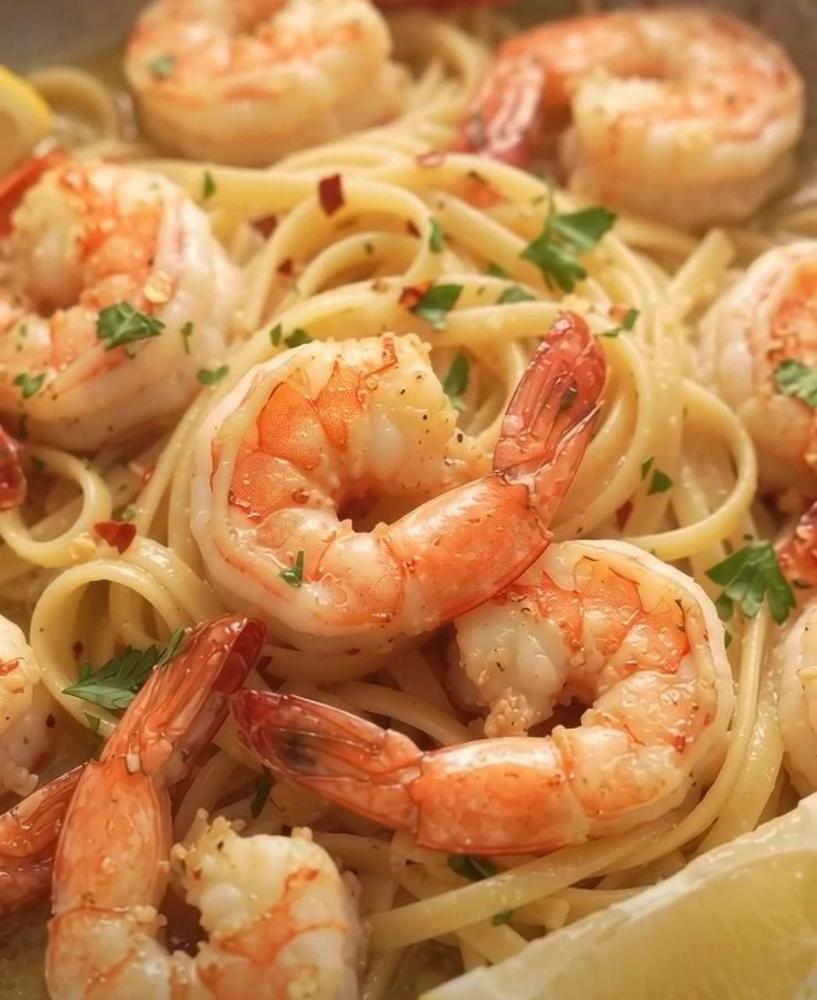
Instructions
- Bring a large pot of salted water to a rolling boil. Add the pasta and cook according to package directions until al dente. Before draining, reserve 1 cup of the starchy pasta water. Drain the pasta and set aside.
- While the pasta is cooking, pat the shrimp dry with paper towels. Season the shrimp with 1/2 teaspoon salt and 1/4 teaspoon black pepper.
- In a large skillet or Dutch oven, melt 2 tablespoons of butter with 1 tablespoon of olive oil over medium-high heat. Once shimmering, add the seasoned shrimp in a single layer. Cook for 1-2 minutes per side, until pink and opaque. Be careful not to overcrowd the pan; cook in batches if necessary. Remove the cooked shrimp from the skillet and set aside on a plate.
- Reduce the heat to medium. Add the remaining 4 tablespoons of butter and 1 tablespoon of olive oil to the same skillet. Once the butter is melted, add the minced garlic and red pepper flakes. Sauté for about 1 minute, stirring constantly, until the garlic is fragrant but not browned.
- Pour in the white wine (or broth) and bring to a simmer, scraping up any browned bits from the bottom of the pan with a wooden spoon. Let it simmer for 2-3 minutes, allowing the alcohol to cook off and the sauce to reduce slightly.
- Stir in the fresh lemon juice and chopped parsley. Season the sauce with salt and pepper to taste.
- Add the cooked pasta to the skillet with the sauce. Toss to coat evenly. Add 1/4 cup of the reserved pasta water and toss again; the starchy water will help the sauce emulsify and cling to the pasta. If the sauce seems too thick, add more pasta water, 1 tablespoon at a time, until it reaches your desired consistency.
- Return the cooked shrimp to the skillet with the pasta and sauce. Gently toss everything together for about 30 seconds, just long enough to heat the shrimp through.
- Serve immediately, garnished with extra fresh parsley and lemon wedges on the side.
Cooking Tips and Variations
Achieving perfect garlic butter shrimp scampi is all about timing and quality ingredients. Here are some key tips and exciting variations to make your dish truly shine.
Don’t Overcook the Shrimp: The Golden Rule
This is perhaps the most crucial tip for any shrimp dish. Shrimp cook incredibly quickly, and overcooked shrimp become rubbery and tough, losing their delicate flavor and texture. Cook them just until they turn pink and opaque, about 1-2 minutes per side, depending on their size. Remove them from the pan as soon as they’re done, even if you plan to add them back to the sauce later. They’ll warm through perfectly without overcooking.
Pasta Water: The Secret to a Silky Sauce
Never underestimate the power of reserved pasta water. The starchy water helps to emulsify the sauce, creating a silky, glossy texture that perfectly coats every strand of pasta. It also helps to bind the sauce to the pasta, preventing it from becoming watery or separating. Start with 1/4 cup and add more, a tablespoon at a time, until your sauce reaches the desired consistency. It’s a game-changer for any pasta dish.
Ingredient Quality: Freshness Makes a Difference
With a dish as simple as shrimp scampi, the quality of your ingredients truly shines through. Opt for fresh, high-quality shrimp whenever possible. If using frozen, thaw them completely and pat them very dry before cooking to ensure a good sear. Use fresh garlic, not pre-minced, for the best flavor. Freshly squeezed lemon juice is also essential for that bright, zesty finish. And of course, fresh parsley adds a vibrant herbaceous note that dried simply cannot replicate.
Fresh Garlic vs. Jarred Garlic
While jarred minced garlic offers convenience, fresh garlic cloves minced right before cooking will provide a far superior, more pungent, and aromatic flavor. The difference is truly noticeable in a garlic-forward dish like scampi.
Enhance with Lemon Zest
For an even brighter and more aromatic lemon flavor, add 1/2 teaspoon of finely grated lemon zest to the sauce along with the lemon juice. The zest contains essential oils that impart a more intense citrus perfume without adding extra acidity.
Wine vs. Broth: Choose Your Base
Dry white wine, like Pinot Grigio or Sauvignon Blanc, adds a wonderful depth and acidity to the sauce. The alcohol cooks off, leaving behind a complex flavor. However, if you prefer to avoid alcohol, high-quality chicken or vegetable broth makes an excellent substitute, providing a savory base for the sauce.
Variations to Explore
- Add Cherry Tomatoes: Halve a cup of cherry tomatoes and add them to the skillet with the garlic. They’ll burst and release their juices, adding a lovely sweetness and acidity to the sauce.
- Include Spinach: Wilt a few handfuls of fresh spinach into the sauce just before adding the shrimp and pasta for a boost of greens and nutrients.
- Different Herbs: While parsley is classic, you can experiment with other fresh herbs like basil or oregano for a different flavor profile.
- Creamy Scampi: For a richer sauce, stir in a splash of heavy cream (about 1/4 cup) after adding the lemon juice.
- Spice it Up: If you love heat, don’t shy away from adding more red pepper flakes, or even a pinch of cayenne pepper, to the sauce.
Serving Suggestions
Shrimp scampi is a meal in itself, but it pairs beautifully with a few simple accompaniments:
- Crusty Bread: A must-have for soaking up every last drop of that amazing garlic butter sauce. A good baguette or ciabatta is perfect.
- Simple Side Salad: A light, refreshing green salad with a vinaigrette dressing provides a nice contrast to the richness of the scampi.
- Roasted Asparagus or Broccoli: For a complete and balanced meal, serve alongside some simply roasted or steamed vegetables.
Storage and Reheating
Garlic butter shrimp scampi is best enjoyed fresh, immediately after preparation, as the shrimp can become rubbery and the pasta can soften too much upon reheating. However, if you have leftovers, here’s how to handle them:
Storage
Allow any leftover scampi to cool completely before storing. Transfer it to an airtight container and refrigerate within 2 hours of cooking. It will keep well in the refrigerator for up to 1-2 days.
Reheating
Reheating scampi can be a bit tricky to maintain the texture of the shrimp and pasta, but it’s certainly doable. The key is to reheat gently and quickly.
- Stovetop Method (Recommended): This is the best method for preserving quality.
- Place the leftover scampi in a non-stick skillet over medium-low heat.
- Add a splash of water, chicken broth, or even a tiny bit of white wine (1-2 tablespoons) to help rehydrate the sauce and prevent drying.
- Cover the skillet and gently heat, stirring occasionally, until the scampi is warmed through. This should take about 3-5 minutes. Be careful not to overheat, as this will make the shrimp tough.
- Microwave Method (Use with caution): While convenient, the microwave can easily overcook shrimp and make pasta mushy.
- Place a single serving of scampi in a microwave-safe dish.
- Add a tiny splash of water or broth (about 1 teaspoon).
- Cover the dish loosely and microwave on 50% power for 1-2 minutes, stirring halfway through, until just warmed. Avoid high power, as it’s more likely to ruin the texture.
Do not freeze leftover shrimp scampi, as the texture of both the shrimp and pasta will significantly degrade upon thawing and reheating.
Frequently Asked Questions
What kind of shrimp should I use for scampi?
For the best results, use large or jumbo shrimp (21/25 count or 16/20 count per pound), peeled and deveined. You can leave the tails on for presentation or remove them for easier eating. Fresh shrimp are ideal, but high-quality frozen shrimp, properly thawed and patted dry, work perfectly well too.
Can I make garlic butter shrimp scampi without wine?
Absolutely! If you prefer not to use alcohol, simply substitute the dry white wine with an equal amount of chicken broth or vegetable broth. The dish will still be incredibly flavorful and delicious.
Why is my shrimp scampi sauce watery?
A watery sauce can be caused by a few factors. It might be that you didn’t reduce the wine/broth enough, or you added too much reserved pasta water. Ensure you’re using a good quality butter and olive oil, and remember that the starch from the pasta water is key to emulsifying the sauce. If it’s still too thin, you can simmer it gently for a minute or two longer to reduce, or add a tiny bit more grated Parmesan cheese if using (though not traditional, it can help thicken).
What’s the best way to prevent the shrimp from becoming rubbery?
The key to tender shrimp is quick cooking. Cook them over medium-high heat for only 1-2 minutes per side, just until they turn pink and opaque. They will continue to cook slightly from residual heat, and they will warm through again when tossed with the hot pasta and sauce. It’s better to slightly undercook them initially than to overcook them.