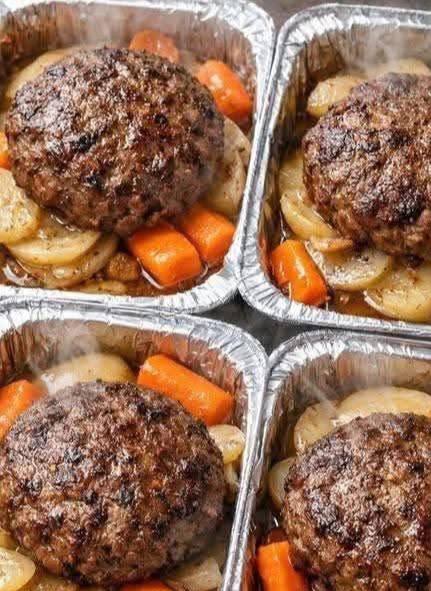
Instructions
- Preheat your oven to 400°F (200°C) or prepare your grill for medium-high heat.
- In a large bowl, combine the melted butter, minced garlic, chopped parsley, dried oregano, salt, black pepper, and red pepper flakes (if using). Stir well to combine.
- Add the cubed steak, quartered potatoes, and sliced carrots to the bowl with the garlic butter mixture. Toss gently to ensure all ingredients are evenly coated.
- Lay out four sheets of heavy-duty aluminum foil on a clean surface. Divide the steak and vegetable mixture evenly among the four foil sheets.
- To assemble each packet, bring the two longer sides of the foil together over the food and fold them down tightly several times to create a secure seal.
- Then, fold in the shorter ends of the foil several times to seal the packet completely. Ensure there are no gaps for steam or juices to escape. This is crucial for even cooking and preventing leaks.
- If cooking in the oven, place the sealed foil packets directly on a baking sheet. If grilling, place them directly on the grill grates.
- Cook for 20-30 minutes, or until the steak is cooked to your desired doneness and the potatoes are tender. Cooking times may vary depending on the thickness of your steak and vegetables, and the heat of your oven or grill. For medium-rare steak, aim for around 20-25 minutes. For well-done, closer to 30 minutes.
- Carefully remove the packets from the oven or grill. Be cautious when opening, as hot steam will escape.
- Open the packets, garnish with extra fresh parsley if desired, and serve immediately.
Cooking Tips and Variations
To ensure your Garlic Butter Steak and Potato Foil Packets turn out perfectly every time, here are some essential tips. First and foremost, always use heavy-duty aluminum foil. This is your best defense against tearing and leaking, which can lead to dry food and a messy cleanup. If you only have regular foil, simply double up each sheet to provide extra strength and prevent punctures. When sealing the packets, make sure to create a very tight seal. This traps the steam and juices inside, which is key to tender meat and perfectly cooked vegetables. Fold the edges over several times, crimping them firmly to secure.
For the best results, try to cut your steak and vegetables into roughly uniform sizes. This ensures everything cooks evenly at the same rate. If your potatoes are much larger than your steak pieces, they might need a head start. You can par-boil the potatoes for 5-7 minutes before adding them to the foil packets to ensure they become tender alongside the steak. Don’t overcrowd the packets; give the ingredients a little breathing room. Overfilling can lead to uneven cooking and can make sealing difficult.
This recipe is incredibly versatile, allowing for endless variations to suit your taste or what you have on hand. For vegetables, feel free to swap or add in bell peppers (any color), sliced zucchini, sliced yellow onion, green beans, or even broccoli florets. Just be mindful of the cooking times; softer vegetables like zucchini will cook faster than denser ones like carrots. For a different flavor profile, consider adding a splash of beef broth or red wine to each packet before sealing for extra moisture and depth. A squeeze of lemon juice after opening the packets can also brighten up the flavors.
If you’re looking to modify this for dietary restrictions, consider a few tweaks. For a lower-carb option, swap out some of the potatoes for additional non-starchy vegetables like mushrooms, green beans, or extra bell peppers. Ensure your selected steak cut is lean if you’re watching fat intake. This recipe is naturally gluten-free, but always double-check any pre-made spices or broths you might add. Experiment with different herbs; fresh rosemary or thyme would be fantastic additions alongside or in place of parsley and oregano.
Storage and Reheating
Garlic Butter Steak and Potato Foil Packets make for excellent leftovers, as the flavors often meld and deepen overnight. To store any uneaten portions, allow the contents of the foil packets to cool completely before transferring them to an airtight container. If you have any individual sealed packets remaining, you can leave them in their foil, but transferring to a container is usually better for preventing any leakage in your fridge. Store the leftovers in the refrigerator for up to 3-4 days.
When it comes to reheating, you have a few good options to maintain the quality of the meal. The best method for reheating these foil packet contents is in the oven. Preheat your oven to 350°F (175°C). Transfer the steak and potatoes to an oven-safe dish, cover it with foil, and bake for 15-20 minutes, or until heated through. The foil covering helps to retain moisture and prevent the steak from drying out.
Alternatively, you can gently reheat the leftovers in a skillet on the stovetop. Add a tablespoon or two of water or beef broth to the skillet, along with the steak and potatoes, cover, and cook over medium-low heat until warmed through, stirring occasionally. This method also helps to reintroduce moisture. The microwave is another option for quick reheating, though it can sometimes make the steak a bit tougher. If using a microwave, heat in short intervals (1-2 minutes) and stir in between to ensure even heating. For best results, add a splash of water or broth and cover the dish loosely with a microwave-safe lid or plastic wrap to help steam and keep the food from drying out.
Frequently Asked Questions
Can I prepare these foil packets ahead of time?
Yes, you absolutely can! You can chop all your vegetables and cut your steak the day before. You can even mix the garlic butter sauce. For best results, wait to combine the raw steak and vegetables with the sauce and assemble the packets no more than a few hours before cooking. This prevents the vegetables from becoming too soft and the steak from potentially marinating too long, which can alter its texture. Keep the prepared packets refrigerated until you’re ready to cook.
What kind of steak is best for foil packets?
For foil packets, you want a cut of steak that will remain tender when cooked in a moist environment. Sirloin, top round, or even flank steak cut into 1-inch cubes work wonderfully. These cuts are flavorful and become incredibly tender when steamed within the foil packet. Avoid very tough cuts or extremely lean cuts that might dry out faster, unless you’re very careful with cooking times.
How do I know if the potatoes are cooked through without opening the packet early?
To check for doneness without fully opening the packet, you can gently press on the packet with tongs or a heat-resistant glove. If the potatoes feel soft and yielding, they are likely cooked. For a more precise check, carefully open one packet after the recommended minimum cooking time (around 20 minutes) and test a potato piece with a fork. If it’s still firm, reseal the packet and cook for another 5-10 minutes.
Can I cook these over a campfire?
Absolutely! Foil packets are a camping staple. If cooking over a campfire, place the packets directly on hot coals (not directly in flames) or on a grill grate over the coals. The cooking time will vary significantly depending on the heat of your fire, so monitor them closely. Turn them occasionally to ensure even cooking. It’s often helpful to place a few coals on top of the packets for more even heat distribution. Expect cooking times to be anywhere from 20-40 minutes, depending on the fire’s intensity.