Instructions
- Heat the olive oil in a large Dutch oven or heavy-bottomed pot over medium heat. Add the chopped onion and cook, stirring occasionally, until softened and translucent, about 5-7 minutes.
- Add the minced garlic and grated ginger to the pot. Cook for another 1-2 minutes, stirring constantly, until fragrant. Be careful not to burn the garlic.
- Stir in the ground turmeric, cumin, coriander, and cayenne pepper (if using). Cook for 1 minute, stirring constantly, to toast the spices and release their aromas. This step is crucial for developing deep flavor.
- Add the rinsed lentils, vegetable broth, and diced tomatoes (with their juice) to the pot. Stir well to combine, scraping up any browned bits from the bottom of the pot.
- Bring the mixture to a boil, then reduce the heat to low, cover, and simmer for 20 minutes. This allows the lentils to begin cooking and absorb some of the flavors.
- After 20 minutes, add the diced carrots and potatoes to the pot. Stir gently. Return to a simmer, cover, and continue to cook for another 20-30 minutes, or until the lentils are tender and the vegetables are cooked through. The cooking time may vary slightly depending on the type of lentils and the size of your vegetable dice.
- Once the lentils and vegetables are tender, stir in the fresh spinach or kale. Cook for just 2-3 minutes, or until the greens have wilted.
- Taste the stew and season generously with salt and freshly ground black pepper. Adjust seasonings as needed. If the stew is too thick, you can add a little more vegetable broth or water to reach your desired consistency.
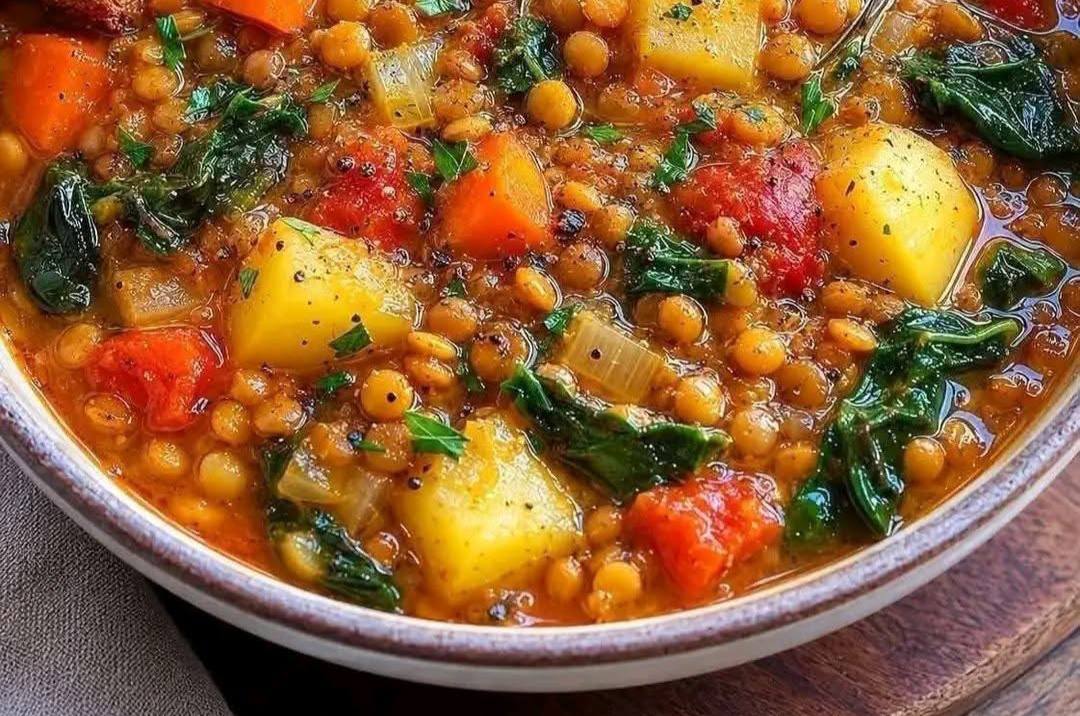
- Ladle the Hearty Turmeric & Lentil Vegetable Stew into bowls. Garnish with fresh chopped cilantro or parsley and serve immediately with a lemon wedge on the side, if desired. The fresh squeeze of lemon brightens all the flavors.
Cooking Tips and Variations
Achieving the perfect stew involves a few key techniques and knowing how to adapt the recipe to your taste and what you have on hand. For the best flavor, don’t rush the initial sautéing of onions, garlic, and ginger; this step builds the aromatic foundation of your stew. Toasting the spices before adding liquids also intensifies their flavor, making them more potent and fragrant. Always rinse your lentils thoroughly before cooking to remove any debris and excess starch, which can make the stew cloudy. When simmering, keep the heat low and cook until the lentils are tender but still hold their shape; overcooking can turn them mushy. Taste and adjust seasonings frequently throughout the cooking process, especially before serving, as the flavors will deepen and meld.
This stew is incredibly forgiving and versatile. Feel free to experiment with different vegetables: bell peppers, celery, zucchini, or even butternut squash would be excellent additions. If you prefer a protein boost, cooked shredded chicken can be stirred in at the end, or you can add chickpeas along with the lentils for more plant-based protein. For a creamier texture, a splash of full-fat coconut milk stirred in at the final stage can add a luxurious richness and subtle sweetness that complements the turmeric beautifully. Adjust the spice level to your preference; for more heat, add extra cayenne pepper or a pinch of red pepper flakes. If you like a smoky flavor, a dash of smoked paprika can be a wonderful addition. Lastly, serve this stew not just with crusty bread, but consider pairing it with a scoop of fluffy brown rice or quinoa for an even heartier and more complete meal.
Storage and Reheating
This Hearty Turmeric & Lentil Vegetable Stew is a fantastic candidate for meal prepping, as its flavors tend to deepen and improve the day after it’s made. To store, allow the stew to cool completely to room temperature before transferring it to airtight containers. Properly stored in the refrigerator, it will keep well for up to 4-5 days. For longer storage, this stew freezes beautifully. Portion it into freezer-safe containers or heavy-duty freezer bags, leaving a little headspace for expansion. It can be frozen for up to 3 months. Thaw frozen stew overnight in the refrigerator before reheating.
When reheating, you can warm individual portions in the microwave until heated through, stirring occasionally to ensure even heating. For larger quantities, transfer the stew to a pot on the stovetop and heat over medium-low heat, stirring frequently, until it’s simmering gently and thoroughly warmed. If the stew has thickened too much during storage, add a splash of vegetable broth or water to achieve your desired consistency while reheating. Avoid boiling vigorously during reheating, as this can break down the lentils and vegetables too much. A fresh sprinkle of herbs and a squeeze of lemon juice after reheating can help revive the flavors and make it taste freshly made.
Frequently Asked Questions
Why are my lentils still hard after cooking?
Lentils can remain hard for several reasons. Ensure you are using fresh lentils, as older lentils can take much longer to cook. Also, avoid adding salt to the cooking water too early, as salt can toughen the skins of legumes and prevent them from softening. It’s best to season with salt towards the end of the cooking process. Finally, check that your heat is consistently low enough for a gentle simmer; a rolling boil can sometimes cause them to cook unevenly.
Can I make this stew in a slow cooker?
Yes, this stew adapts wonderfully to a slow cooker! To convert, sauté the onion, garlic, and ginger with the spices as instructed on the stovetop to build flavor, then transfer them to the slow cooker. Add the rinsed lentils, broth, diced tomatoes, carrots, and potatoes to the slow cooker. Cook on low for 6-8 hours or on high for 3-4 hours, or until the lentils and vegetables are tender. Stir in the spinach or kale during the last 30 minutes of cooking. Season to taste before serving.
What’s the best way to thicken the stew if it’s too watery?
If your stew is too watery, there are a few ways to thicken it. You can simply continue to simmer it uncovered for a longer period, allowing some of the liquid to evaporate. Alternatively, you can remove about 1/2 cup of the stew, mash it with a fork or an immersion blender, and then stir it back into the pot; the mashed lentils and potatoes will help thicken the broth. Another option is to create a slurry by whisking 1-2 tablespoons of cornstarch with an equal amount of cold water, then slowly stir this into the simmering stew until it reaches your desired consistency.
Can I use red lentils instead of brown or green lentils?
While you can use red lentils, be aware that they cook much faster and tend to break down more, creating a creamier, less chunky stew. If using red lentils, add them along with the vegetables (carrots and potatoes) in step 6, and reduce the cooking time significantly, checking for doneness after about 15-20 minutes. This will prevent them from turning into a complete mush. Brown or green lentils are preferred for this recipe as they hold their shape better and provide a more distinct texture.