Instructions
- Prepare the Crispy Roasted Potatoes: Preheat your oven to 400°F (200°C). On a large baking sheet, toss the quartered potatoes with 2 tablespoons of olive oil, dried rosemary, garlic powder, 1/2 teaspoon sea salt, and 1/4 teaspoon black pepper. Ensure the potatoes are evenly coated. Spread them in a single layer, making sure not to overcrowd the pan. If necessary, use two baking sheets.
- Roast the potatoes for 30-40 minutes, flipping them halfway through, until they are golden brown, tender on the inside, and crispy on the outside.
- Prepare the Chicken: While the potatoes are roasting, pat the chicken breasts dry thoroughly with paper towels. Season both sides of the chicken breasts with 1 teaspoon Italian seasoning, 1/2 teaspoon sea salt, and 1/4 teaspoon black pepper.
- Heat 1 tablespoon of olive oil in a large oven-safe skillet (cast iron or stainless steel works best) over medium-high heat. Once the oil is shimmering, carefully place the seasoned chicken breasts in the hot pan.
- Sear the chicken for 5-7 minutes per side, or until a beautiful golden-brown crust forms and the internal temperature reaches 165°F (74°C) when checked with a meat thermometer. If your chicken breasts are very thick and not fully cooked after searing, you can transfer the skillet to the preheated oven with the potatoes for the last 5-10 minutes, or until cooked through.
- Once cooked, remove the chicken from the skillet and place it on a cutting board or plate. Tent loosely with foil and let it rest for at least 5-10 minutes. This is crucial for juicy chicken.
- Make the Creamy Herb Sauce: While the chicken is resting, return the same skillet (do not clean it, as the fond adds flavor) to medium heat. Add 2 tablespoons of unsalted butter to the pan. Once melted, add the minced shallot and cook for 2-3 minutes until softened and translucent, scraping up any browned bits from the bottom of the pan with a wooden spoon.
- Add the minced garlic and cook for another minute until fragrant, being careful not to burn it.
- Pour in the 1/2 cup of chicken broth, scraping the bottom of the pan vigorously to deglaze and incorporate all the flavorful browned bits. Let it simmer for 1-2 minutes until slightly reduced.
- Stir in the 1/2 cup of heavy cream and the 1/2 teaspoon of Dijon mustard (if using). Bring the sauce to a gentle simmer and cook for 3-5 minutes, stirring occasionally, until it thickens slightly to your desired consistency.
- Remove the skillet from the heat. Stir in the 2 tablespoons of fresh parsley and 1 tablespoon of fresh chives (if using). Taste the sauce and season with additional salt and black pepper as needed.
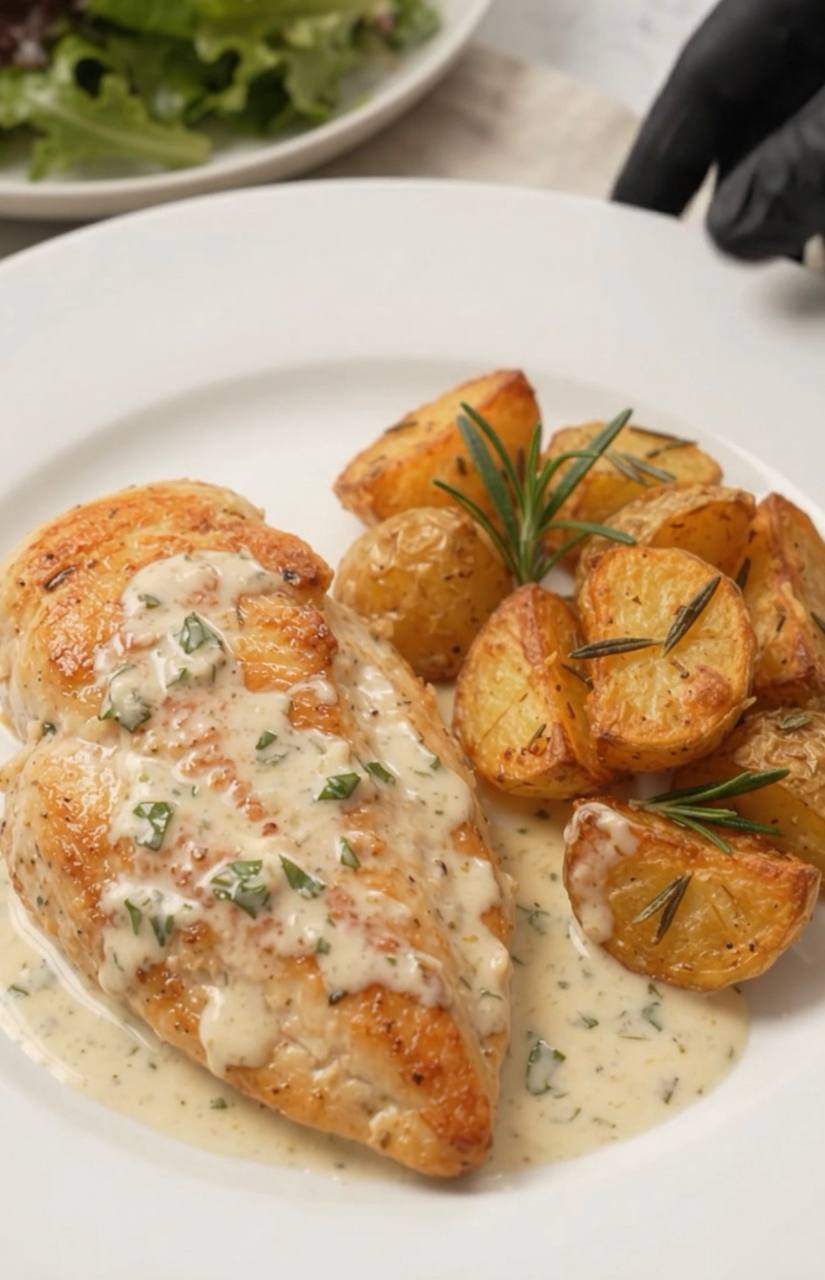
- Assemble and Serve: Slice the rested chicken breasts crosswise into thick medallions or serve them whole. Arrange the golden seared chicken on plates, spoon a generous amount of the creamy herb sauce over and around the chicken, and serve alongside the crispy roasted potatoes. Garnish with fresh rosemary sprigs and extra chopped parsley for a vibrant finish. Serve immediately and enjoy!
Cooking Tips and Variations
Pro Tips for Culinary Perfection:
- For Ultra-Crispy Potatoes: The key to truly crispy roasted potatoes is not overcrowding the baking sheet. If they’re too close together, they’ll steam instead of roast, preventing that golden crunch. Use two baking sheets if necessary. Also, ensure your oven is fully preheated and don’t open the oven door too frequently, as this drops the temperature. A little trick is to add a tablespoon of cornstarch to your seasoning mix for an extra crisp exterior.
- Achieving Golden Chicken: Patting the chicken dry is paramount. Excess moisture will steam the chicken instead of searing it, preventing a beautiful crust from forming. Don’t move the chicken once it hits the hot pan until it’s ready to flip; this allows the crust to develop properly.
- Rest Your Chicken: This is a non-negotiable step for juicy chicken! Resting allows the juices, which get pushed to the center during cooking, to redistribute throughout the meat. If you cut into it too soon, all those delicious juices will run out onto your cutting board, leaving you with dry chicken.
- Sauce Consistency: If your sauce is too thin, continue to simmer it gently until it reduces and thickens to your liking. If it’s too thick, you can thin it out with a splash of extra chicken broth or cream. Always taste and adjust seasoning at the end; the flavors will intensify as it simmers.
- Deglazing is Flavor: Don’t skip the deglazing step when making the sauce! Those browned bits (fond) stuck to the bottom of the pan after searing the chicken are packed with incredible flavor. Scraping them up with the chicken broth forms the rich, savory base of your sauce.
- Fresh Herbs are Best: While dried herbs can be used in a pinch, fresh herbs truly elevate the flavor and aroma of this dish, especially in the sauce. Add them at the very end of cooking the sauce to preserve their vibrant color and delicate flavor.
Flavor Variations to Explore:
- Herb Garden Delight: Experiment with different fresh herbs in your sauce. Thyme, tarragon, sage, or a touch of dill can all add unique flavor profiles. For the potatoes, consider adding fresh oregano or finely chopped fresh thyme alongside the rosemary.
- Spicy Kick: If you enjoy a little heat, add a pinch of red pepper flakes to the sauce along with the garlic, or sprinkle some cayenne pepper onto the chicken seasoning.
- Cheesy Indulgence: Stir in a tablespoon or two of freshly grated Parmesan cheese into the sauce at the very end for an extra layer of richness and umami.
- Mushroom Magic: Sauté sliced mushrooms (cremini or button) with the shallots and garlic before adding the broth to the sauce for an earthy depth of flavor.
- Lemon Brightness: A squeeze of fresh lemon juice into the finished sauce, or a sprinkle of lemon zest, can add a wonderful brightness that cuts through the richness.
- Vegetable Boost: Roast additional vegetables alongside the potatoes. Asparagus, broccoli florets, bell peppers, or sliced carrots are all excellent choices that cook well at the same temperature.
- Mustard Medley: Instead of just Dijon, try a whole-grain mustard for a different texture and a more robust mustard flavor in your sauce.
- Wine Reduction: For an even more sophisticated sauce, deglaze the pan with 1/4 cup of dry white wine (like Sauvignon Blanc or Pinot Grigio) after the shallots and garlic, letting it reduce by half before adding the chicken broth.
Storage and Reheating
Storage:
Leftovers of this delicious dish can be stored in an airtight container in the refrigerator for up to 3-4 days. It’s best to store the chicken, sauce, and potatoes separately if possible, especially if you want to maintain the crispiness of the potatoes. However, they can also be stored together in a single container.
Reheating:
- Oven (Recommended for best results, especially for potatoes): Preheat your oven to 350°F (175°C). Spread the potatoes in a single layer on a baking sheet. Place the chicken (and sauce, if stored separately, in an oven-safe dish) alongside. Reheat for 15-20 minutes, or until everything is heated through and the potatoes have regained some crispness. You might want to cover the chicken with foil to prevent it from drying out, especially if reheating with the sauce.
- Stovetop (Good for chicken and sauce): Gently reheat the chicken and sauce in a skillet over medium-low heat. Add a splash of chicken broth or cream if the sauce seems too thick. Stir occasionally until heated through. Reheat potatoes separately in the oven or air fryer for crispness.
- Microwave (Quickest, but potatoes won’t be crispy): For a quick reheat, place the chicken, sauce, and potatoes on a microwave-safe plate. Heat in 1-minute intervals, stirring the sauce and rearranging the potatoes, until thoroughly warmed through. Be aware that the potatoes will lose their crisp texture in the microwave.
Frequently Asked Questions
Can I use chicken thighs instead of breasts?
Absolutely! Chicken thighs are an excellent alternative and often stay even juicier due to their higher fat content. Adjust cooking times accordingly; thighs typically require a bit longer to cook through (around 8-10 minutes per side, depending on thickness), but they also tolerate higher heat and are more forgiving if slightly overcooked. Ensure they reach an internal temperature of 175°F (80°C).
What if my sauce is too thin or too thick?
If your sauce is too thin, continue to simmer it gently over medium-low heat, stirring occasionally, until it reduces and thickens to your desired consistency. Be patient, as it can take a few extra minutes. If it’s too thick, you can easily thin it out by stirring in a tablespoon or two of extra chicken broth or heavy cream until it reaches the perfect consistency. Always taste and adjust seasoning after making adjustments.
Can I make this dish ahead of time?
While this dish is best enjoyed fresh, you can certainly do some prep work in advance. You can cut and season the potatoes a few hours ahead of time and store them in the refrigerator. The chicken can be seasoned a few hours before cooking. The creamy herb sauce can also be made a day in advance and stored in the refrigerator; gently reheat it on the stovetop, adding a splash of broth or cream if needed to adjust consistency.
What side dishes pair well with this meal?
This dish is quite hearty and complete on its own, but a simple green salad with a light vinaigrette (as seen in the background of the image) is a perfect complement to cut through the richness of the sauce. Steamed or roasted asparagus, green beans, or a side of crusty bread to soak up extra sauce would also be delightful additions.