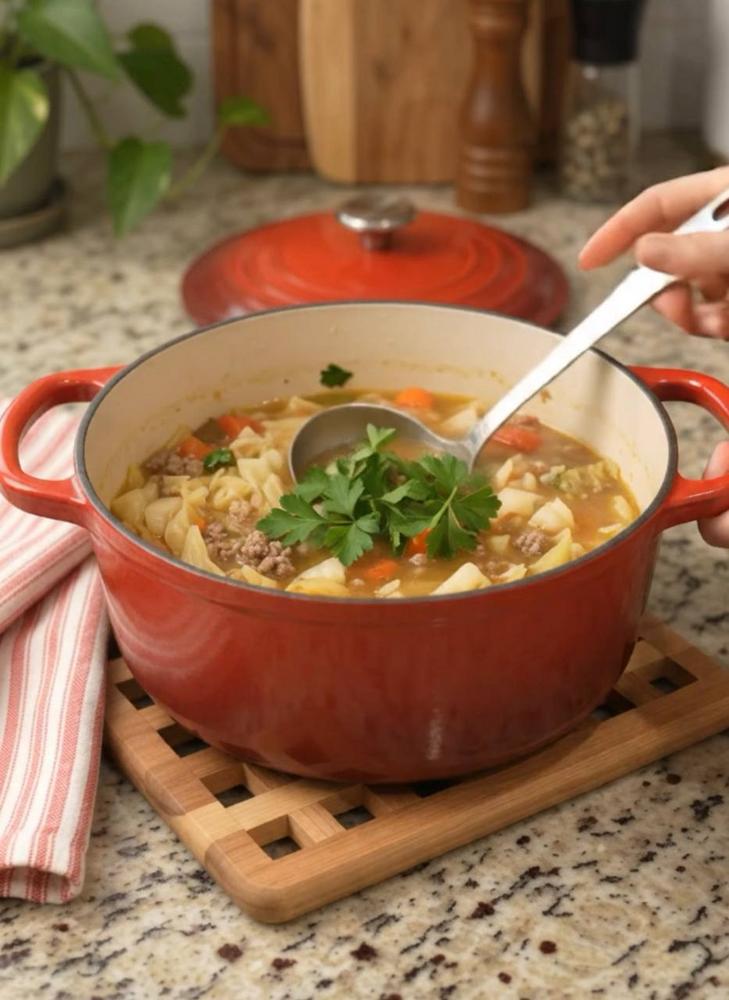
Instructions
- Heat the olive oil in a large Dutch oven or heavy-bottomed pot over medium-high heat. Add the ground beef and cook, breaking it up with a spoon, until it is thoroughly browned and no pink remains. Drain any excess grease from the pot.
- Add the chopped onion, carrots, and celery to the pot with the beef. Sauté for 5-7 minutes, or until the vegetables begin to soften and the onion becomes translucent.
- Stir in the minced garlic and cook for another minute until fragrant. Be careful not to burn the garlic.
- Add the chopped cabbage to the pot. It may seem like a lot, but it will cook down significantly. Stir well to combine with the beef and other vegetables.
- Pour in the beef broth and the optional can of diced tomatoes. Stir in the dried thyme, dried oregano, and bay leaf. Season generously with salt and freshly ground black pepper.
- Bring the soup to a boil, then reduce the heat to low, cover the pot, and let it simmer for 25-30 minutes, or until the cabbage and carrots are tender.
- Remove the bay leaf from the soup. Increase the heat to medium-high and bring the soup back to a gentle boil. Add the egg noodles and cook according to package directions, usually 7-10 minutes, or until al dente. Be careful not to overcook the noodles, as they will continue to soften in the hot soup.
- Taste the soup and adjust seasonings as needed. You may need to add more salt or pepper.
- Ladle the hot soup into bowls. Garnish each serving with a sprinkle of fresh chopped parsley before serving.
Cooking Tips and Variations
Achieving soup perfection is all about understanding the nuances of the ingredients and cooking process. For this Hearty Beef and Cabbage Soup, starting with properly browned ground beef is paramount. Don’t rush this step; allowing the beef to develop a deep, rich color creates a layer of flavor that permeates the entire soup. Once browned, make sure to drain off any excess fat. This prevents your soup from becoming greasy and ensures a cleaner, more robust broth. When sautéing your aromatics like onions, carrots, and celery, aim for a gentle softening, not browning. This draws out their natural sweetness and sets a fantastic foundation for the soup’s flavor profile. Garlic, on the other hand, should only be cooked until fragrant, usually about one minute, as it can quickly burn and turn bitter if overcooked.
The cabbage in this recipe will seem abundant initially, but it cooks down significantly. Don’t be afraid to pack it into the pot; it will wilt beautifully and meld into the soup. For uniform cooking, try to chop your vegetables into roughly similar-sized pieces. This ensures everything becomes tender at the same rate. While beef broth provides the richest flavor for this particular soup, you can absolutely experiment with chicken or vegetable broth if that’s what you have on hand or prefer a lighter flavor. Just be mindful that the overall taste will shift accordingly. A crucial tip for the egg noodles: add them towards the end of the cooking process. Adding them too early will result in mushy, overcooked pasta that absorbs too much liquid, leaving you with a thicker, less soupy consistency.
This recipe is incredibly versatile and open to delicious variations. For a richer, slightly tangy broth, consider adding a small can of tomato paste along with the diced tomatoes, or even a splash of balsamic vinegar. If you enjoy a bit of heat, a pinch of red pepper flakes added with the dried herbs will give it a pleasant kick. Don’t limit yourself to just cabbage and carrots; other root vegetables like diced parsnips, turnips, or even sweet potatoes can be fantastic additions, lending different textures and flavors. If you prefer a thicker, heartier soup without noodles, you can add diced potatoes along with the broth and cook until tender. For a different starch, consider using small pasta shapes like ditalini or elbow macaroni, or even a cup of cooked rice stirred in at the very end. Finally, don’t underestimate the power of fresh herbs. While dried herbs are used during cooking, a generous sprinkle of fresh parsley at the end brightens the flavor and adds a pop of color, making the soup even more appealing.
Storage and Reheating
This Hearty Beef and Cabbage Soup is an excellent candidate for meal prepping and makes for fantastic leftovers, as the flavors often deepen and meld even further overnight. To store, allow the soup to cool completely to room temperature before transferring it to airtight containers. This prevents condensation and helps maintain its quality. It can be stored in the refrigerator for up to 3-4 days. For longer storage, this soup freezes beautifully. Portion the cooled soup into freezer-safe containers or heavy-duty freezer bags, leaving a little headspace for expansion. It can be frozen for up to 3 months. When freezing, you might consider cooking the noodles separately or adding them fresh when reheating, as pasta can sometimes become mushy or break down after freezing and thawing.
When you’re ready to enjoy your delicious leftovers, reheating is straightforward. If refrigerated, simply transfer the desired amount of soup to a saucepan and heat gently over medium-low heat on the stovetop, stirring occasionally, until it is heated through. If the soup has thickened too much, you can add a splash of extra beef broth or water to reach your desired consistency. For frozen soup, it’s best to thaw it in the refrigerator overnight before reheating on the stovetop. If you’re in a hurry, you can reheat frozen soup directly in a saucepan over low heat, stirring frequently and breaking up the frozen chunks as it thaws, until it’s simmering and hot throughout. Microwaving is also an option for individual portions; heat in microwave-safe bowls, stirring every minute or two, until piping hot. Always ensure the soup reaches an internal temperature of 165°F (74°C) for safe consumption.
Frequently Asked Questions
What kind of ground beef is best for this soup?
For this Hearty Beef and Cabbage Soup, we recommend using lean ground beef, such as 85/15 or 90/10. This allows you to get plenty of rich beef flavor without an excessive amount of grease. If you use a higher fat content beef, make sure to thoroughly drain the fat after browning to prevent the soup from becoming oily.
Can I make this soup vegetarian or vegan?
Absolutely! To make this soup vegetarian or vegan, simply omit the ground beef. Instead, you can sauté a combination of mushrooms (cremini or button work well) and perhaps some plant-based ground “meat” crumbles at the beginning. Use vegetable broth instead of beef broth, and ensure all other ingredients are plant-based. The cabbage and other vegetables will still create a wonderfully flavorful and hearty soup.
Can I add other vegetables to this soup?
Yes, this soup is very forgiving and adaptable. Feel free to add other vegetables you enjoy or have on hand. Diced potatoes (add them with the broth), green beans, corn, or even a handful of spinach (stir in at the very end until wilted) would be delicious additions. Just be mindful of cooking times for any new vegetables; harder vegetables like potatoes will need to cook longer.
How can I thicken my soup if it’s too thin?
If your soup is thinner than you’d prefer, there are a few ways to thicken it. You can make a slurry by whisking 1-2 tablespoons of cornstarch with an equal amount of cold water, then stirring it into the simmering soup and cooking for a few minutes until it thickens. Alternatively, you can mash some of the cooked potatoes or other vegetables against the side of the pot to release their starches, or simply let the soup simmer uncovered for a bit longer to allow some of the liquid to evaporate.