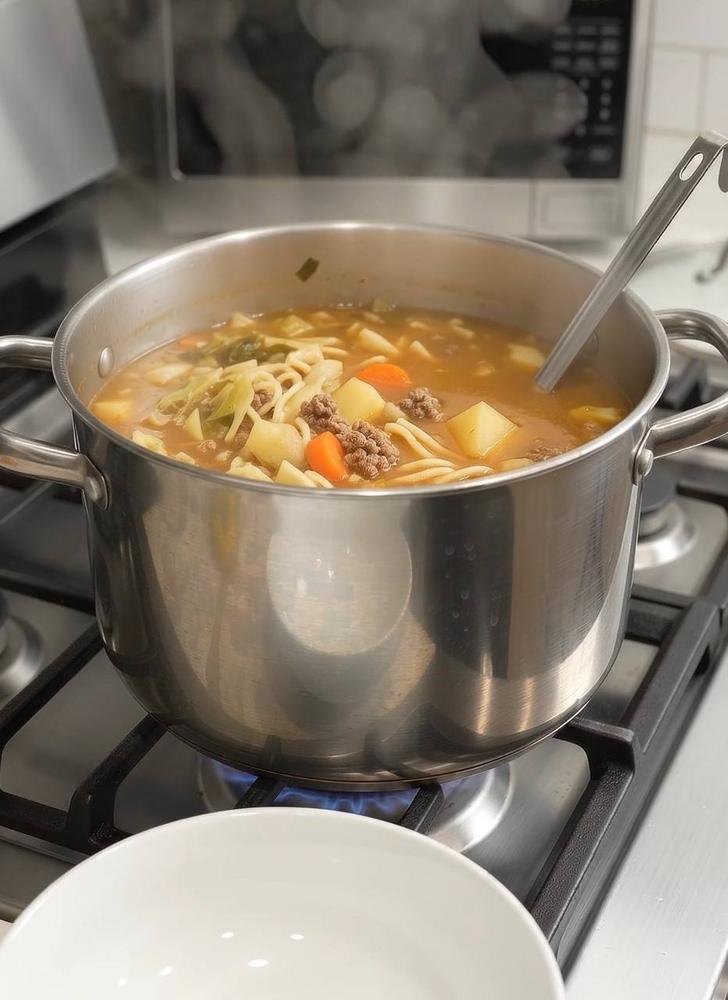
Instructions
- Heat the olive oil in a large Dutch oven or heavy-bottomed pot over medium-high heat. Add the ground beef and cook, breaking it apart with a spoon, until fully browned. Drain off any excess fat and set the beef aside.
- Reduce the heat to medium. Add the chopped onion and celery to the pot and cook, stirring occasionally, until softened, about 5-7 minutes. Add the minced garlic and cook for another minute until fragrant.
- Return the browned ground beef to the pot. Pour in the beef broth and water. Add the sliced carrots, diced potatoes, dried thyme, and bay leaf. Bring the mixture to a boil, then reduce the heat to low, cover, and simmer for 15-20 minutes, or until the carrots and potatoes are tender.
- Stir in the chopped cabbage and egg noodles. Continue to simmer, uncovered, for another 8-10 minutes, or until the noodles are al dente and the cabbage is tender-crisp.
- Remove the bay leaf. Taste the soup and season with salt and black pepper as needed. Remember that broth and ground beef can vary in sodium content, so adjust accordingly.
- Ladle the hot soup into bowls. Garnish each serving with fresh chopped parsley and thinly sliced green onions before serving. Serve immediately and enjoy!
Cooking Tips and Variations
Achieving the perfect Hearty Beef and Vegetable Noodle Soup is all about technique and a little bit of creativity. First and foremost, don’t skimp on browning your ground beef. This crucial step develops deep, rich flavor through the Maillard reaction, which forms the savory backbone of your soup. Ensure the beef gets a good sear and forms a nice crust before you break it up too much. After browning, always drain off any excess fat to prevent your soup from becoming greasy. When it comes to vegetables, uniform dicing is key for even cooking. Imagine each piece cooking at the same rate, ensuring every bite has a consistent texture. Harder vegetables like carrots and potatoes go in earlier, giving them ample time to soften, while softer ones like cabbage and the noodles are added towards the end to prevent them from becoming mushy and losing their texture. Speaking of noodles, timing is everything. Overcooked noodles can quickly turn a beautiful soup into a starchy mess. Add them in the last 8-10 minutes of cooking, or according to package directions, and keep a close eye on them. For the best flavor, invest in a high-quality beef broth or stock. A good broth provides a robust foundation that elevates all the other ingredients. If you have homemade beef stock, even better!
This recipe is incredibly versatile, inviting you to customize it to your heart’s content. Feel free to swap out some of the vegetables or add others you enjoy. Peas, corn, green beans, diced zucchini, or even spinach (added at the very end to wilt) would all be delicious additions. For a different flavor profile, consider adding a dash of Worcestershire sauce or a splash of red wine during the sautéing stage for extra depth. If you prefer a different type of noodle, ditalini, elbow macaroni, or even small pasta shells work wonderfully. For those looking to lighten it up, ground turkey or chicken can be used in place of beef, though the flavor profile will change. You can also experiment with different herbs; a sprig of fresh rosemary or a pinch of marjoram can add another layer of aromatic complexity. Don’t be afraid to make this soup your own – it’s a forgiving recipe that encourages creativity!
Storage and Reheating
One of the best things about Hearty Beef and Vegetable Noodle Soup is that it often tastes even better the next day as the flavors meld and deepen. Proper storage is key to enjoying your leftovers safely and deliciously. Once the soup has cooled to room temperature, transfer it to airtight containers. It can be stored in the refrigerator for up to 3-4 days. It’s important to note that the noodles will continue to absorb liquid as the soup sits, which can make them softer and reduce the overall broth. If you anticipate having a lot of leftovers, you can cook the noodles separately and add them to individual servings just before eating to maintain their optimal texture. This also allows you to freeze the noodle-free soup for longer storage.
For longer storage, this soup freezes beautifully without the noodles. Simply prepare the soup up to the point of adding the noodles and cabbage. Let it cool completely, then transfer it to freezer-safe containers or heavy-duty freezer bags, leaving some headspace for expansion. It can be frozen for up to 3 months. When you’re ready to enjoy, thaw the soup overnight in the refrigerator or gently reheat it from frozen on the stovetop over low heat, adding a little extra broth or water if needed. Once thawed and simmering, add fresh noodles and cabbage and cook until done. To reheat refrigerated soup, gently warm it on the stovetop over medium-low heat, stirring occasionally, until heated through. You may need to add a splash of beef broth or water to thin it out to your desired consistency, as the noodles will have absorbed some of the liquid. Avoid boiling the soup vigorously when reheating, as this can further break down the vegetables and noodles. Always ensure the soup is piping hot before serving.
Frequently Asked Questions
Can I make this soup ahead of time?
Absolutely! This soup is fantastic for making ahead. The flavors tend to deepen and meld beautifully overnight. If you plan to make it more than a day in advance, or if you intend to freeze portions, we recommend cooking the noodles separately and adding them to individual bowls just before serving. This prevents the noodles from becoming too mushy and absorbing all the broth, ensuring a better texture when reheated.
What kind of beef is best for this soup?
Lean ground beef (85-90% lean) is ideal for this soup. It provides plenty of savory beef flavor without contributing excessive grease, which keeps the broth clear and light. If you use a higher fat content ground beef, be sure to thoroughly drain off all the rendered fat after browning to prevent a greasy soup.
Can I add other vegetables to this soup?
Yes, this soup is incredibly versatile! Feel free to customize it with your favorite vegetables. Green beans, corn, peas, diced zucchini, spinach (stirred in at the very end to wilt), or even a handful of chopped kale would be delicious additions. Just be mindful of their cooking times; add harder vegetables earlier and softer ones later to ensure everything is cooked to perfection without becoming overcooked.
How can I make this soup thicker?
If you prefer a thicker soup, there are a few ways to achieve this. You can mash some of the cooked potatoes against the side of the pot with a spoon, which will release their starches and naturally thicken the broth. Alternatively, you can create a slurry by whisking 1 tablespoon of cornstarch with 2 tablespoons of cold water, then stirring it into the simmering soup until it reaches your desired thickness. Be sure to cook it for a minute or two after adding the slurry to cook out any starchy taste.