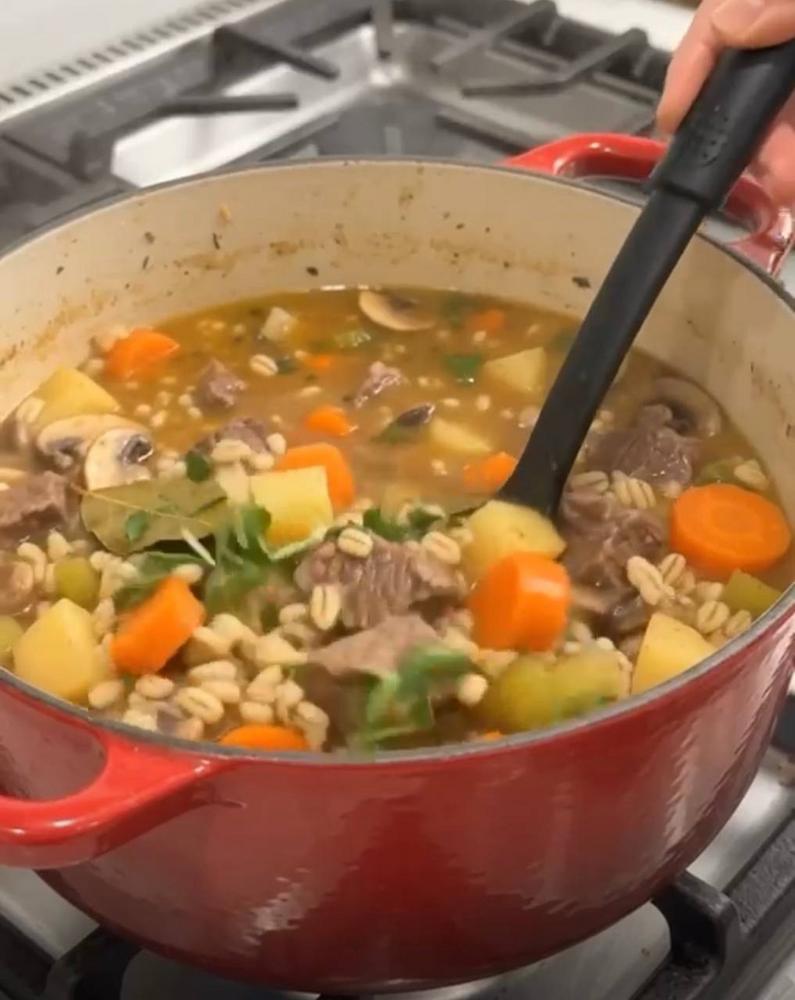
Instructions
- Pat the beef cubes dry with paper towels. Season generously with salt and black pepper.
- Heat 1 tablespoon of olive oil in a large Dutch oven or heavy-bottomed pot over medium-high heat. Working in batches if necessary to avoid overcrowding, sear the beef on all sides until deeply browned. Remove the browned beef to a plate and set aside.
- Add the remaining 1 tablespoon of olive oil to the pot. Reduce heat to medium. Add the chopped onion, celery, and carrots. Sauté for 5-7 minutes, stirring occasionally, until the vegetables begin to soften.
- Add the sliced mushrooms to the pot and cook for another 3-5 minutes, until they release their moisture and start to brown.
- Stir in the minced garlic and cook for 1 minute more, until fragrant.
- Return the browned beef to the pot. Pour in the beef broth and diced tomatoes. Add the pearl barley, bay leaves, dried thyme, and crushed rosemary. Stir everything together.
- Bring the soup to a boil, then reduce the heat to low, cover the pot, and simmer for 1 hour, stirring occasionally.
- After 1 hour, add the quartered potatoes to the soup. Continue to simmer, covered, for another 30-45 minutes, or until the beef is very tender and the barley and potatoes are cooked through.
- Remove the bay leaves from the soup. Taste and adjust seasoning with salt and pepper as needed.
- Ladle the Hearty Beef Barley Soup into bowls, garnish with fresh chopped parsley, and serve hot.
Cooking Tips and Variations
For the most tender beef, opt for cuts like chuck roast, stew beef, or short ribs. These cuts have enough fat and connective tissue to break down beautifully during the long simmering process, resulting in incredibly tender, fall-apart meat. Always pat the beef dry before searing; this helps create a beautiful brown crust, which is essential for building deep flavor in your soup. Don’t overcrowd the pot when browning the beef, as this can steam the meat instead of searing it. Work in batches to ensure each piece gets proper contact with the hot surface.
The quality of your beef broth makes a significant difference in the final flavor of the soup. Use a good quality, low-sodium beef broth or homemade beef stock for the best results. This allows you to control the salt content and ensures a rich, savory base. If you prefer a thicker soup, you can mash some of the cooked potatoes against the side of the pot with your ladle, or for a very thick consistency, you can remove a cup of the soup, blend it, and return it to the pot. Alternatively, a cornstarch slurry (1 tablespoon cornstarch mixed with 2 tablespoons cold water) can be stirred in during the last 10 minutes of simmering to achieve your desired thickness.
For variations, feel free to experiment with different vegetables. Green beans, peas, corn, or even parsnips can be added during the last 20 minutes of cooking. If you enjoy a touch of acidity, a splash of red wine or balsamic vinegar can be added along with the broth for an extra layer of complexity. For a smoky flavor, a strip of bacon or two, diced and rendered before browning the beef, can add wonderful depth. You can also make this soup in a slow cooker: brown the beef and sauté the aromatics as instructed, then transfer everything to your slow cooker and cook on low for 6-8 hours or on high for 3-4 hours, adding the potatoes during the last hour of cooking. For a vegetarian version, omit the beef, use vegetable broth, and add extra mushrooms, kidney beans, or lentils for protein and texture.
Storage and Reheating
Hearty Beef Barley Soup is an excellent make-ahead meal, as its flavors meld and deepen overnight, often tasting even better the next day. To store, allow the soup to cool completely to room temperature (this is crucial to prevent bacterial growth and maintain food safety). Once cooled, transfer the soup to airtight containers. It can be stored in the refrigerator for up to 3-4 days. For longer storage, this soup freezes beautifully. Portion the cooled soup into freezer-safe containers or heavy-duty freezer bags, leaving some headspace for expansion. It can be frozen for up to 3 months. Thaw frozen soup overnight in the refrigerator before reheating.
To reheat refrigerated soup, simply transfer the desired portion to a saucepan and warm over medium heat, stirring occasionally, until heated through. If the soup has thickened too much in the refrigerator, you can add a splash of beef broth or water to achieve your desired consistency. For frozen soup, you can reheat it gently from frozen in a saucepan over low heat, stirring frequently, or thaw it first and then reheat as above. Alternatively, individual portions can be reheated in the microwave. Place the soup in a microwave-safe bowl, cover loosely, and heat in 1-2 minute intervals, stirring between each, until hot. Be mindful that the barley will continue to absorb liquid as it sits, so you may need to add a little extra liquid when reheating, especially if it’s been frozen.
Frequently Asked Questions
What kind of beef is best for beef barley soup?
The best cuts of beef for beef barley soup are those that benefit from long, slow cooking, as they become incredibly tender and flavorful. Chuck roast, stew beef, or beef short ribs are excellent choices. These cuts have enough marbling and connective tissue that breaks down during simmering, resulting in juicy, fall-apart beef.
Do I need to soak barley before adding it to the soup?
For pearl barley, which is the most common type used in soups, soaking is generally not necessary. It cooks relatively quickly compared to hulled barley. If you are using hulled barley, which is less processed, soaking it for a few hours or overnight can help reduce its cooking time, but it’s still not strictly required for soup, as it will soften during the long simmer.
Can I make this soup in a slow cooker?
Yes, this Hearty Beef Barley Soup is perfect for a slow cooker! To adapt the recipe, first brown the beef and sauté the aromatics (onion, celery, carrots, mushrooms, garlic) in a separate pan as instructed. Then, transfer the browned beef and sautéed vegetables to your slow cooker. Add the beef broth, diced tomatoes, pearl barley, bay leaves, dried thyme, and rosemary. Cook on low for 6-8 hours or on high for 3-4 hours. Add the quartered potatoes during the last hour of cooking to ensure they are tender but not mushy.
How can I prevent the barley from becoming too mushy?
To prevent the barley from becoming too mushy, ensure you add it at the correct time in the recipe, usually after the initial simmer, allowing it to cook alongside the beef and vegetables. Pearl barley typically takes about 30-45 minutes to cook through. If you prefer a firmer barley, you can even cook it separately and add it to the soup just before serving, though this method means it won’t absorb as much of the broth’s flavor during cooking.