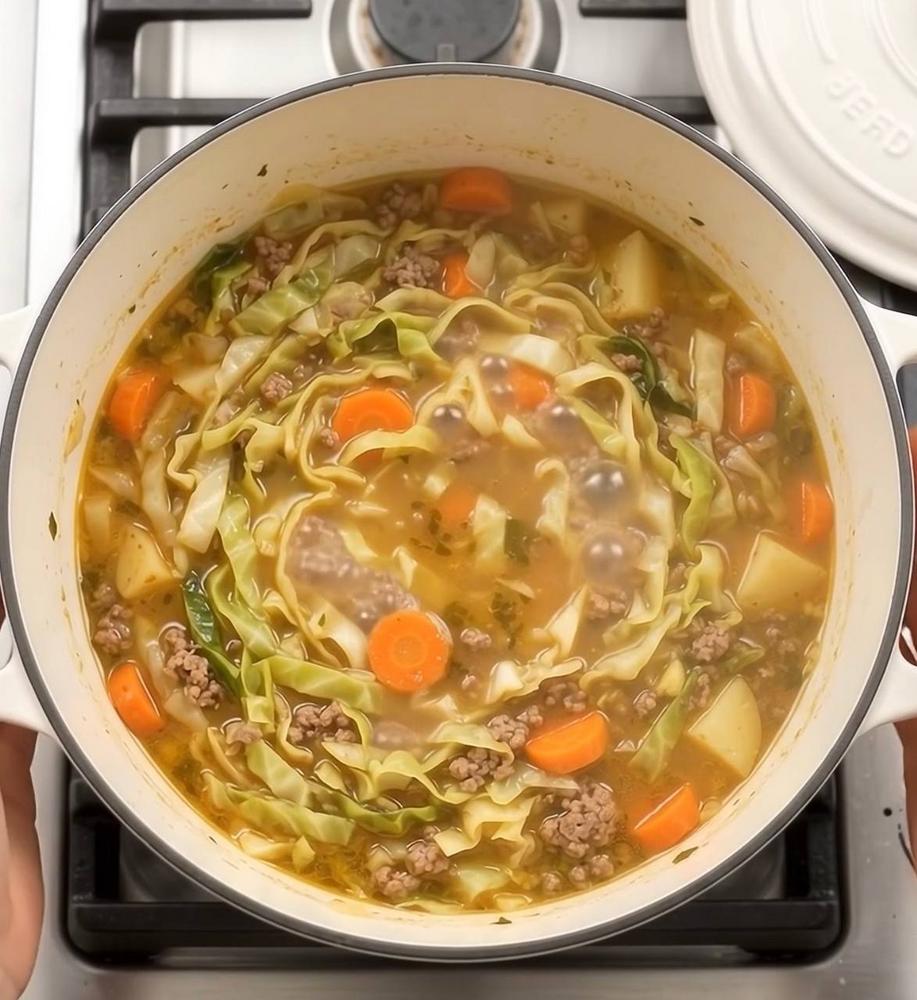
Instructions
- Heat the olive oil in a large Dutch oven or heavy-bottomed pot over medium-high heat.
- Add the ground beef to the pot and cook, breaking it up with a spoon, until it is fully browned and no pink remains.
- Carefully drain any excess fat from the pot.
- Add the diced onion and sliced carrots to the pot with the browned beef. Sauté for 5-7 minutes, stirring occasionally, until the vegetables begin to soften.
- Stir in the minced garlic, dried thyme, and dried parsley. Cook for another 1-2 minutes until fragrant, being careful not to burn the garlic.
- Pour in the beef broth. Add the diced potatoes and chopped cabbage to the pot. If using, add the bay leaf and Worcestershire sauce.
- Bring the soup to a rolling boil, then reduce the heat to low, cover the pot, and let it simmer for 20-25 minutes, or until the potatoes and cabbage are tender.
- Once the vegetables are tender, add the wide egg noodles to the pot. Stir well to ensure the noodles are submerged in the broth.
- Continue to simmer, uncovered, for another 8-10 minutes, or according to package directions, until the noodles are al dente (cooked through but still firm to the bite).
- Remove the bay leaf if you used one.
- Taste the soup and adjust seasonings as needed, adding salt and freshly ground black pepper to your preference.
- Ladle the Hearty Beef Cabbage Noodle Soup into bowls. Garnish with fresh chopped parsley or dill, if desired, and serve hot.
Cooking Tips and Variations
For the best results with your Hearty Beef Cabbage Noodle Soup, always start with quality ingredients. Using a good quality, low-sodium beef broth can make a significant difference in the overall flavor profile, allowing you to control the saltiness later. When browning your ground beef, ensure it’s thoroughly cooked and then drain off any excess fat; this prevents the soup from becoming greasy and keeps the broth clear and flavorful. Don’t rush the sautéing of the onions and carrots; allowing them to soften and slightly caramelize builds a crucial flavor base for the entire soup. As for the cabbage, aim for roughly chopped or shredded pieces that are uniform in size to ensure even cooking. The potatoes should also be diced into consistent, bite-sized cubes for the same reason. A key tip for noodle soups is to add the noodles toward the end of the cooking process. Adding them too early can lead to mushy, overcooked noodles that absorb too much broth and break down. Cook them just until al dente, as they will continue to soften slightly in the hot soup even after you turn off the heat. Finally, always taste and adjust your seasonings before serving; a little extra salt or pepper can really make the flavors pop.
This recipe is wonderfully adaptable, allowing for various substitutions and additions to suit your taste or what you have on hand. If you’re looking for an alternative to ground beef, ground turkey or even ground chicken can be used for a lighter option, though you might need to add a bit more oil to prevent sticking. Leftover shredded beef or pork would also work beautifully, added in at the same time as the broth. Feel free to amp up the vegetable content; celery, bell peppers (especially red or green), or even a handful of fresh spinach or kale added in the last few minutes of cooking would be delicious and add extra nutrients. For those who enjoy a bit of heat, a pinch of red pepper flakes stirred in with the garlic can add a welcome kick. If you prefer a creamier soup, stir in a splash of heavy cream, half-and-half, or a dollop of sour cream or Greek yogurt just before serving (do not boil after adding dairy to prevent curdling). For an even richer, deeper flavor, consider adding a tablespoon of tomato paste when you sauté the aromatics, or a splash of red wine with the broth. Fresh herbs like dill or marjoram can be used in place of or in addition to parsley for a different aromatic twist. Don’t be afraid to experiment and make this soup truly your own!
Storage and Reheating
Proper storage is key to enjoying your Hearty Beef Cabbage Noodle Soup for days to come. Once the soup has cooled completely to room temperature (this is important to prevent bacterial growth and condensation), transfer it to airtight containers. You can store individual portions or a larger batch, depending on your needs. Stored in the refrigerator, the soup will remain fresh and delicious for 3-4 days. It’s worth noting that the noodles may continue to absorb broth and soften over time, which is normal. If you anticipate having a lot of leftovers, you might consider cooking the noodles separately and adding them to individual servings just before eating, or undercooking them slightly in the main batch to allow for further absorption during storage.
For longer storage, this soup freezes exceptionally well, especially if you’ve added the noodles separately or cooked them al dente. Ladle the cooled soup into freezer-safe containers or heavy-duty freezer bags, leaving a little headspace if using containers to allow for expansion. It can be frozen for up to 2-3 months. When you’re ready to enjoy it, simply transfer the frozen soup to the refrigerator overnight to thaw, or reheat directly from frozen on the stovetop over low heat, stirring occasionally. Be aware that cabbage may soften more upon thawing, but the flavor will still be fantastic.
Reheating the soup is straightforward. For refrigerated soup, the best method is to gently reheat it on the stovetop over medium-low heat, stirring occasionally, until it is heated through and simmering. If the soup has thickened too much during storage, you can add a splash of extra beef broth or water to reach your desired consistency. For individual portions, the microwave is a convenient option. Transfer the soup to a microwave-safe bowl, cover loosely, and heat in 1-2 minute intervals, stirring between each, until piping hot. Always ensure the soup is reheated to an internal temperature of 165°F (74°C) to ensure it’s safe to eat. Avoid boiling the soup vigorously during reheating, as this can further break down the vegetables and noodles.
Frequently Asked Questions
Can I make this soup ahead of time?
Absolutely! This Hearty Beef Cabbage Noodle Soup is an excellent candidate for meal prep. In fact, many people find that the flavors deepen and meld even more beautifully after a day or two in the refrigerator. You can prepare the entire soup, including the noodles, and store it as directed. If you prefer your noodles to be perfectly al dente upon reheating, you might consider cooking the noodles separately and adding them to individual portions just before serving, or slightly undercooking them when you initially make the soup.
What kind of cabbage is best for this soup?
Green cabbage is the traditional and most recommended choice for this recipe. Its mild flavor and sturdy texture hold up well during simmering, becoming tender without turning mushy. You can use either a finely shredded cabbage for a more delicate texture or a roughly chopped cabbage for larger, more substantial pieces. While other types like savoy cabbage could work, green cabbage offers the classic taste and texture for this comforting soup.
Can I add other vegetables to this soup?
Yes, this soup is very versatile and welcoming to additional vegetables! Feel free to incorporate other hearty vegetables you enjoy or have on hand. Good additions include diced celery (sautéed with the onions and carrots), bell peppers (added with the broth), or even a handful of fresh spinach or kale stirred in during the last 5-10 minutes of cooking until wilted. You could also experiment with turnips or parsnips for a different root vegetable flavor profile.
My soup seems too thick/thin. How can I adjust the consistency?
The consistency of your soup can vary depending on how much liquid the noodles absorb and the exact size of your vegetables. If your soup seems too thick, simply add more beef broth or even a little water, a quarter cup at a time, until it reaches your desired consistency. If it’s too thin, you can let it simmer uncovered for a bit longer to allow some of the liquid to evaporate, or you can mash a few of the cooked potatoes against the side of the pot to release their starch, which will help thicken the broth naturally.