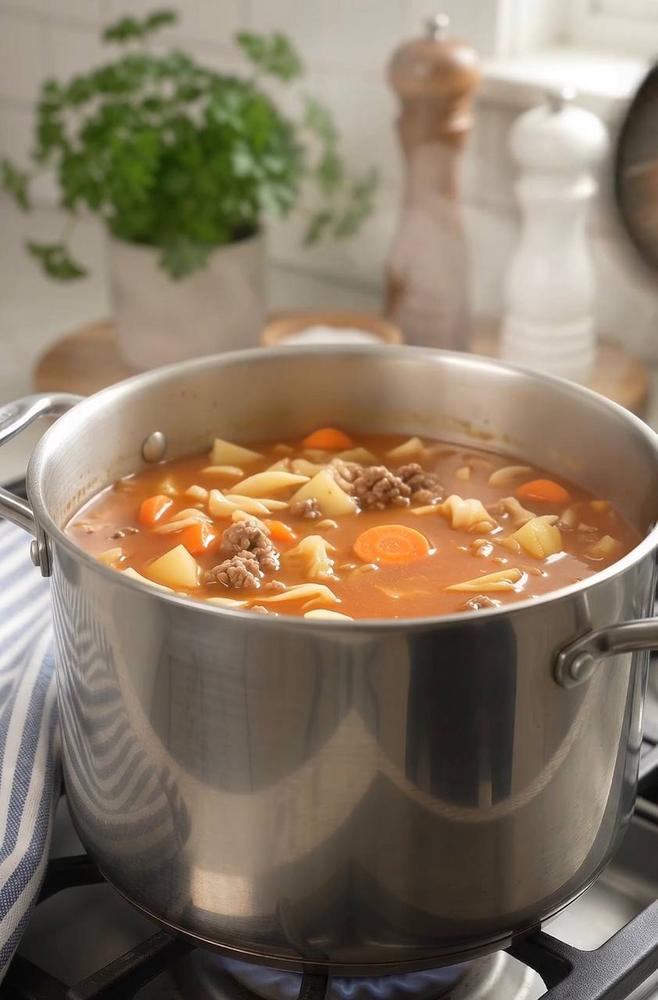
Instructions
- Heat the olive oil in a large Dutch oven or heavy-bottomed pot over medium-high heat. Add the ground beef and cook, breaking it up with a spoon, until thoroughly browned.
- Once the beef is cooked, drain off any excess fat from the pot. This step is crucial for preventing a greasy soup and ensuring a clean, rich flavor.
- Add the chopped onion, carrots, and celery to the pot with the browned beef. Sauté for 5-7 minutes, stirring occasionally, until the vegetables begin to soften.
- Stir in the minced garlic and cook for another minute until fragrant, being careful not to burn the garlic.
- Pour in the beef broth, diced tomatoes (with their juice), and tomato sauce. Add the Italian seasoning, dried thyme, and bay leaf. Stir everything together.
- Bring the soup to a boil, then reduce the heat to low, cover, and let it simmer for at least 20 minutes to allow the flavors to meld.
- Add the diced potatoes to the simmering soup. Continue to simmer, covered, for another 15-20 minutes, or until the potatoes are tender when pierced with a fork.
- Stir in the wide egg noodles. Cook for 8-10 minutes, or according to package directions, until the noodles are al dente. Be careful not to overcook the noodles, as they will continue to absorb liquid and soften even after the heat is removed.
- Remove the bay leaf from the soup. Taste and season generously with salt and freshly ground black pepper as needed.
- Ladle the Hearty Beef Noodle Soup into bowls. Garnish with fresh chopped parsley, if desired, and serve hot.
Cooking Tips and Variations
To achieve the absolute best Hearty Beef Noodle Soup, start with quality ingredients. Using a good quality beef broth or stock will make a significant difference in the depth of flavor. When browning the ground beef, ensure it gets a nice, even sear, as this creates delicious fond at the bottom of the pot, which will contribute immensely to the soup’s richness when deglazed by the liquids. Don’t rush the simmering process; allowing the soup to simmer for at least 20 minutes before adding the potatoes gives the initial flavors time to develop beautifully.
The key to perfect noodles in soup is timing. Always add the noodles towards the end of the cooking process. If you add them too early, they will become mushy and absorb too much liquid, leaving you with less broth. Wide egg noodles are fantastic for this recipe, but you can experiment with other short pasta shapes like ditalini, elbow macaroni, or even small shells. Just adjust the cooking time according to the pasta package instructions.
This soup is wonderfully adaptable! Feel free to add other vegetables you have on hand. Frozen peas, corn, or green beans can be stirred in during the last 5 minutes of cooking. For a touch of spice, a pinch of red pepper flakes can be added with the garlic. A splash of Worcestershire sauce or a teaspoon of balsamic vinegar can also deepen the savory notes of the broth. If you prefer a richer, slightly creamier broth, a tablespoon of tomato paste can be sautéed with the vegetables before adding the liquids.
To avoid a bland broth, remember to taste and adjust your seasonings. Salt and pepper are crucial, but don’t forget to consider a little more Italian seasoning or a dash of garlic powder if it feels like it’s missing something. For an extra layer of herbaceousness, a sprig of fresh rosemary or a few sprigs of fresh thyme can be added along with the bay leaf during the initial simmer, then removed before serving. A common pitfall is overcooking the noodles, making them soggy. Pay close attention to the cooking time once they are added. Another is not draining enough fat from the beef, which can make the soup greasy; a quick skim after simmering can help if you missed some.
Storage and Reheating
This Hearty Beef Noodle Soup makes for fantastic leftovers, often tasting even better the next day as the flavors continue to meld. To store, allow the soup to cool completely to room temperature. Transfer it to airtight containers and refrigerate for up to 3-4 days. For longer storage, this soup freezes beautifully. Portion it into freezer-safe containers or heavy-duty freezer bags, leaving some headspace for expansion, and freeze for up to 2-3 months.
When reheating, if the soup has been refrigerated, you may notice that the noodles have absorbed a significant amount of the broth and have softened further. To reheat, gently warm the soup on the stovetop over medium-low heat, stirring occasionally. If it’s too thick, add a splash of extra beef broth or water to reach your desired consistency. If reheating from frozen, thaw overnight in the refrigerator first, then reheat on the stovetop, adding liquid as needed. You can also reheat individual portions in the microwave, stirring halfway through, until heated through.
Frequently Asked Questions
Can I make this soup ahead of time?
Absolutely! This soup is an excellent make-ahead meal. The flavors often deepen and improve after a day or two in the refrigerator. If you plan to make it more than a day ahead, consider cooking the noodles separately and adding them to individual bowls just before serving. This prevents the noodles from becoming too mushy and absorbing too much of the broth.
What kind of noodles are best for this soup?
Wide egg noodles are a classic choice for their texture and ability to soak up the broth without falling apart easily. However, you can use other short pasta shapes like ditalini, elbow macaroni, small shells, or even broken spaghetti. Just be sure to adjust the cooking time according to the package instructions for your chosen noodle type.
Can I add more vegetables to this soup?
Yes, this soup is very forgiving and welcomes additional vegetables! Green beans, peas, corn, spinach (stirred in at the very end until wilted), or even diced zucchini would all be delicious additions. For heartier vegetables like butternut squash or parsnips, add them along with the potatoes to ensure they have enough time to cook through.
How can I make this soup thicker or thinner?
If your soup is too thick, simply stir in additional beef broth or water, a quarter cup at a time, until you reach your desired consistency. If you prefer a thicker soup, you can mash some of the cooked potatoes against the side of the pot to release their starch, or make a cornstarch slurry (1 tablespoon cornstarch mixed with 2 tablespoons cold water) and stir it into the simmering soup until thickened. Alternatively, let it simmer uncovered for a bit longer to allow some of the liquid to evaporate.