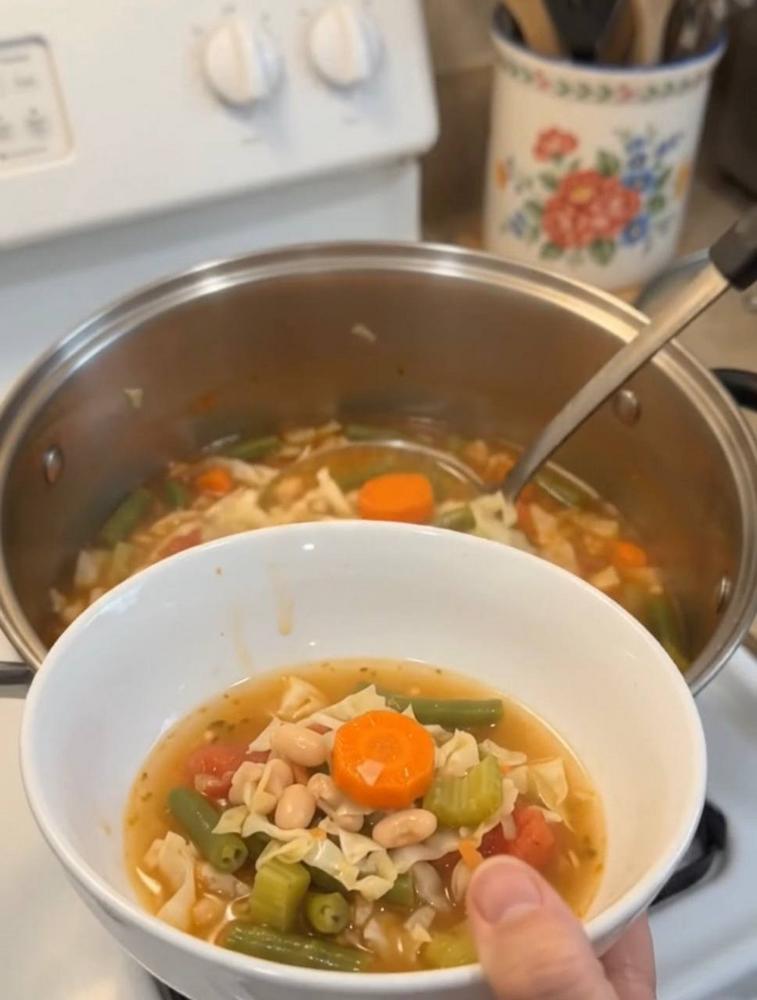
Instructions
- Heat the olive oil in a large Dutch oven or heavy-bottomed soup pot over medium heat.
- Add the chopped onion, carrots, and celery to the pot. Sauté for 8-10 minutes, stirring occasionally, until the vegetables have softened and the onion is translucent.
- Stir in the minced garlic, dried thyme, dried oregano, and smoked paprika (if using). Cook for another 1-2 minutes until fragrant, being careful not to burn the garlic.
- Pour in the vegetable broth and add the diced tomatoes (with their juice), rinsed cannellini beans, rinsed great northern beans, and the bay leaf. Bring the mixture to a boil.
- Once boiling, reduce the heat to low, cover the pot, and let it simmer for 15 minutes to allow the flavors to meld.
- Add the shredded cabbage and fresh green beans to the pot. Stir well to submerge the vegetables in the broth.
- Continue to simmer for another 15-20 minutes, or until the cabbage and green beans are tender but still have a slight bite. The exact cooking time will depend on how finely your cabbage is shredded.
- Remove the bay leaf from the soup and discard it.
- Season the soup generously with salt and freshly ground black pepper to taste. Start with a small amount and add more as needed. Remember that broth can vary in sodium content.
- Ladle the hot soup into bowls. Garnish each serving with a sprinkle of fresh chopped parsley before serving.
Cooking Tips and Variations
For the best results with your Hearty Cabbage and White Bean Vegetable Soup, consider these tips. Don’t overcook the cabbage; adding it towards the end ensures it retains some texture and doesn’t become mushy. You want it tender-crisp, not limp. Always rinse canned beans thoroughly under cold water before adding them to the soup. This not only removes excess sodium but also any starchy residue, leading to a cleaner flavor. To deepen the flavor profile even further, you can add a Parmesan rind (if not strictly vegan) to the simmering broth and remove it before serving – it adds an incredible umami boost. A splash of balsamic vinegar or a squeeze of fresh lemon juice at the end can also brighten the flavors and add a subtle tang.
This soup is incredibly versatile and lends itself beautifully to variations. If you’re looking to add more protein, consider stirring in cooked shredded chicken, browned Italian sausage (vegan or regular), or even some crumbled tempeh during the last 10 minutes of simmering. For extra vegetables, feel free to toss in spinach or kale during the last 5 minutes of cooking until wilted, or add diced potatoes, corn, or zucchini along with the cabbage. You can experiment with different types of beans too; kidney beans, chickpeas, or black beans would all work well. Adjust the spice level by adding a pinch of red pepper flakes with the other dried herbs for a bit of heat. While vegetable broth is recommended for a vegan soup, chicken broth can be used if you prefer a non-vegetarian option. For a thicker soup, you can mash a portion of the cooked white beans against the side of the pot with a spoon or an immersion blender, then stir them back into the soup. This adds creaminess without needing any dairy.
Storage and Reheating
This Hearty Cabbage and White Bean Vegetable Soup is fantastic for meal prep as it tastes even better the next day once the flavors have had more time to meld. To store leftovers, allow the soup to cool completely to room temperature. Transfer it to airtight containers and refrigerate for up to 4-5 days. Make sure the containers are sealed tightly to prevent any absorption of refrigerator odors.
For longer storage, this soup freezes beautifully. Once cooled, ladle the soup into freezer-safe containers or heavy-duty freezer bags, leaving about an inch of headspace to account for expansion. Label with the date and freeze for up to 3 months. When you’re ready to enjoy it, thaw the frozen soup overnight in the refrigerator. If you’re in a hurry, you can gently reheat it from frozen in a pot over low heat, stirring occasionally, though this may take a bit longer.
To reheat refrigerated soup, simply transfer the desired portion to a saucepan and warm over medium-low heat on the stovetop, stirring occasionally, until heated through. You can also reheat individual servings in the microwave in a microwave-safe bowl. Cover the bowl and heat in 1-2 minute intervals, stirring between each, until hot. If the soup seems a bit thick after refrigeration or freezing, you can add a splash of water or vegetable broth to reach your desired consistency. Always ensure the soup is piping hot before serving.
Frequently Asked Questions
Can I use fresh herbs instead of dried?
Absolutely! Fresh herbs will provide an even brighter, more vibrant flavor. As a general rule, use three times the amount of fresh herbs as dried. So, for this recipe, you would use about 3 teaspoons of fresh chopped thyme and 3 teaspoons of fresh chopped oregano. Add them towards the end of the cooking process for maximum flavor and freshness.
What if I don’t have both types of white beans?
No problem at all! You can easily use two cans of the same type of white bean, such as two cans of cannellini beans or two cans of great northern beans. Navy beans or even chickpeas (garbanzo beans) would also be delicious substitutes and work well in this recipe, offering a slightly different texture and flavor profile but still contributing to the heartiness.
Can I make this soup in a slow cooker?
Yes, you can adapt this recipe for a slow cooker. First, sauté the onion, carrots, celery, and garlic with the herbs in a separate pan on the stovetop as directed. Then, transfer the sautéed vegetables to your slow cooker. Add the vegetable broth, diced tomatoes, rinsed beans, and bay leaf. Cook on low for 6-8 hours or on high for 3-4 hours. During the last 30-60 minutes of cooking, stir in the shredded cabbage and green beans until they are tender. Season with salt and pepper before serving. This method is great for hands-off cooking!
How can I make this soup spicier?
If you enjoy a bit of heat, there are several ways to kick up the spice in this soup. You can add a pinch or two of red pepper flakes along with the dried herbs when you’re sautéing the aromatics. For a deeper, smoky heat, a dash of cayenne pepper can be added. Alternatively, you can include a diced jalapeño or serrano pepper (remove seeds for less heat) at the same time you add the carrots and celery. Taste as you go to achieve your desired spice level.