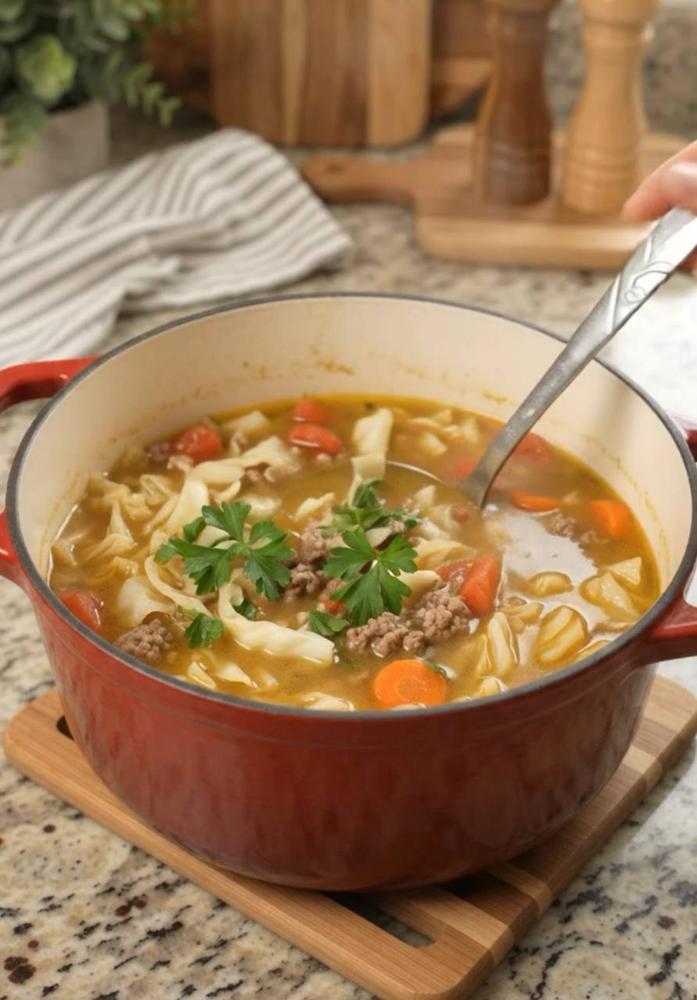
Instructions
- Brown the Beef: Heat olive oil in a large Dutch oven or heavy-bottomed pot over medium-high heat. Add the ground beef and cook, breaking it up with a spoon, until thoroughly browned and no pink remains. Drain off any excess fat from the pot.
- Sauté Aromatics: Add the chopped onion, diced carrots, and diced celery to the pot with the browned beef. Cook, stirring occasionally, for 5-7 minutes, or until the vegetables begin to soften. Add the minced garlic and cook for another 1 minute until fragrant, being careful not to burn the garlic.
- Build the Broth: Pour in the beef broth and add the can of undrained diced tomatoes, dried thyme, black pepper, and initial 1/2 teaspoon of salt. Stir everything together. Bring the mixture to a rolling boil, then reduce the heat to low, cover, and let it simmer for at least 15-20 minutes. This simmering time allows the flavors to meld beautifully and the vegetables to become tender.
- Cook the Noodles: Increase the heat to medium-high and bring the soup back to a gentle boil. Add the egg noodles to the pot. Cook the noodles according to package directions, typically 7-10 minutes, or until they are al dente (tender but still firm to the bite). Stir occasionally to prevent the noodles from sticking together or to the bottom of the pot. If the soup becomes too thick as the noodles absorb liquid, add a splash of water or extra broth to reach your desired consistency.
- Simmer and Serve: Once the noodles are cooked, remove the pot from the heat. Stir in the 1/4 cup of fresh chopped parsley. Taste the soup and adjust seasonings as needed, adding more salt or pepper if desired. Allow the soup to sit for a few minutes off the heat for the flavors to further meld.
- Garnish and Enjoy: Ladle the Hearty Ground Beef Noodle Soup into individual bowls. Garnish generously with additional fresh chopped parsley for a burst of color and fresh flavor. Serve hot and enjoy this comforting meal!
Cooking Tips and Variations
Achieving the perfect bowl of Hearty Ground Beef Noodle Soup is easy with a few key tips and a willingness to explore variations:
Noodle Management for Perfection: The biggest challenge in noodle soups is often preventing the noodles from becoming mushy or absorbing all the broth. To avoid this, especially if you anticipate leftovers, consider cooking the egg noodles separately in a pot of salted boiling water until al dente. Drain them and add a portion directly to each serving bowl, then ladle the hot soup over the top. This method ensures your noodles remain firm and your broth stays plentiful. If you do cook them directly in the soup, make sure to add them only when the soup is almost ready to serve, and keep a close eye on them to prevent overcooking. For leftovers, you might find adding a splash of broth or water when reheating helps rehydrate the soup.
Maximizing Flavor Depth: Don’t rush the browning of your ground beef. A good, deep sear on the beef creates delicious fond (browned bits) at the bottom of the pot, which will deglaze into the broth, adding a rich, complex flavor. You can deglaze with a splash of beef broth or even a little red wine after browning the beef and before adding the vegetables. For an even deeper umami punch, stir in a tablespoon of tomato paste with the garlic and cook it for a minute before adding the broth. A bay leaf added during the simmering stage and removed before serving can also contribute to a more profound flavor. A dash of Worcestershire sauce also works wonders for beef-based soups.
Vegetable Versatility: While carrots, celery, and onion form the classic mirepoix base, feel free to experiment with other vegetables. Frozen peas or corn can be stirred in during the last few minutes of cooking for added sweetness and color. Diced potatoes (russet or Yukon gold) can be added along with the broth and simmered until tender, making the soup even heartier. Fresh spinach or kale can be wilted into the soup right before serving for an extra boost of greens. Bell peppers, mushrooms, or even green beans are also excellent additions.
Herb and Spice Adjustments: Dried thyme is a fantastic complement to beef, but feel free to experiment with other herbs. A pinch of dried oregano, a touch of rosemary, or even a dash of smoked paprika can add interesting layers of flavor. For a touch of heat, a pinch of red pepper flakes can be added. Always taste and adjust seasonings at the end; soups often benefit from a final tweak of salt and pepper to truly make the flavors sing.
Broth Quality Matters: The quality of your beef broth or stock will significantly impact the final taste of your soup. Opt for a good quality, low-sodium beef broth to allow you to control the salt content yourself. If you have homemade beef stock, even better!
Thickening Options: This soup is typically brothy, but if you prefer a slightly thicker consistency, you can remove about 1/2 cup of broth, whisk in 1 tablespoon of cornstarch, and then stir it back into the simmering soup until thickened. Alternatively, mashing a portion of the cooked vegetables against the side of the pot can naturally thicken the broth.
Storage and Reheating
This Hearty Ground Beef Noodle Soup is fantastic for meal prepping and often tastes even better the next day as the flavors continue to meld.
Refrigeration: Allow the soup to cool completely before transferring it to an airtight container. It can be stored in the refrigerator for up to 3-4 days. Be aware that the noodles will continue to absorb liquid and may become softer and swell over time. If you plan to store for more than a day or two, consider cooking the noodles separately and adding them to each serving as you reheat.
Freezing: This soup freezes well, especially if the noodles are cooked separately. If the noodles are cooked directly in the soup, they may become very soft and somewhat mushy upon thawing and reheating. For best results when freezing, consider freezing the soup base (beef, vegetables, and broth) without the noodles. Once cooled, transfer the soup to freezer-safe containers or heavy-duty freezer bags, leaving some headspace for expansion. It can be stored in the freezer for up to 2-3 months. Thaw overnight in the refrigerator before reheating.
Reheating:
- Stovetop: Transfer the desired amount of soup to a saucepan. Heat over medium-low heat, stirring occasionally, until heated through. If the soup has thickened too much or absorbed a lot of liquid (especially if noodles were cooked in it), add a splash of beef broth or water to reach your desired consistency.
- Microwave: Place a single serving of soup in a microwave-safe bowl. Heat on high in 1-2 minute intervals, stirring in between, until hot. Again, add a little extra liquid if needed.
Serve reheated soup with fresh parsley, if desired, and a side of crusty bread.
Frequently Asked Questions
Can I use a different type of noodle?
Absolutely! While wide egg noodles are classic for their texture and ability to soak up broth, you can certainly experiment. Medium egg noodles, ditalini, small shells, or even broken spaghetti can work well. Just be mindful of their cooking times and adjust accordingly. Remember that smaller pasta shapes might absorb liquid more quickly.
What if my soup is too salty?
If your soup tastes too salty, there are a few tricks to help balance it out. You can add a peeled, raw potato to the simmering soup for the last 15-20 minutes; it will absorb some of the excess salt, then remove it before serving. Alternatively, dilute the soup by adding more unsalted beef broth or even just a bit of water. A squeeze of lemon juice or a splash of vinegar can also help cut through saltiness, adding a bright note.
Can I make this soup vegetarian?
While this is a ground beef noodle soup, you can adapt the concept to be vegetarian. Omit the ground beef and instead, add an extra tablespoon of olive oil to sauté a greater variety of vegetables like mushrooms, zucchini, or bell peppers. Use vegetable broth instead of beef broth. You could also add canned lentils or chickpeas for a protein boost, or a plant-based ground meat substitute if desired.
How can I make this soup even heartier?
To make the soup even more substantial, you have several options. Increase the amount of ground beef to 1.5 pounds. Add more hearty vegetables like diced potatoes (russet or Yukon gold work well), sweet potatoes, or even a can of drained and rinsed kidney beans or cannellini beans. You could also stir in a cup of cooked rice or quinoa towards the end of cooking, though this will significantly thicken the soup and absorb more liquid.