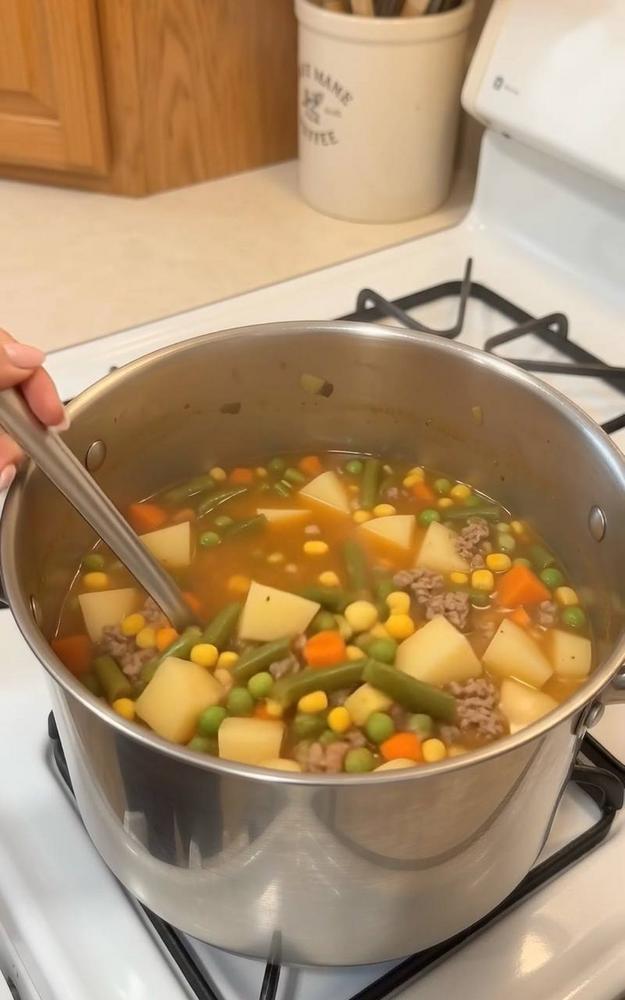
Instructions
- Heat the olive oil in a large Dutch oven or heavy-bottomed pot over medium-high heat. Add the ground beef and cook, breaking it apart with a spoon, until thoroughly browned. Drain any excess grease from the pot.
- Add the diced onion to the pot with the browned ground beef. Cook, stirring occasionally, until the onion softens and becomes translucent, about 5-7 minutes.
- Stir in the minced garlic and cook for another minute until fragrant, being careful not to burn it.
- Pour in the beef broth, diced tomatoes (with their juice), and tomato sauce. Add the Worcestershire sauce, dried thyme, dried oregano, and bay leaf. Stir to combine all ingredients.
- Bring the soup to a boil, then reduce the heat to low, cover, and let it simmer for 15 minutes to allow the flavors to meld.
- Add the diced carrots, celery, and potatoes to the pot. Stir well.
- Increase the heat slightly to bring the soup back to a gentle simmer. Cover and cook for 20-25 minutes, or until the potatoes and carrots are tender when pierced with a fork.
- Stir in the frozen green beans, corn kernels, and peas. Continue to simmer for another 5-7 minutes, or until all the vegetables are heated through and tender-crisp.
- Remove the bay leaf from the soup. Season generously with salt and freshly ground black pepper to taste. Start with 1 teaspoon of salt and 1/2 teaspoon of pepper, then adjust as needed.
- Ladle the hot soup into bowls. Garnish with fresh chopped parsley, if desired, and serve immediately.
Cooking Tips and Variations
To truly elevate your Hearty Ground Beef Vegetable Soup, consider these tips and variations that can enhance flavor, adjust texture, or cater to different dietary needs. One crucial tip for maximum flavor is to ensure your ground beef is thoroughly browned. Don’t rush this step; the caramelization of the meat adds a deep, savory foundation to your soup. After browning, always drain off any excess fat. This prevents your soup from becoming greasy and ensures a cleaner, richer broth. For an extra layer of aromatic complexity, consider adding a tablespoon of tomato paste to the pot after the onions and garlic have softened. Sauté it for a minute or two before adding the liquids; this helps to deepen the tomato flavor and adds a touch of umami.
When it comes to vegetables, feel free to make this soup your own. While our recipe includes classic choices like carrots, potatoes, green beans, corn, and peas, almost any vegetable can find a happy home in this pot. Try adding diced bell peppers (red, yellow, or green) for a burst of color and sweetness, or some chopped zucchini or yellow squash in the last 10-15 minutes of cooking. Leafy greens like spinach or kale can be stirred in during the last few minutes; they’ll wilt beautifully into the hot broth, adding extra nutrients. For a heartier texture and a touch of earthiness, sliced mushrooms are a fantastic addition. If you prefer a bit of spice, a pinch of red pepper flakes added with the dried herbs can give it a subtle kick.
Herb selection is another area where you can customize your soup. Beyond thyme and oregano, a bay leaf is essential for a classic flavor profile. Consider adding a sprig of fresh rosemary during the simmering process, removing it before serving, for a more robust, woodsy note. A dash of Italian seasoning can also be a convenient way to add a blend of complementary herbs. Don’t forget to taste and adjust your seasonings throughout the cooking process and especially before serving. The type of broth you use can significantly impact the final taste; low-sodium beef broth gives you more control over the salt content, but a richer beef stock can add even more depth. If you want to thicken the soup slightly, you can remove about a cup of the cooked potatoes, mash them, and stir them back into the soup, or create a simple cornstarch slurry (1 tablespoon cornstarch mixed with 2 tablespoons cold water) and stir it in during the last few minutes of simmering until the desired consistency is reached.
For a variation on the meat, you can easily substitute ground turkey or chicken for the ground beef for a lighter version, adjusting the cooking time slightly. If you’re looking to make this soup vegetarian or vegan, simply omit the ground beef, use vegetable broth, and consider adding a can of drained and rinsed kidney beans, black beans, or chickpeas for protein and texture. For a gluten-free version, ensure your Worcestershire sauce and beef broth are certified gluten-free. This soup is incredibly forgiving and truly shines when you tailor it to your family’s preferences. Experiment with different combinations and discover your own perfect bowl of comfort!
Storage and Reheating
This Hearty Ground Beef Vegetable Soup is one of those wonderful dishes that often tastes even better the next day, as the flavors have more time to meld and deepen. Proper storage is key to enjoying your leftovers safely and deliciously.
To store, allow the soup to cool completely to room temperature before transferring it to an airtight container. Dividing it into smaller, individual portions can speed up the cooling process and make future reheating more convenient. Once cooled, place the sealed containers in the refrigerator, where the soup will keep well for up to 3-4 days. It’s important not to leave the soup at room temperature for more than two hours to prevent bacterial growth.
For longer storage, this soup freezes beautifully. Once cooled, transfer the soup to freezer-safe containers or heavy-duty freezer bags. If using bags, lay them flat in the freezer until solid, then stack them to save space. Label the containers or bags with the date. Frozen soup will maintain its quality for up to 3 months. When you’re ready to enjoy it, thaw the soup overnight in the refrigerator before reheating.
Reheating the soup is straightforward. For individual servings, the microwave is your quickest option. Transfer a portion to a microwave-safe bowl, cover loosely, and heat on high for 2-3 minutes, stirring halfway through, until heated through. For larger quantities or a more even reheat, transfer the soup to a saucepan or pot and heat gently over medium-low heat on the stovetop, stirring occasionally, until it reaches a simmering temperature. If the soup appears too thick after refrigeration or freezing, you can add a splash of extra beef broth or water to thin it to your desired consistency. Always ensure the soup is piping hot before serving. These simple storage and reheating methods mean you can enjoy the comforting goodness of this soup long after you’ve made it, making it perfect for meal prep or those busy weeknights.
Frequently Asked Questions
Can I use frozen vegetables instead of fresh?
Absolutely! The recipe already calls for some frozen vegetables like green beans, corn, and peas, which are perfectly fine to use. For other vegetables like carrots, celery, or potatoes, you can often find pre-chopped frozen versions. Keep in mind that frozen vegetables might have a slightly softer texture than fresh ones, and they may not need as long to cook. If using entirely frozen vegetables, add them all during the last 10-15 minutes of simmering to prevent them from becoming too mushy.
What can I serve with this soup?
This hearty soup is a meal in itself, but it pairs wonderfully with a few simple accompaniments. A crusty loaf of bread or warm dinner rolls are perfect for dipping into the rich broth. Cornbread or cornbread muffins also make an excellent pairing, offering a touch of sweetness. For a lighter side, a simple green salad with a vinaigrette dressing can provide a refreshing contrast to the richness of the soup. Crackers or a grilled cheese sandwich are also classic, comforting choices.
How can I make this soup thicker?
If you prefer a thicker soup, there are a few ways to achieve this. One natural method is to simply mash some of the cooked potatoes directly in the pot with the back of a spoon; the starches released will help thicken the broth. Alternatively, you can create a cornstarch slurry: whisk 1 tablespoon of cornstarch with 2 tablespoons of cold water until smooth. Stir this mixture into the simmering soup during the last 5-7 minutes of cooking and continue to simmer until it thickens to your desired consistency. You can also let the soup simmer uncovered for a bit longer, allowing some of the liquid to evaporate, which will naturally thicken it.
Can I make this soup in a slow cooker?
Yes, this soup adapts well to a slow cooker! First, brown the ground beef and drain the fat in a skillet on the stovetop. Transfer the browned beef to your slow cooker. Add the diced onion, minced garlic, beef broth, diced tomatoes, tomato sauce, Worcestershire sauce, dried herbs, and bay leaf. Stir in the carrots, celery, and potatoes. Cook on low for 6-8 hours or on high for 3-4 hours, or until vegetables are tender. During the last 30 minutes of cooking, stir in the frozen green beans, corn, and peas. Season with salt and pepper to taste before serving. This method is perfect for a hands-off approach to a delicious meal.