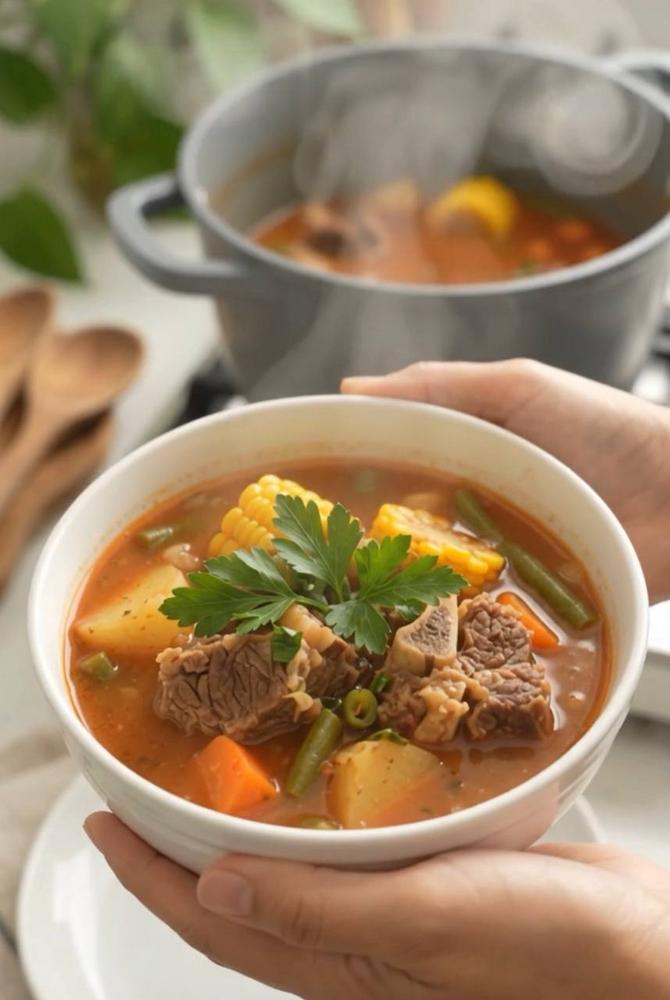
Instructions
- Prepare the Beef: Pat the beef pieces dry with paper towels. Season generously with salt and black pepper.
- Brown the Beef: Heat the olive oil in a large, heavy-bottomed pot or Dutch oven over medium-high heat. Add the beef in a single layer, working in batches if necessary to avoid overcrowding, and sear until deeply browned on all sides, about 3-4 minutes per side. Browning the beef is a crucial step for developing rich flavor in your soup. Remove the browned beef and set aside.
- Sauté Aromatics: Reduce the heat to medium. Add the chopped onion to the pot and cook, stirring occasionally, until softened and translucent, about 5-7 minutes. Add the minced garlic and cook for another minute until fragrant, being careful not to burn it.
- Deglaze the Pot: Pour in about 1/2 cup of beef broth and use a wooden spoon to scrape up any browned bits from the bottom of the pot. These bits are packed with flavor and will enrich your broth.
- Combine Ingredients: Return the browned beef to the pot. Stir in the remaining beef broth, water, crushed tomatoes (or tomato paste), bay leaves, dried thyme, and dried oregano. Add the remaining salt and pepper.
- Simmer for Tenderness: Bring the soup to a gentle boil, then reduce the heat to low, cover the pot, and let it simmer for at least 1.5 to 2 hours, or until the beef is very tender and easily falls apart with a fork. For bone-in cuts like short ribs, this longer simmering time is essential for extracting maximum flavor and achieving that melt-in-your-mouth texture.
- Add Harder Vegetables: After the beef has simmered for the initial time and is tender, add the diced carrots and potatoes to the pot. Continue to simmer, covered, for another 20-25 minutes, or until the carrots and potatoes are fork-tender.
- Add Softer Vegetables: Stir in the green beans and corn (either kernels or corn on the cob rounds). Cook for an additional 5-10 minutes, or until the green beans are tender-crisp and the corn is cooked through. You want these vegetables to retain some of their texture and vibrant color.
- Adjust Seasoning: Remove the bay leaves. Taste the soup and adjust seasoning with additional salt and pepper if needed. If the broth seems too thick, you can add a little more water or beef broth to reach your desired consistency.
- Serve: Ladle the hot soup into bowls. Garnish generously with fresh chopped parsley before serving.
Cooking Tips and Variations
Achieving the perfect Hearty Vegetable Beef Soup isn’t just about following a recipe; it’s about understanding the nuances that elevate a good soup to a truly great one. Here are some essential tips and exciting variations to help you master this comforting classic.
Beef Selection for Unmatched Flavor: The foundation of any great beef soup is, of course, the beef itself. For the most profound flavor and melt-in-your-mouth tenderness, opt for bone-in cuts like beef short ribs, oxtail, or stewing beef with good marbling. These cuts contain connective tissue that breaks down during long, slow cooking, enriching the broth with gelatin and imparting an incredible depth of flavor. If you prefer boneless, chuck roast cut into 2-inch cubes is an excellent choice. Always remember to pat your beef dry and sear it thoroughly on all sides before simmering; this browning step, known as the Maillard reaction, creates complex savory flavors that are impossible to achieve otherwise.
The Power of Quality Broth: While the beef provides a fantastic base, a high-quality beef broth or stock is paramount. If you have homemade beef stock, this is the time to use it! Its richness will elevate your soup to gourmet status. If using store-bought, choose a low-sodium option so you can control the seasoning yourself. For an even deeper flavor profile, consider adding a parmesan rind to the pot during the simmering stage; it will infuse the broth with a savory umami kick.
Vegetable Timing is Key: To ensure all your vegetables are perfectly cooked—tender but not mushy—it’s crucial to add them at the right stages. Harder, root vegetables like carrots and potatoes need more time to cook, so they go in earlier. Softer, quicker-cooking vegetables like green beans and corn should be added towards the end of the simmering process. This staggered addition prevents overcooking and helps maintain their vibrant color and texture, contributing to a more appealing and delicious soup.
Flavor Development Through Simmering: Patience is a virtue when making this soup. The long, slow simmer is not just for tenderizing the beef; it’s also essential for allowing all the flavors to meld and deepen. Resist the urge to rush this step. The longer the soup simmers gently, the more the ingredients will contribute to a complex and harmonious flavor profile. Aim for at least 1.5 to 2 hours of simmering after adding the liquid, and even longer if time permits.
Seasoning Throughout: Don’t just season at the beginning and end. Taste your soup periodically, especially after adding new ingredients, and adjust the salt and pepper as needed. Remember that the flavors will concentrate as the soup simmers, so it’s often better to start with a conservative amount and add more later. A pinch of sugar can also help balance the acidity of the tomatoes and enhance the natural sweetness of the vegetables.
Aromatic Boost: Beyond onions and garlic, consider adding other aromatics for an extra layer of flavor. A leek, chopped and added with the onion, can provide a subtle sweetness. A sprig of fresh rosemary or a few sprigs of fresh thyme tied with kitchen twine can be added during the simmering stage and removed before serving for a more pronounced herbal note.
The Finishing Touch: Fresh herbs, like the parsley suggested, are not just for garnish; they add a burst of freshness and brightness that cuts through the richness of the soup. Other excellent choices include fresh dill or chives, finely chopped and stirred in just before serving. A squeeze of fresh lemon juice at the very end can also brighten the flavors beautifully.
Serving Suggestions: This hearty soup is a meal in itself, but it pairs wonderfully with some accompaniments. Serve it with a crusty baguette or a rustic sourdough bread for dipping. Cornbread or even a side of fluffy white rice can also be excellent choices to soak up every last drop of that delicious broth.
Variations to Explore:
- Spice It Up: For a touch of warmth, add a pinch of red pepper flakes or a dash of smoked paprika along with the other seasonings.
- Add Legumes: Canned kidney beans, cannellini beans, or chickpeas can be rinsed and drained, then added during the last 20 minutes of cooking for extra protein and fiber.
- Grain Goodness: Stir in 1/2 cup of pearl barley or farro along with the harder vegetables. These grains will absorb some of the broth and add a lovely chewiness to the soup. You may need to add additional broth or water if using grains.
- Mushroom Magic: Sauté sliced mushrooms (cremini or button) with the onions for an earthy, umami boost.
- Greens Power: Stir in a few handfuls of fresh spinach or kale during the last 5 minutes of cooking until just wilted for an added nutritional punch.
- Tomato Depth: Instead of just crushed tomatoes, consider adding a can of diced tomatoes (drained or undrained for more liquid) for varying textures. A tablespoon of balsamic vinegar added during the last 30 minutes can also deepen the tomato flavor.
- Root Vegetable Medley: Experiment with other root vegetables like parsnips, turnips, or sweet potatoes, adding them at the same time as the carrots and potatoes.
- Pressure Cooker Method: If you’re short on time, a pressure cooker can significantly reduce the cooking time for the beef. Brown the beef and sauté aromatics as usual in the pressure cooker pot. Add all liquids and seasonings (except the softer vegetables), secure the lid, and cook on high pressure for 45-60 minutes for bone-in beef, or 30-40 minutes for boneless stew meat. Allow natural release for 10-15 minutes, then quick release any remaining pressure. Add the harder vegetables and cook on high pressure for another 5-7 minutes with a quick release. Finally, stir in the softer vegetables and simmer on sauté mode until tender.
By incorporating these tips and trying out some variations, you’ll not only create an incredibly delicious Hearty Vegetable Beef Soup but also gain confidence in adapting recipes to your personal taste and what you have on hand. Enjoy the process and savor every comforting spoonful!
Storage and Reheating
One of the many joys of making a large pot of Hearty Vegetable Beef Soup is the promise of delicious leftovers. This soup often tastes even better the next day, as the flavors have more time to meld and deepen. Proper storage and reheating are key to enjoying your soup safely and deliciously.
Storage:
- Cool Down Quickly: Before storing, allow the soup to cool down to room temperature as quickly as possible, ideally within 1-2 hours. To speed up the cooling process, you can divide the soup into smaller containers or place the pot in a sink filled with ice water (ensure no water gets into the soup).
- Refrigeration: Transfer the cooled soup to airtight containers. Store it in the refrigerator for up to 3-4 days. Make sure the containers are sealed tightly to prevent absorption of other odors and to maintain freshness.
- Freezing: This soup freezes beautifully, making it an excellent option for meal prep. Once completely cooled, transfer the soup to freezer-safe airtight containers or heavy-duty freezer bags. If using bags, lay them flat in the freezer to save space. Label with the date. Frozen soup can be stored for up to 2-3 months. Note that potatoes can sometimes become a bit mealy in texture after freezing and thawing, but the overall flavor of the soup will still be excellent. If this is a concern, you can cook the potatoes separately and add them when reheating, or simply embrace the slightly softer texture.
Reheating:
- From the Refrigerator:
- Stovetop: The best way to reheat is on the stovetop. Pour the desired amount of soup into a saucepan or pot. Heat over medium-low heat, stirring occasionally, until it reaches a gentle simmer and is heated through. This usually takes about 10-15 minutes, depending on the quantity.
- Microwave: For individual portions, transfer the soup to a microwave-safe bowl. Heat on high for 2-4 minutes, stirring halfway through, until piping hot. Be careful, as the bowl may be hot.
- From the Freezer:
- Thawing First: For best results, it’s recommended to thaw frozen soup in the refrigerator overnight before reheating. Once thawed, follow the stovetop or microwave instructions for refrigerated soup.
- Reheating from Frozen (Stovetop): If you’re in a hurry, you can reheat frozen soup directly on the stovetop. Place the frozen block of soup in a pot over very low heat. Add a splash of water or broth to the bottom of the pot to prevent scorching. Cover and let it slowly melt and heat through, stirring occasionally and breaking up the frozen chunks as it thaws. Increase the heat to medium-low once mostly thawed, and continue to heat until simmering and hot throughout. This method can take 20-30 minutes or more, depending on the amount.
Tips for Reheating:
- Check Consistency: Soup can thicken in the refrigerator or freezer. If your soup seems too thick after reheating, add a little extra beef broth or water to reach your desired consistency.
- Taste and Adjust: Always taste your reheated soup before serving. You might find it needs a fresh sprinkle of salt, pepper, or even a dash of fresh herbs to revive its flavors.
- Fresh Garnish: A fresh sprinkle of chopped parsley or other herbs upon reheating can make leftovers feel just as special as the first serving.
With these simple guidelines, you can enjoy your Hearty Vegetable Beef Soup for days, making mealtime easy and delicious whenever a craving for comfort strikes.
Frequently Asked Questions
Can I make this soup in a slow cooker?
Absolutely! A slow cooker is a fantastic way to make this Hearty Vegetable Beef Soup. First, brown the beef and sauté the onions and garlic on the stovetop as directed – this step is crucial for flavor development and shouldn’t be skipped. Transfer the browned beef, sautéed aromatics, all liquids, and seasonings (except the softer vegetables like green beans and corn) to your slow cooker. Cook on low for 6-8 hours or on high for 3-4 hours, until the beef is incredibly tender. During the last 30-45 minutes of cooking, stir in the carrots and potatoes. Then, during the final 15-20 minutes, add the green beans and corn until all vegetables are tender. This method yields a wonderfully flavorful and convenient soup.
What if I don’t have bone-in beef short ribs?
No problem at all! While bone-in short ribs contribute immense flavor to the broth, boneless beef chuck roast is an excellent and widely available alternative. Cut the chuck roast into 1.5 to 2-inch cubes. You can also use other stewing cuts like beef round or even a combination of stew meat. Regardless of the cut, always ensure you brown the beef thoroughly before adding any liquids to lock in those deep, savory flavors. If using boneless beef, you might consider adding an extra cup of beef broth or even a beef bouillon cube to compensate for the flavor typically extracted from bones.
Can I add other vegetables to this soup?
Yes, this Hearty Vegetable Beef Soup is incredibly versatile and adaptable to your preferences or whatever vegetables you have on hand. Feel free to experiment! Great additions include sliced celery (add with onions), parsnips (add with carrots and potatoes), diced bell peppers (add with softer vegetables), or even a handful of fresh spinach or kale stirred in during the last 5 minutes of cooking until just wilted. Just remember to consider the cooking times of different vegetables; harder root vegetables go in earlier, while softer greens or quick-cooking items go in later to prevent them from becoming mushy.
Why is my soup not as flavorful as I’d like?
There are a few common reasons why a soup might lack flavor. Firstly, ensure you didn’t skip the crucial step of browning the beef before simmering. Searing the beef creates a deep, caramelized crust that adds significant flavor to the entire soup. Secondly, the quality of your beef broth makes a huge difference; use a good quality, full-bodied beef broth or stock. Thirdly, ensure adequate simmering time. Flavors need time to meld and develop, so don’t rush the simmering process. Finally, seasoning is key: taste and adjust the salt and pepper throughout the cooking process. Sometimes a pinch more salt, a dash of fresh herbs, or even a squeeze of lemon juice at the end can brighten and enhance all the flavors.
Conclusion
As the aroma of simmering beef and garden-fresh vegetables fills your kitchen, you’ll know you’re on the cusp of creating something truly special. Our Hearty Vegetable Beef Soup isn’t just a recipe; it’s an invitation to experience the profound comfort and satisfaction that only a homemade, lovingly prepared meal can provide. Each spoonful is a testament to the power of simple, quality ingredients transformed into a symphony of flavors and textures – from the tender, rich beef to the vibrant, perfectly cooked vegetables, all swimming in a deeply savory broth.
This soup is more than just sustenance; it’s a bowl of warmth, a source of nourishment, and a dish that brings people together. Whether you’re gathering around the table with loved ones on a chilly evening, seeking a satisfying meal after a long day, or simply craving that unmistakable taste of home, this Hearty Vegetable Beef Soup delivers every time. It’s a classic for a reason, embodying the very essence of comfort food.
Now that you have all the tools, tips, and techniques at your disposal, we encourage you to roll up your sleeves and bring this incredible recipe to life in your own kitchen. Don’t be afraid to make it your own – experiment with variations, adjust seasonings to your palate, and savor the process of creating something truly delicious. Once you’ve experienced the rich, comforting embrace of this Hearty Vegetable Beef Soup, we’re confident it will earn a permanent place in your recipe repertoire. Please share your creations with us, or comment below with your favorite variations and serving suggestions. Happy cooking, and enjoy every heartwarming bite!