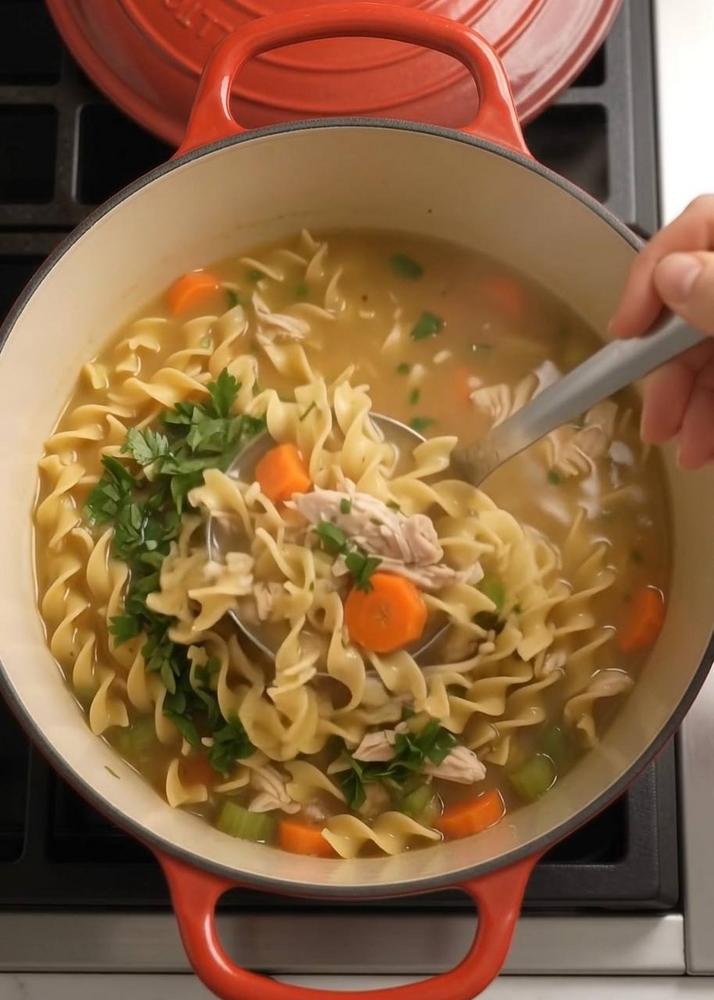
Instructions
- Heat the olive oil in a large Dutch oven or stock pot over medium heat.
- Add the chopped onion, carrots, and celery to the pot. Sauté for 5-7 minutes, stirring occasionally, until the vegetables begin to soften and the onion becomes translucent.
- Add the minced garlic to the pot and cook for another 1 minute until fragrant, being careful not to burn it.
- Pour in the chicken broth. Add the shredded or diced cooked chicken, dried thyme, bay leaf, black pepper, and initial 1/4 teaspoon of salt.
- Bring the soup to a gentle boil, then reduce the heat to low, cover, and let it simmer for at least 20-30 minutes to allow the flavors to meld. The longer it simmers, the richer the flavor.
- After simmering, remove the bay leaf from the pot and discard it.
- Increase the heat to medium-high and bring the soup to a rolling boil. Add the wide egg noodles and cook according to package directions, usually 6-8 minutes, or until al dente (tender but still firm to the bite). Be careful not to overcook the noodles, as they will continue to soften in the hot broth.
- Taste the soup and adjust seasonings as needed, adding more salt or pepper if desired.
- Ladle the hot soup into bowls. Garnish each serving generously with fresh chopped parsley before serving.
Cooking Tips and Variations
For the best flavor, consider using homemade chicken stock. It provides a depth that store-bought broth often lacks, and you have complete control over the sodium content. If using store-bought, opt for a good quality, low-sodium variety.
To prepare your own chicken for the soup, you can boil 1-2 boneless, skinless chicken breasts or thighs directly in the broth for about 15-20 minutes, or until cooked through. Remove the chicken, shred it with two forks, and then return it to the pot. This method infuses even more chicken flavor into your broth.
Don’t overcrowd your pot when sautéing the aromatics. If you’re doubling the recipe, you might need to sauté in batches to ensure the vegetables caramelize slightly rather than steam.
For a clearer broth, skim any foam that rises to the surface during the initial simmering stage. Also, avoid stirring vigorously once the noodles are added, as this can release starch and cloud the broth.
Prevent soggy noodles by adding them only when you’re ready to serve. If you plan to make a large batch for meal prep, cook the noodles separately and add them to individual servings just before eating. This keeps them perfectly al dente.
Feel free to experiment with other vegetables. Diced potatoes, green beans, peas, or spinach can be lovely additions. Add heartier vegetables like potatoes with the carrots and celery, and quick-cooking greens like spinach or peas in the last 5 minutes of simmering.
Enhance the herb profile by adding a sprig of fresh rosemary or a few sage leaves during the simmering stage. Remember to remove them before serving. A squeeze of fresh lemon juice at the very end can also brighten all the flavors.
For a slightly richer soup, you can stir in a tablespoon of butter or a splash of heavy cream just before serving, though this is optional and not traditional.
If you prefer a thicker broth, you can make a slurry of 1 tablespoon cornstarch mixed with 2 tablespoons cold water and stir it into the simmering soup until thickened. However, a good chicken noodle soup typically has a lighter, more brothy consistency.
Adjust the amount of chicken to your liking. More chicken will make the soup heartier and more protein-rich. Similarly, if you love noodles, feel free to add a bit more, but be mindful that they will absorb more broth.
Storage and Reheating
Allow the soup to cool completely before transferring it to airtight containers. Store in the refrigerator for up to 3-4 days. For longer storage, chicken noodle soup freezes beautifully for up to 3 months. If freezing, it’s highly recommended to cook and store the noodles separately, adding them only when reheating, as frozen and reheated noodles can become mushy.
To reheat, transfer the desired portion to a saucepan over medium-low heat. Stir occasionally until heated through. If the soup has thickened significantly (due to noodles absorbing broth), you may need to add a splash of extra chicken broth or water to reach your desired consistency. If you stored noodles separately, cook fresh noodles and add them to the reheated broth.
When reheating frozen soup, thaw it in the refrigerator overnight or gently reheat it from frozen on the stovetop over low heat, stirring frequently. Again, add fresh noodles if they were stored separately.
Frequently Asked Questions
Can I use raw chicken directly in the soup?
Yes, you absolutely can! If using raw chicken (boneless, skinless breasts or thighs are best), add them to the broth along with the other ingredients in step 4. Simmer until the chicken is cooked through, usually about 20-25 minutes. Then, remove the chicken, shred it, and return it to the pot before adding the noodles. This method adds even more chicken flavor to your broth.
How can I prevent my noodles from getting mushy?
The best way to prevent mushy noodles is to cook them separately and add them to individual bowls just before serving. If you must cook them directly in the soup, add them in the last 6-8 minutes of cooking and be careful not to overcook them. They will continue to absorb liquid and soften even after the heat is off.
What if my broth isn’t as flavorful as I’d like?
If your broth lacks flavor, there are a few things you can do. First, ensure you’ve simmered it long enough (at least 20-30 minutes, but longer is better for flavor development). Second, taste and adjust your seasonings – a pinch more salt, pepper, or a dash of poultry seasoning can make a big difference. You can also add a small amount of chicken bouillon or a few drops of fish sauce (it won’t make the soup taste like fish, but it enhances savory notes) to boost the umami.
Can I make this soup vegetarian?
While this is a chicken noodle soup recipe, you can adapt it to be vegetarian. Omit the chicken and use vegetable broth instead of chicken broth. You can add extra vegetables like mushrooms, zucchini, or bell peppers, or incorporate a can of drained and rinsed cannellini beans for added protein and heartiness.