Instructions
- Preheat your oven to 400°F (200°C). Line a large, rimmed baking sheet with parchment paper or aluminum foil for easier cleanup.
- In a very large mixing bowl, combine the chopped potatoes, red bell pepper strips, green bell pepper strips, and sliced sausage.
- Drizzle the olive oil over the ingredients in the bowl.
- Add the dried oregano, dried thyme, garlic powder, smoked paprika (if using), salt, and black pepper to the bowl.
- Toss everything together thoroughly until all the potatoes, peppers, and sausage are evenly coated with the oil and seasonings. Make sure to get into all the nooks and crannies.
- Pour the seasoned mixture onto the prepared baking sheet. Spread the ingredients out into a single layer, ensuring they are not overcrowded. If your baking sheet is too small, use two sheets to prevent steaming and promote even browning and crisping. Overcrowding can lead to soggy vegetables instead of nicely roasted ones.
- Roast in the preheated oven for 20 minutes.
- After 20 minutes, carefully remove the baking sheet from the oven and give the mixture a good stir or flip the ingredients with a spatula. This helps ensure even cooking and browning on all sides.
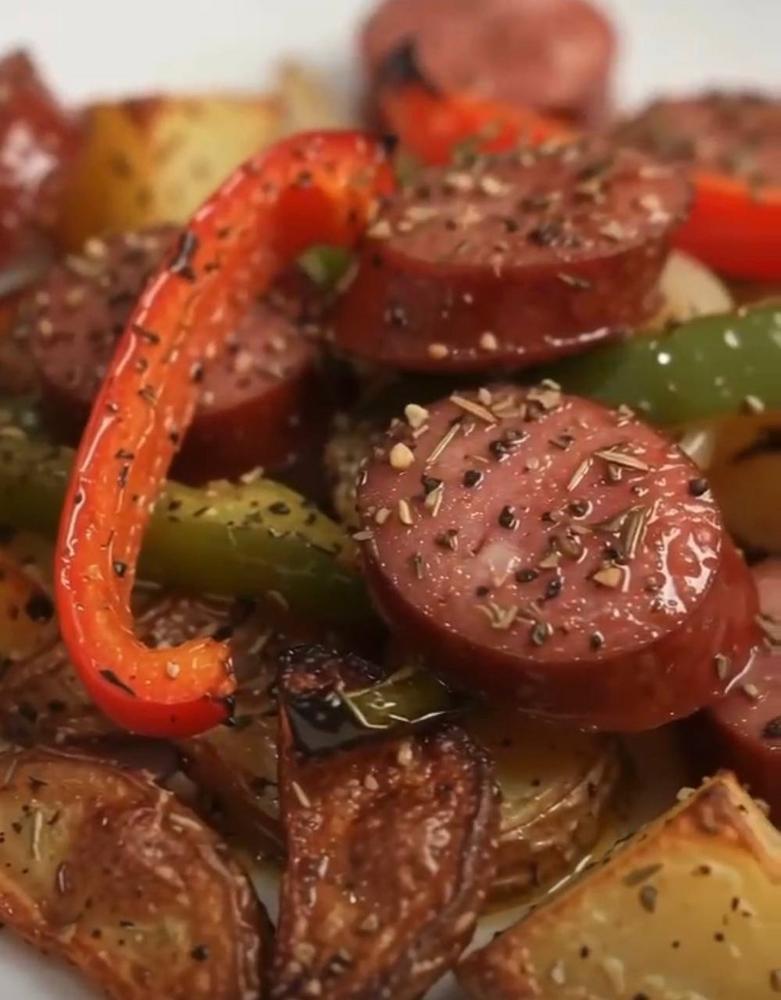
- Return the baking sheet to the oven and continue roasting for another 15-25 minutes, or until the potatoes are tender when pierced with a fork and golden brown, the peppers are tender-crisp and slightly caramelized, and the sausage is heated through and slightly browned at the edges. The total roasting time will vary depending on your oven and how small you cut your potatoes.
- Once cooked to your desired tenderness and crispiness, remove the baking sheet from the oven.
- Taste and adjust seasoning if necessary.
- Serve hot, garnished with fresh chopped parsley if desired.
Cooking Tips and Variations
To achieve the best possible results with your One-Pan Roasted Sausage, Peppers, and Potatoes, consider these expert tips. First and foremost, ensure your potatoes are as dry as possible before tossing them with oil and seasonings. Excess moisture can lead to steaming rather than roasting, preventing that coveted crispy exterior. After washing, pat them thoroughly with a clean kitchen towel or paper towels. When spreading the ingredients on the baking sheet, avoid overcrowding. This is perhaps the most crucial tip for any roasted vegetable dish. If the pan is too full, steam gets trapped, and your vegetables will steam instead of roast, resulting in a less desirable texture. If necessary, divide the mixture between two baking sheets to allow for proper air circulation and direct heat exposure. Use a hot oven, as specified, and don’t be afraid to let the potatoes get a good golden-brown color; that’s where much of the flavor and texture comes from.
For variations, the possibilities are nearly endless! Experiment with different types of sausage: a spicy Italian sausage will add a fiery kick, while a chicken apple sausage offers a slightly sweeter, leaner option. Chorizo can bring a beautiful smoky paprika flavor and vibrant color. Don’t limit yourself to just bell peppers; add other quick-cooking vegetables like sliced onions, zucchini, cherry tomatoes, or broccoli florets. If adding onions, they can go in at the beginning with the potatoes. For softer vegetables like zucchini or cherry tomatoes, add them during the last 15-20 minutes of roasting so they don’t become mushy. You can also vary the seasoning blend. Instead of oregano and thyme, try a blend of Italian herbs, Herbes de Provence, or even a touch of chili powder and cumin for a Tex-Mex twist. A squeeze of fresh lemon juice or a drizzle of balsamic glaze over the finished dish can add a bright, tangy counterpoint that elevates all the flavors. For an extra layer of flavor, toss in a handful of minced garlic cloves during the last 10-15 minutes of roasting, being careful not to burn the garlic. A sprinkle of grated Parmesan cheese in the last few minutes can also add a savory, cheesy crust.
For even crispier potatoes, consider cutting them slightly smaller or par-boiling them for 5-7 minutes before tossing with the other ingredients. This helps them cook through faster and achieve a crispier exterior in the oven. However, for this simple one-pan recipe, starting raw works perfectly well. Another trick for maximizing flavor is to use a high-quality olive oil that can withstand the heat of the oven. If you enjoy a touch of heat, a pinch of red pepper flakes can be added along with the other seasonings. Remember to cut all your vegetables and sausage into roughly similar-sized pieces to ensure they cook evenly. Potatoes typically take the longest, so cutting them to about 1-inch chunks is ideal for them to finish cooking at the same time as the peppers and sausage.
Finally, don’t be shy with your seasoning! Roasting tends to mellow flavors, so a generous hand with salt, pepper, and herbs is crucial for a truly delicious outcome. Taste the mixture before it goes into the oven and adjust as needed. A final sprinkle of fresh herbs like chopped parsley or chives after roasting not only adds a pop of color but also a fresh, vibrant aroma that brightens the entire dish. This dish is incredibly forgiving and encourages experimentation, so feel free to make it your own!
Storage and Reheating
This One-Pan Roasted Sausage, Peppers, and Potatoes makes for excellent leftovers, perfect for meal prep or a quick lunch the next day. To store, allow the dish to cool completely to room temperature. This is important to prevent condensation, which can lead to sogginess and affect the quality of the food. Once cooled, transfer the leftovers to an airtight container. It can be stored in the refrigerator for up to 3-4 days. For longer storage, you can freeze individual portions. Place cooled portions in freezer-safe containers or heavy-duty freezer bags. It can be frozen for up to 2-3 months, though the texture of the potatoes may become slightly softer after freezing and thawing.
When reheating, there are a few options depending on your preference and available equipment. For best results, especially if you want to revive some of that crispy texture, reheating in the oven is highly recommended. Preheat your oven to 350°F (175°C). Spread the leftovers in a single layer on a baking sheet. You can line the sheet with foil or parchment paper for easy cleanup. Heat for 10-15 minutes, or until thoroughly heated through and the potatoes and peppers have slightly re-crisped. If the dish seems a bit dry, you can sprinkle a tablespoon or two of water or chicken broth over it before reheating to add some moisture, though this is usually not necessary. The oven method is ideal for larger quantities or if you’re not in a rush.
For a quicker reheating method, the microwave can be used, though it will result in a softer texture for the potatoes and peppers. Place a single serving in a microwave-safe dish. Cover loosely with a lid or microwave-safe plastic wrap, leaving a small vent. Heat on high for 1-2 minutes, stirring halfway through, or until heated through. Be careful not to overheat, as this can dry out the sausage and vegetables. If you prefer a combination of speed and some crispness, you can reheat in a skillet on the stovetop. Heat a tablespoon of olive oil or butter in a non-stick skillet over medium heat. Add the leftovers and cook, stirring occasionally, for 5-7 minutes, until heated through and some of the edges have re-crisped. This method works well for individual servings and helps to bring back some of the roasted qualities. Regardless of the method, always ensure the food is heated to an internal temperature of 165°F (74°C) for food safety.
Frequently Asked Questions
Can I prepare this dish ahead of time?
While this dish is best enjoyed fresh out of the oven, you can do some prep work in advance. You can chop the potatoes and bell peppers up to a day ahead and store them in separate airtight containers in the refrigerator. If you’re concerned about potatoes browning, you can submerge them in cold water after chopping, then drain and pat them very dry just before roasting. The sausage can also be sliced ahead of time. However, it’s best to toss everything with the oil and seasonings just before baking to prevent the vegetables from becoming soggy or releasing too much moisture.
What kind of sausage is best for this recipe?
The best kind of sausage is really a matter of personal preference! For this recipe, pre-cooked or smoked sausages work wonderfully because they only need to be heated through and browned, minimizing cooking time. Options like kielbasa, smoked chicken sausage, pre-cooked Italian sausage (mild or hot), or even fully cooked chorizo are excellent choices. If you use raw sausage (like fresh Italian sausage), you may need to cook it slightly longer to ensure it’s fully cooked, or even par-cook it before adding it to the sheet pan to ensure it cooks evenly with the vegetables.
My potatoes aren’t getting crispy, what am I doing wrong?
There are a few common culprits when potatoes don’t crisp up. First, ensure your oven is fully preheated to the specified temperature; an underheated oven won’t provide enough direct heat. Second, and most importantly, avoid overcrowding the baking sheet. If the pan is too full, the vegetables will steam instead of roast, leading to a soft, soggy texture. Use two baking sheets if necessary, giving the ingredients plenty of space. Third, make sure the potatoes are patted very dry after washing and before tossing with oil. Excess moisture prevents crisping. Finally, ensure you’re using enough oil to coat them evenly, as oil helps conduct heat and promote browning.
Can I add other vegetables to this recipe?
Absolutely! This recipe is incredibly versatile and welcomes additions. Good options that roast well alongside potatoes and peppers include sliced onions (add at the beginning), zucchini (add during the last 15-20 minutes), cherry tomatoes (add during the last 10-15 minutes), broccoli florets (add during the last 15-20 minutes), or even mushrooms. Just be mindful of the cooking times for different vegetables; softer or quicker-cooking vegetables should be added later in the roasting process to prevent them from becoming mushy.