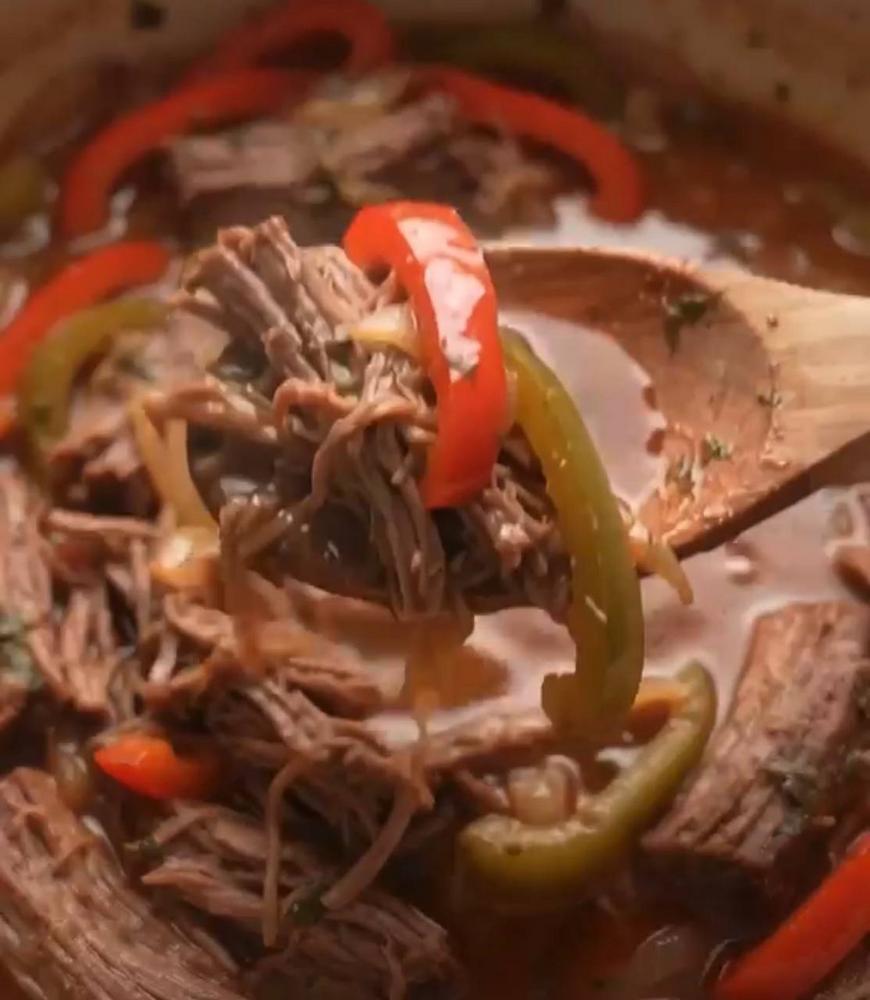
Instructions
- Prepare the Beef: Pat the beef chuck roast pieces dry thoroughly with paper towels. Season generously all over with salt and freshly ground black pepper.
- Sear the Beef: Heat the olive oil in a large Dutch oven or heavy-bottomed pot over medium-high heat until shimmering. Add the beef chunks in a single layer, working in batches if necessary to avoid overcrowding the pot. Sear on all sides until deeply browned and a rich crust forms, about 3-4 minutes per side. Remove the seared beef to a plate and set aside.
- Sauté the Aromatics: Reduce the heat to medium. Add the sliced onions and bell peppers to the same pot, adding a little more olive oil if needed. Sauté, stirring occasionally, until the vegetables have softened and the onions are translucent, about 8-10 minutes.
- Add Garlic and Tomato Paste: Stir in the minced garlic and tomato paste. Cook for another 1-2 minutes, stirring constantly, until the garlic is fragrant and the tomato paste has deepened in color.
- Deglaze (if using wine): If using red wine, pour it into the pot and scrape up any browned bits from the bottom of the pot with a wooden spoon. Let the wine simmer and reduce by about half, for 2-3 minutes.
- Combine Ingredients: Return the seared beef to the pot. Pour in the crushed tomatoes and beef broth. Stir in the dried oregano, dried basil, dried thyme, red pepper flakes (if using), and bay leaves. Stir everything together to combine.
- Slow Cook (Dutch Oven/Stovetop Method): Bring the mixture to a gentle simmer. Once simmering, reduce the heat to low, cover the pot tightly, and cook for 3 to 4 hours, or until the beef is fork-tender and easily shreds. Check occasionally to ensure there’s enough liquid; if it seems too dry, add a splash more beef broth.
- Slow Cooker Method: After searing the beef and sautéing the aromatics in a separate pan, transfer the beef and sautéed vegetables to the slow cooker. Add the crushed tomatoes, beef broth, red wine (if using), tomato paste, herbs, and bay leaves. Stir to combine. Cook on low for 6-8 hours or on high for 3-4 hours, until the beef is fork-tender.
- Pressure Cooker Method: Use the sauté function on your pressure cooker to sear the beef and sauté the aromatics as described above. Deglaze with wine if using. Add the remaining ingredients (crushed tomatoes, beef broth, tomato paste, herbs, bay leaves). Secure the lid and set to high pressure for 60-70 minutes. Allow for a natural pressure release for at least 15 minutes before quick-releasing any remaining pressure.
- Shred the Beef: Carefully remove the cooked beef from the pot and place it on a cutting board or in a large bowl. Using two forks, shred the beef into bite-sized pieces. Discard any large pieces of fat or gristle.
- Finish the Sauce: Remove and discard the bay leaves from the sauce. If the sauce is too thin, you can simmer it uncovered for 10-15 minutes to reduce and thicken. Taste the sauce and adjust seasoning with salt and pepper as needed.
- Combine and Serve: Return the shredded beef to the pot with the sauce and stir to coat thoroughly. Let it simmer for another 5-10 minutes to allow the flavors to meld. Garnish with fresh chopped parsley before serving.
Cooking Tips and Variations
For the most tender and flavorful Italian Shredded Beef, choosing the right cut of meat is paramount. Chuck roast, also known as pot roast or chuck eye roast, is your best friend here. Its marbling and connective tissue break down beautifully during slow cooking, resulting in that coveted fall-apart texture. Brisket is another excellent option. Always pat your beef dry before searing; this is crucial for achieving a deep, flavorful crust through the Maillard reaction, which adds immense depth to the final dish. Don’t overcrowd the pan when searing, as this will steam the meat instead of browning it.
To deepen the flavor profile, consider adding a splash of balsamic vinegar along with the tomatoes for a touch of tang and sweetness. For a spicier kick, increase the amount of red pepper flakes or add a finely diced jalapeño along with the bell peppers. If you prefer a richer, more umami-driven sauce, a teaspoon of Worcestershire sauce or a dried porcini mushroom steeped in hot water (then chopped and added) can work wonders. You can also experiment with different herb combinations; fresh rosemary or sage can add a lovely dimension. For a creamy finish, stir in a tablespoon or two of cream cheese or a dollop of mascarpone at the very end, just before serving.
The liquid base is key to the sauce. While beef broth and crushed tomatoes are standard, feel free to use a good quality passata (strained tomatoes) for a smoother sauce. A robust red wine not only deglazes the pan beautifully but also adds layers of complexity. If you prefer not to use alcohol, simply increase the beef broth by the same amount. If your sauce seems too thin after the beef is shredded, simply let it simmer uncovered for a bit longer to reduce. Conversely, if it’s too thick, add a splash more broth or water until it reaches your desired consistency. A pinch of sugar can help balance the acidity of the tomatoes if needed.
Storage and Reheating
Italian Shredded Beef is an excellent make-ahead meal, as the flavors often deepen and improve overnight. To store leftovers, allow the dish to cool completely to room temperature. Transfer the shredded beef and its sauce to an airtight container. It can be stored in the refrigerator for up to 3-4 days. For longer storage, this dish freezes beautifully. Place the cooled beef and sauce in freezer-safe containers or heavy-duty freezer bags, removing as much air as possible to prevent freezer burn. It can be frozen for up to 3 months. Thaw frozen portions overnight in the refrigerator before reheating.
When reheating, there are several convenient options. For individual servings, the microwave works well: place the beef in a microwave-safe dish, cover loosely, and heat on medium power, stirring occasionally, until heated through. For larger quantities, or to maintain moisture, reheat gently on the stovetop. Transfer the beef and sauce to a pot or Dutch oven and warm over medium-low heat, stirring frequently, until simmering and thoroughly heated. If the sauce has thickened too much during refrigeration, you can add a tablespoon or two of beef broth or water to loosen it up. Avoid overheating, as this can dry out the beef.
Frequently Asked Questions
What’s the best cut of beef for shredding?
The best cuts of beef for shredding are those with good marbling and connective tissue, which break down into rich gelatin during slow cooking. Chuck roast (also known as pot roast or chuck eye roast) is the top choice due to its excellent flavor and texture when slow-cooked. Brisket is another fantastic option, offering similar results.
Can I make this dish without wine?
Absolutely! If you prefer not to use wine, simply omit it. You can replace the 1/2 cup of red wine with an equal amount of beef broth, or even a little extra crushed tomatoes. The dish will still be incredibly flavorful and delicious without the wine.
How can I thicken the sauce if it’s too thin?
If your sauce is too thin after the beef has cooked and been shredded, you have a few options. The easiest way is to simply simmer the sauce uncovered for 10-15 minutes (or longer, if needed) over medium heat, allowing it to reduce and thicken naturally. Alternatively, you can create a slurry by whisking together 1 tablespoon of cornstarch with 2 tablespoons of cold water, then stirring it into the simmering sauce and cooking for another 1-2 minutes until thickened.
What are the best ways to serve Italian Shredded Beef?
Italian Shredded Beef is incredibly versatile! It’s fantastic piled high on toasted hoagie rolls with melted provolone cheese for a hearty sandwich. It’s also excellent tossed with pasta (like pappardelle or rigatoni), served over creamy polenta, mashed potatoes, or even rice. For a lighter meal, you can serve it alongside roasted vegetables or a simple green salad. It also makes delicious fillings for tacos, quesadillas, or wraps.