Instructions
-
Preparing the Shortbread Crust:
- Preheat your oven to 350°F (175°C). Line a 9×13-inch baking pan with parchment paper, leaving an overhang on the two longer sides to create “handles.” This will make it easy to lift the baked bars out of the pan later.
- In a large mixing bowl, using an electric mixer or a stand mixer with the paddle attachment, cream together the softened butter and 1/2 cup granulated sugar until light and fluffy, about 2-3 minutes.
- In a separate bowl, whisk together the 2 cups all-purpose flour and 1/4 teaspoon salt. Gradually add the dry ingredients to the wet ingredients, mixing on low speed until just combined and a crumbly dough forms. Be careful not to overmix.
- Press the dough evenly into the bottom of the prepared 9×13-inch baking pan. Use your hands or the back of a spoon to create a firm, even layer.
- Bake the crust in the preheated oven for 18-20 minutes, or until the edges are lightly golden brown. While the crust is baking, prepare the lemon filling.
-
Making the Lemon Filling:
- In a large mixing bowl, whisk together the 4 large eggs until well combined.
- Add the 1 1/2 cups granulated sugar, 1/4 cup all-purpose flour, 1/4 teaspoon baking powder, and 1/4 teaspoon salt to the whisked eggs. Whisk vigorously until the mixture is smooth and lump-free.
- Stir in the 1/2 cup freshly squeezed lemon juice and the 2 tablespoons lemon zest. Mix until everything is thoroughly incorporated.
-
Baking and Cooling:
- Once the crust is pre-baked, carefully pour the lemon filling evenly over the hot crust in the pan.
- Return the pan to the oven and bake for an additional 20-25 minutes, or until the filling is set. The edges of the filling should be lightly golden, and the center should jiggle only slightly when gently shaken. Avoid overbaking, as this can lead to a rubbery texture.
- Remove the pan from the oven and place it on a wire rack to cool completely at room temperature. This can take 1-2 hours.
- Once cooled to room temperature, transfer the pan to the refrigerator and chill for at least 2-3 hours, or preferably overnight. Chilling is crucial for the bars to set properly and to ensure clean, neat slices.
-
Finishing Touches:
- Once thoroughly chilled, use the parchment paper overhang to carefully lift the entire slab of lemon bars out of the pan and onto a cutting board.
- Using a sharp knife, trim off the edges for a clean presentation (optional, but recommended). Then, cut the slab into squares or rectangles of your desired size. A warm, clean knife wiped between each cut will help achieve the cleanest slices.
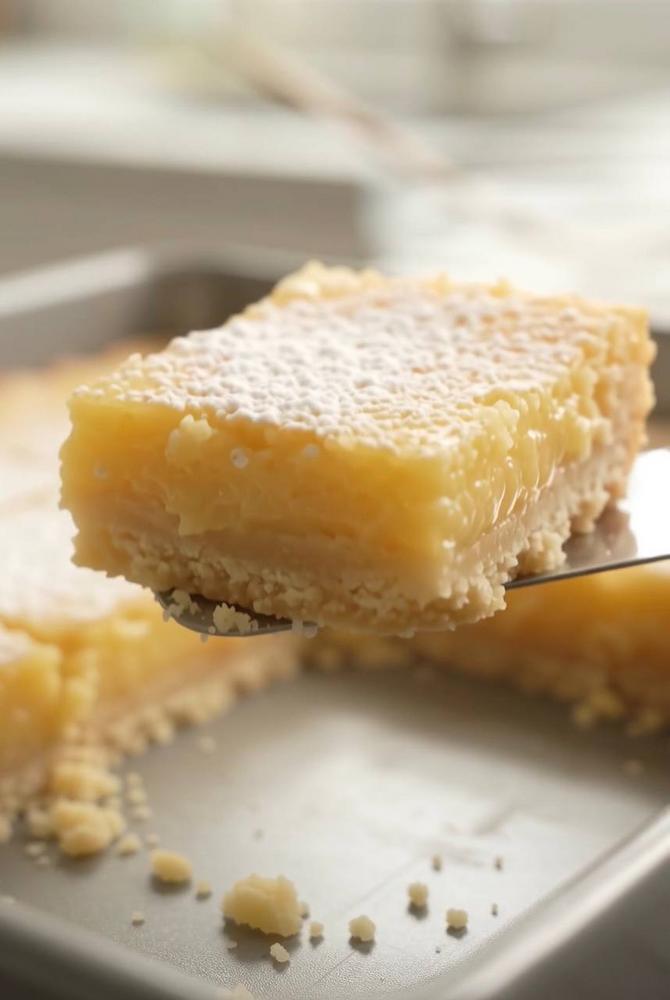
- Just before serving, place a generous amount of confectioners’ sugar in a fine-mesh sieve and dust evenly over the top of the lemon bars.
- Serve immediately and enjoy your homemade classic lemon bars!
Cooking Tips and Variations
Achieving the perfect lemon bar is all about a few key techniques and quality ingredients. Firstly, always use fresh lemon juice! Bottled lemon juice simply doesn’t deliver the vibrant, zesty flavor that makes these bars so irresistible. Take the extra few minutes to squeeze fresh lemons; you’ll taste the difference. When it comes to the shortbread crust, ensure your butter is truly softened for easy creaming, but not melted, as this will affect the texture. Don’t overmix the crust dough once the flour is added; overworking gluten can lead to a tough crust instead of the desired tender, crumbly texture. Press the crust firmly and evenly into the pan to prevent crumbling when sliced. For the lemon filling, resist the urge to overbake. The filling should still have a slight jiggle in the center when you remove it from the oven; it will continue to set as it cools. Overbaking can result in a rubbery consistency, losing that delightful custardy texture. The most important tip for success is patience during cooling. Chilling the bars thoroughly, ideally for several hours or overnight, is absolutely essential. This allows the filling to fully set, making it easy to cut clean, beautiful squares without the filling oozing out. Trying to cut them warm will result in a messy, unset disaster. For easy removal and clean cuts, always line your pan with parchment paper, leaving an overhang, and dust with powdered sugar just before serving for the freshest look and taste.
If you encounter common issues, here’s some troubleshooting: if your crust is crumbly, it might be due to not pressing it firmly enough into the pan or not having enough butter. If your filling is runny, it was likely underbaked or not chilled long enough. If it’s too rubbery, it was overbaked. For flavor variations, you can easily swap out lemon for other citrus fruits. Try lime bars for a slightly different tang, using fresh lime juice and zest in place of lemon. For a more intense citrus flavor in the crust, you can add 1 teaspoon of lemon zest to the shortbread dough. To add a textural element, consider sprinkling a thin layer of shredded coconut over the crust before pouring the filling, or mixing in some finely chopped pistachios for a gourmet twist. You could also experiment with a hint of vanilla extract in the filling, though many purists prefer the unadulterated lemon flavor. For serving suggestions, these bars are fantastic on their own, but they also pair beautifully with fresh berries (like raspberries or blueberries) or a dollop of freshly whipped cream. A small scoop of vanilla bean ice cream also makes for a decadent pairing. Don’t be afraid to experiment and make these classic bars your own!
Storage and Reheating
Proper storage is key to maintaining the freshness and deliciousness of your homemade lemon bars. Once completely cooled and cut, store the lemon bars in an airtight container. You can layer them with parchment paper between layers to prevent sticking. They will keep well in the refrigerator for up to 5-7 days. The cold temperature helps to maintain the firm, custardy texture of the filling. While technically they can be stored at room temperature for a day or two in a cool environment, refrigeration is highly recommended for food safety and to preserve the best taste and texture, especially due to the egg-based filling. The powdered sugar dusting can absorb moisture in the refrigerator, so for the best presentation, it’s often best to dust them with confectioners’ sugar just before serving rather than storing them pre-dusted. If you do dust them beforehand, you might notice the sugar disappearing or forming a glaze; a fresh dusting will revive their appearance.
Lemon bars also freeze exceptionally well, making them a great make-ahead dessert. To freeze, arrange the cut bars in a single layer on a baking sheet and place them in the freezer until solid, about 1-2 hours. Once frozen, transfer them to a freezer-safe airtight container or a heavy-duty freezer bag, again layering with parchment paper to prevent sticking. They can be stored in the freezer for up to 2-3 months. To enjoy frozen lemon bars, simply remove them from the freezer and let them thaw in the refrigerator overnight, or at room temperature for about 30-60 minutes. There’s no need to reheat lemon bars; they are best enjoyed chilled or at room temperature, as reheating can alter the delicate texture of the filling. If you stored them undusted, give them a fresh sprinkle of powdered sugar right before serving for that perfect finishing touch.
Frequently Asked Questions
What makes my lemon bar filling runny?
A runny lemon bar filling is typically a sign of being underbaked or not chilled long enough. The eggs in the filling need sufficient heat to coagulate and set, creating that firm, custardy texture. If the center still jiggles significantly when removed from the oven, it likely needs a few more minutes of baking. Additionally, adequate chilling time in the refrigerator (at least 2-3 hours, preferably overnight) is crucial for the filling to fully firm up and become sliceable. Patience during the cooling process is key!
Can I use bottled lemon juice instead of fresh?
While you technically *can* use bottled lemon juice, it is strongly discouraged for the best flavor. Freshly squeezed lemon juice provides a bright, vibrant, and complex citrus flavor that bottled juice simply cannot replicate. Bottled lemon juice often has a duller, sometimes metallic or artificial taste, which will significantly diminish the quality and deliciousness of your lemon bars. For a dessert where lemon is the star, using fresh ingredients makes all the difference.
Why did my shortbread crust turn out tough?
A tough shortbread crust is usually a result of overmixing the dough once the flour has been added. When flour is mixed excessively, it develops gluten, which leads to a chewy or tough texture rather than the desired tender, crumbly shortbread. To avoid this, mix the flour into the butter and sugar mixture only until just combined and a crumbly dough forms. Overworking the dough, either by hand or with a mixer, should be avoided to ensure a perfectly tender crust.
How do I get clean cuts when slicing lemon bars?
Getting clean, neat slices for your lemon bars requires two main things: thorough chilling and a sharp, clean knife. Ensure the bars are completely chilled in the refrigerator for at least 2-3 hours, or even better, overnight. This allows the filling to fully set and become firm. When cutting, use a long, sharp knife and wipe the blade clean with a damp cloth after each cut to prevent the filling from sticking and creating ragged edges. For extra precision, you can briefly warm the knife under hot water and dry it before each slice.