Instructions
- Pat the pork medallions dry with paper towels. Season generously on both sides with salt and black pepper.
- Heat the olive oil in a large, heavy-bottomed skillet or Dutch oven over medium-high heat until shimmering.
- Add the pork medallions to the hot skillet in a single layer, working in batches if necessary to avoid overcrowding. Sear for 2-3 minutes per side, until deeply golden brown. The pork does not need to be cooked through at this point. Remove the seared pork to a plate and set aside.
- Reduce the heat to medium. Add the diced onion to the skillet and cook, stirring occasionally, until softened and translucent, about 5-7 minutes.
- Stir in the minced garlic and dried thyme. Cook for another minute until fragrant, being careful not to burn the garlic.
- Add the sliced carrots to the skillet. Cook for 5 minutes, stirring occasionally, to allow them to soften slightly.
- In a small bowl, whisk together the maple syrup, Dijon mustard, whole grain mustard, chicken broth, and apple cider vinegar until well combined.
- Pour the maple-mustard sauce over the carrots in the skillet. Bring the mixture to a gentle simmer, scraping up any browned bits from the bottom of the pan with a wooden spoon.
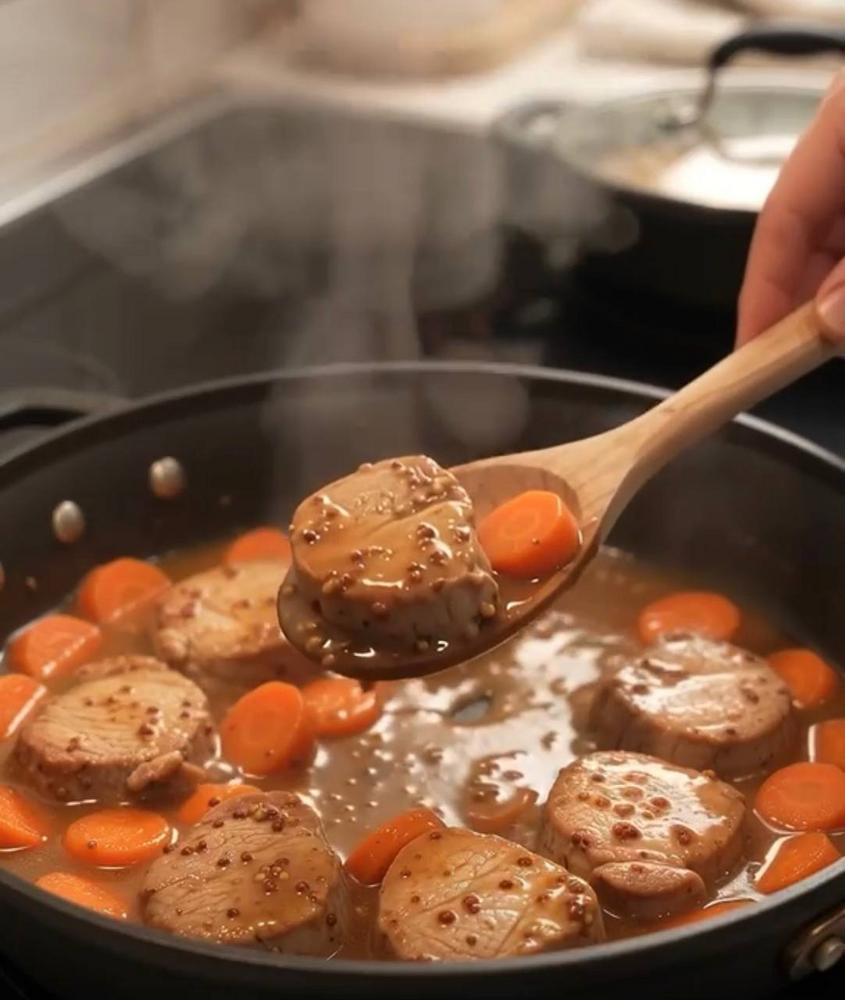
- Return the seared pork medallions to the skillet, nestling them among the carrots and ensuring they are partially submerged in the sauce.
- Reduce the heat to low, cover the skillet, and simmer for 15-20 minutes, or until the pork is cooked through (internal temperature reaches 145°F / 63°C) and the carrots are tender.
- If you prefer a thicker sauce, remove the pork and carrots from the skillet and set aside. Bring the sauce to a simmer over medium heat. Whisk in the cornstarch slurry and cook, stirring constantly, until the sauce thickens to your desired consistency, about 1-2 minutes. Return the pork and carrots to the skillet and toss to coat.
- Taste the sauce and adjust seasonings (salt, pepper) if necessary.
- Garnish with fresh chopped parsley before serving.
Cooking Tips and Variations
For the juiciest pork, avoid overcooking. Pork tenderloin is lean and can dry out quickly. Use a meat thermometer to ensure it reaches an internal temperature of 145°F (63°C) for perfect doneness. A brief rest after cooking will also help redistribute the juices.
The quality of your maple syrup truly makes a difference here. Opt for real maple syrup (Grade A Amber or Dark Robust) for the best, most authentic flavor. Imitation syrups often contain corn syrup and artificial flavors that won’t give you the same depth.
Don’t skip the searing step! Browning the pork medallions before simmering creates a rich depth of flavor (fond) on the bottom of the pan, which then becomes part of your delicious sauce. This caramelization adds a layer of complexity that can’t be achieved otherwise.
When it comes to mustard, feel free to experiment. While Dijon and whole grain provide a classic balance, a touch of spicy brown mustard can add a pleasant kick. Honey mustard could be used for a slightly sweeter, milder sauce, though you might want to reduce the maple syrup slightly if doing so.
Ensure your carrots are cut into uniform pieces to promote even cooking. If some pieces are too thick, they’ll remain firm while others turn mushy. Aim for 1/2-inch thick rounds for optimal texture.
To vary the vegetables, consider adding other quick-cooking options during the last 5-10 minutes of simmering. Green beans, frozen peas, or sliced bell peppers would all be delicious additions. For a heartier meal, you could add small potato chunks along with the carrots, though they might require a longer cooking time.
Fresh herbs can elevate this dish even further. A sprig of fresh rosemary or thyme added during the simmering phase will infuse the sauce with wonderful aromatic notes. Garnish with fresh chives for a subtle oniony flavor.
For a touch of brightness and acidity, a squeeze of fresh lemon juice or a splash more apple cider vinegar stirred in at the very end can balance the sweetness of the maple and deepen the overall flavor profile.
If you’re looking for a thicker sauce without using cornstarch, simply simmer the sauce uncovered for a few extra minutes after removing the pork and carrots, allowing it to naturally reduce and concentrate.
Storage and Reheating
Leftover Maple Mustard Pork with Carrots can be stored in an airtight container in the refrigerator for up to 3-4 days. This dish often tastes even better the next day as the flavors have more time to meld and deepen.
To reheat, transfer the desired portion to a microwave-safe dish and heat on medium power, stirring occasionally, until warmed through. Alternatively, gently reheat in a skillet on the stovetop over medium-low heat, adding a splash of chicken broth or water if the sauce appears too thick or dry. Be careful not to overheat the pork, as it can become tough.
This dish also freezes well. Allow the cooked pork and carrots to cool completely before transferring to a freezer-safe airtight container or heavy-duty freezer bag. It can be frozen for up to 2-3 months. Thaw overnight in the refrigerator before reheating.
Frequently Asked Questions
What kind of pork is best for this recipe?
Pork tenderloin is ideal for this recipe because it’s lean, cooks quickly, and remains incredibly tender when prepared correctly. Its mild flavor also allows the maple and mustard sauce to shine. You could also use boneless pork chops, but adjust cooking times accordingly to prevent them from drying out.
Can I make this dish ahead of time?
Yes, this Maple Mustard Pork with Carrots is an excellent make-ahead meal. You can prepare the entire dish and store it in the refrigerator. The flavors often deepen overnight, making it even more delicious. Just gently reheat as directed in the storage section.
What can I serve with Maple Mustard Pork and Carrots?
This dish pairs beautifully with a variety of sides. Some popular choices include fluffy white rice or brown rice, creamy mashed potatoes, couscous, quinoa, or even a simple side salad with a light vinaigrette. The starch helps to soak up the delicious sauce.
My sauce isn’t thickening enough, what should I do?
If your sauce isn’t reaching your desired consistency, you can easily thicken it. The recipe includes an optional cornstarch slurry (1 tablespoon cornstarch mixed with 2 tablespoons cold water). After removing the pork and carrots, bring the sauce to a simmer and whisk in the slurry, cooking for 1-2 minutes until thickened. Alternatively, you can simply simmer the sauce uncovered for a longer period, allowing it to naturally reduce and concentrate.