Instructions
- Render the Bacon: In a large, heavy-bottomed pot or Dutch oven, cook the diced bacon over medium heat until crispy. Remove the bacon with a slotted spoon and set aside on a paper towel-lined plate, reserving about 2 tablespoons of bacon fat in the pot.
- Sauté Aromatics: Add the diced onion and celery to the pot with the reserved bacon fat. Cook over medium heat, stirring occasionally, until softened and translucent, about 8-10 minutes. Add the minced garlic and cook for another minute until fragrant.
- Make the Roux: Sprinkle the flour over the softened vegetables. Stir constantly for 2-3 minutes, cooking out the raw flour taste. This creates a roux, which will thicken the chowder.
- Add Liquids and Potatoes: Gradually whisk in the clam juice and water, ensuring no lumps form. Bring the mixture to a simmer, then add the diced potatoes and fresh thyme. If using fresh clams, add them now. If using canned clams, hold off on adding them until step 7.
- Simmer for Flavor Development: Reduce the heat to low, cover the pot, and simmer for 15-20 minutes, or until the potatoes are fork-tender. If using fresh clams, they should open during this time. Discard any clams that do not open. Remove the opened clams, let them cool slightly, then remove the meat from the shells and roughly chop. Set aside.
- Incorporate Dairy: Once the potatoes are tender, stir in the heavy cream and whole milk. Add the butter and stir until melted.
- Add Clams and Season: If using canned clams, drain them (reserving the juice if not already accounted for in step 4) and add them to the chowder now, along with the chopped fresh clam meat if applicable. Stir gently to combine. Season with freshly ground black pepper and salt to taste. Remember that clam juice is salty, so taste before adding too much additional salt.
- Gentle Simmer and Serve: Heat the chowder through gently over low heat, ensuring it doesn’t boil once the dairy is added, as this can cause it to curdle. Simmer for another 5-10 minutes to allow the flavors to meld.
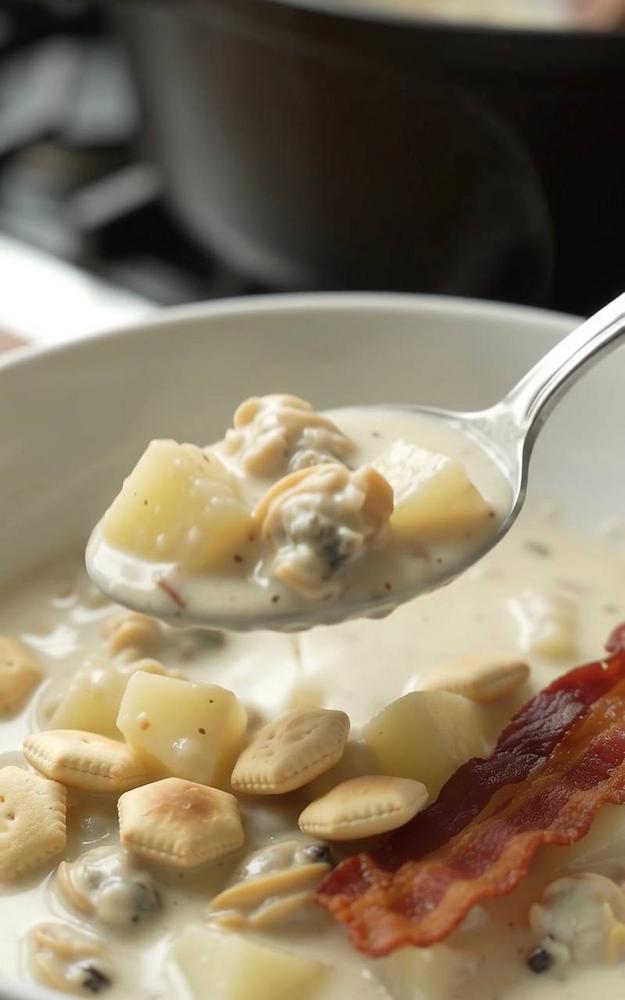
- Garnish and Enjoy: Ladle the hot chowder into bowls. Garnish generously with the reserved crispy bacon, fresh parsley or chives, and serve immediately with a side of oyster crackers.
Cooking Tips and Variations
To achieve the perfect New England Clam Chowder, attention to detail makes all the difference. For the best flavor, always use high-quality ingredients. When selecting clams, fresh is always superior. If you’re using fresh littleneck or cherrystone clams, scrub them thoroughly under cold running water to remove any grit. Steaming them open yourself not only provides the freshest clam meat but also yields invaluable clam liquor, which is far more flavorful than bottled alternatives. Simply place the scrubbed clams in a pot with about an inch of water or white wine, cover, and steam over high heat until they open (about 5-10 minutes). Strain and reserve the liquid, then remove the clam meat, chop it, and set aside.
The type of potato you choose is also crucial for texture. Starchy potatoes like Russet or Yukon Gold are ideal because they break down slightly as they cook, contributing to the chowder’s natural thickness and creamy mouthfeel. Avoid waxy potatoes, which tend to hold their shape too well and won’t contribute to the chowder’s body. When creating the roux, make sure to cook the flour for a full 2-3 minutes to eliminate any raw flour taste, which can otherwise impart an unpleasant flavor to your chowder. Gradually whisking in the clam juice and water is key to preventing lumps and ensuring a smooth, velvety base.
A critical tip for preventing curdling, especially with rich dairy like heavy cream, is to add it towards the end of the cooking process and avoid bringing the chowder to a rolling boil afterward. Gentle simmering is sufficient to heat the dairy through and allow the flavors to meld without risking separation. Taste and adjust seasoning throughout the cooking process; clam juice can vary in saltiness, so it’s always best to start with less and add more as needed. A pinch of white pepper can also be used for a subtle spice without visible flecks, if preferred.
For variations, consider adding a bay leaf during the simmering stage for an extra layer of aromatic depth, removing it before serving. A dash of Worcestershire sauce or a splash of dry white wine can also enhance the savory notes. If you enjoy a touch of heat, a tiny pinch of cayenne pepper can be stirred in at the end. For a smoky twist without bacon, you can use smoked paprika in the roux. Some recipes call for a small amount of corn, which adds a touch of sweetness and color; stir it in during the last few minutes of cooking. Finally, allowing the chowder to rest for 15-20 minutes off the heat before serving allows the flavors to deepen and marry, resulting in an even more harmonious dish.
Storage and Reheating
New England Clam Chowder, while best enjoyed fresh, stores reasonably well for a few days. To store, allow the chowder to cool completely at room temperature (this should take no more than 2 hours) before transferring it to an airtight container. Refrigerate promptly. It will keep well in the refrigerator for up to 3-4 days. It’s generally not recommended to freeze clam chowder, especially if it contains potatoes and dairy. The potatoes can become mealy and crumbly upon thawing, and the dairy may separate or curdle, leading to an undesirable texture. If you must freeze it, do so without the potatoes and dairy, adding them when you reheat the base.
When reheating, gently warm the chowder over low to medium-low heat on the stovetop. Stir frequently to prevent scorching and to ensure even heating. Avoid bringing it to a rapid boil, as high heat can cause the dairy to separate. If the chowder has thickened too much in the refrigerator, you can add a splash of milk or a little more clam juice while reheating to achieve your desired consistency. Microwave reheating is also an option, but do so in short bursts, stirring in between, and again, avoid overheating. Always ensure the chowder is heated through to a safe internal temperature before serving.
Frequently Asked Questions
Why did my clam chowder curdle?
The most common reason for clam chowder to curdle is boiling it vigorously after adding the dairy (cream and milk). High heat can cause the proteins in the dairy to separate. To prevent this, always add dairy towards the end of the cooking process and simply heat it through gently over low heat, never allowing it to come to a rolling boil.
Can I use canned clams instead of fresh?
Yes, you can absolutely use good quality canned chopped clams. If using canned, drain the clams and reserve the clam juice to use in the chowder base. Add the drained clam meat towards the very end of cooking, as it is already cooked and only needs to be heated through to prevent it from becoming tough.
How can I make my chowder thicker or thinner?
If your chowder is too thin, you can create a slurry of 1 tablespoon of cornstarch mixed with 2 tablespoons of cold water, then whisk it into the simmering chowder and cook for a few minutes until thickened. Alternatively, you can remove about 1 cup of the cooked potatoes, mash them, and stir them back into the chowder. If your chowder is too thick, simply thin it out with a splash of warm milk, clam juice, or water until it reaches your desired consistency.
What kind of potatoes are best for clam chowder?
Starchy potatoes like Russet or Yukon Gold are best for New England Clam Chowder. Their higher starch content helps to naturally thicken the chowder as they cook and break down slightly, contributing to the creamy texture. Waxy potatoes, like red potatoes, tend to hold their shape too well and won’t offer the same thickening properties.