Instructions
- Pat the beef cubes thoroughly dry with paper towels. This is a crucial step for achieving a good sear. Season the beef generously with 1 teaspoon of salt and 0.5 teaspoon of black pepper.
- Heat 1 tablespoon of olive oil in a large Dutch oven or heavy-bottomed pot over medium-high heat until shimmering. Do not overcrowd the pot; work in batches if necessary to ensure proper browning. Add a single layer of beef cubes and sear on all sides until deeply browned and a crust has formed, about 3-5 minutes per side. Remove the browned beef to a plate and set aside. Repeat with the remaining beef, adding the second tablespoon of olive oil if needed.
- Reduce the heat to medium. Add the chopped onion to the same pot, scraping up any browned bits from the bottom. Sauté the onion for 5-7 minutes, or until softened and translucent. Add the minced garlic and cook for another 1 minute until fragrant.
- Sprinkle the flour over the onions and garlic. Cook, stirring constantly, for 1-2 minutes, allowing the flour to cook out its raw taste. This will form a roux that helps thicken the stew.
- Gradually pour in the red wine (if using), scraping the bottom of the pot with a wooden spoon to deglaze and release all the flavorful browned bits. Let the wine simmer for 2-3 minutes, allowing some of the alcohol to evaporate.
- Stir in the beef broth, diced tomatoes (with their liquid), Worcestershire sauce, dried thyme, and bay leaf. Bring the mixture to a gentle simmer.
- Return the browned beef and any accumulated juices from the plate to the pot. Stir to combine. Reduce the heat to low, cover the pot, and simmer for 1.5-2 hours, or until the beef is starting to become tender. Stir occasionally to prevent sticking.
- After 1.5-2 hours, add the chopped potatoes and carrots to the pot. Stir gently to submerge them in the liquid. Continue to simmer, covered, for another 45-60 minutes, or until the vegetables are fork-tender and the beef is incredibly tender and easily pulls apart.
- Remove the bay leaf. Taste the stew and adjust seasoning with the remaining 0.5 teaspoon of salt and 0.5 teaspoon of black pepper, or more to your preference. If the gravy is too thin, you can uncover the pot and simmer for a bit longer to allow it to reduce, or make a cornstarch slurry (1 tablespoon cornstarch mixed with 2 tablespoons cold water) and stir it into the simmering stew until thickened.
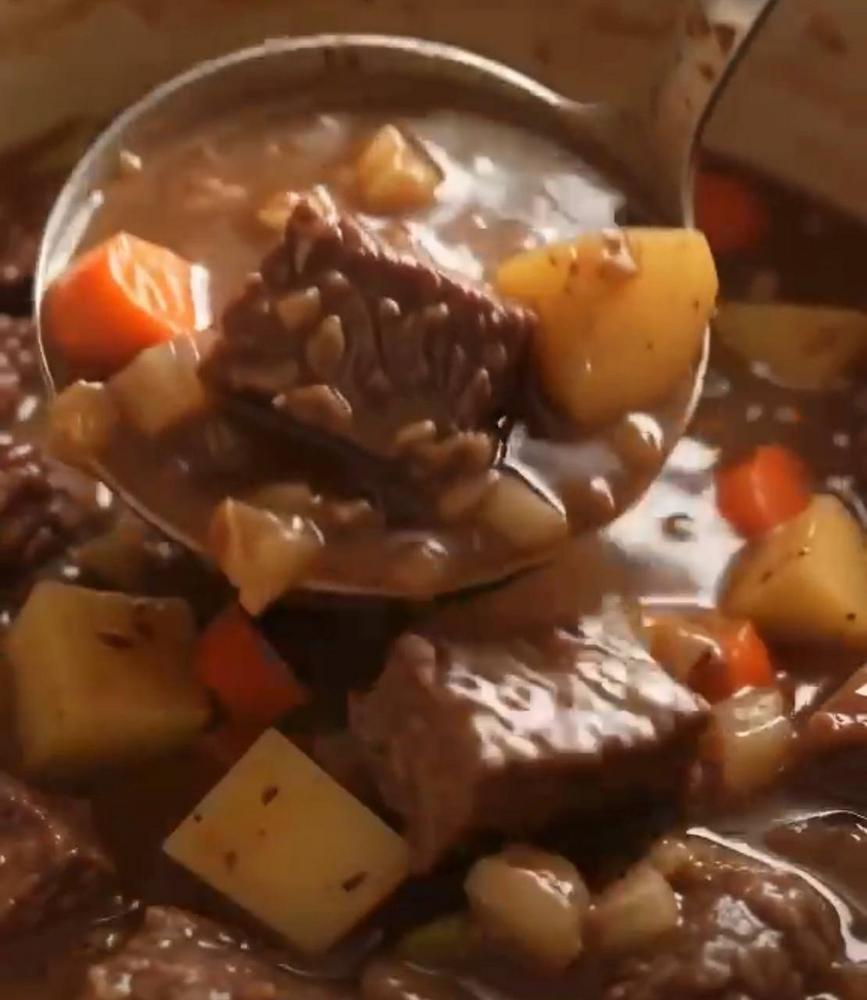
- Ladle the hot stew into bowls. Garnish with fresh chopped parsley before serving. Serve immediately with crusty bread for dipping.
Cooking Tips and Variations
To truly achieve the best old-fashioned beef stew, selecting the right cut of beef is paramount. We recommend using beef chuck roast because it contains a good amount of connective tissue and fat, which breaks down beautifully during slow cooking, resulting in incredibly tender, melt-in-your-mouth beef. Avoid leaner cuts, as they tend to dry out and become tough. When preparing the beef, patting it dry before seasoning and browning is a game-changer. Moisture on the surface of the meat prevents proper searing and crust formation, which are essential for developing deep, rich flavor. Browning the beef in batches is also critical; overcrowding the pot lowers the temperature, steaming the meat instead of searing it. Take your time with this step, as those browned bits on the bottom of the pot, known as “fond,” are pure flavor gold that will be incorporated into your gravy when you deglaze.
Building the flavor base is another key element. After browning the beef, sautéing the onions until translucent and then adding garlic for just a minute or so creates an aromatic foundation. Deglazing the pot with red wine or extra beef broth after sautéing the aromatics helps release all those flavorful browned bits, enriching the stew’s depth. Don’t be afraid to let the wine simmer for a few minutes to cook off the alcohol and concentrate its flavors. When it comes to vegetables, don’t overcook them. Adding the potatoes and carrots partway through the cooking process ensures they become tender but still hold their shape, preventing them from turning into mush. Cutting them into substantial, rustic chunks also helps them stand up to the long cooking time. For an even deeper flavor, consider adding a tablespoon of tomato paste to the onions and garlic before adding the flour; it adds a wonderful umami note.
For variations, feel free to customize your stew. You can add other root vegetables like parsnips or turnips along with the carrots and potatoes for more complexity. Towards the end of cooking, frozen peas or chopped celery can be added for extra color and freshness. Mushrooms, sautéed separately and added with the vegetables, also make a fantastic addition. If you prefer not to use wine, simply substitute with an equal amount of beef broth. For a slightly different flavor profile, you could swap out the dried thyme for dried rosemary or a blend of Italian herbs. A splash of balsamic vinegar at the end can brighten the flavors. You can also experiment with different thickening agents; while flour creates a classic gravy, a cornstarch slurry (1 tablespoon cornstarch mixed with 2 tablespoons cold water) added at the very end can quickly thicken the stew if needed, or if you prefer a gluten-free option. Remember that the stew often tastes even better the next day, as the flavors have more time to meld and deepen, making it an excellent make-ahead meal for busy weeknights or entertaining.
Storage and Reheating
Old-fashioned beef stew is an excellent dish for meal prepping as its flavors deepen and meld beautifully overnight. To store, allow the stew to cool completely to room temperature (this usually takes 1-2 hours) before transferring it to airtight containers. Properly stored, the stew will last for 3-4 days in the refrigerator. For longer storage, beef stew freezes exceptionally well. Portion the cooled stew into freezer-safe containers or heavy-duty freezer bags, leaving a little headspace as liquids expand when frozen. It can be stored in the freezer for up to 3 months. Thaw frozen stew overnight in the refrigerator before reheating.
When reheating, there are several effective methods. For individual portions, the microwave is convenient: simply place a serving in a microwave-safe bowl, cover loosely, and heat on high for 2-3 minutes, stirring halfway through, until heated through. For larger quantities, or if reheating from the refrigerator, the stovetop is ideal. Transfer the stew to a pot or Dutch oven and heat over medium-low heat, stirring occasionally, until it reaches a gentle simmer and is thoroughly hot. If the stew has thickened too much during storage, you can add a splash of beef broth or water to achieve your desired consistency. Be careful not to boil vigorously, as this can cause the vegetables to break down further. Always ensure the stew is heated to an internal temperature of 165°F (74°C) for food safety.
Frequently Asked Questions
Why is my beef stew meat tough?
The most common reason for tough beef in stew is insufficient cooking time. Beef chuck roast, while flavorful, is a tough cut of meat that requires long, slow cooking to break down its connective tissues. If your beef is tough, it simply needs more time to simmer. Continue cooking it, covered, over low heat until it becomes fork-tender. Also, ensure you’re using the right cut; leaner cuts like sirloin or round steak will remain tough even with extended cooking in a stew.
Can I make this stew in a slow cooker or Instant Pot?
Absolutely! For a slow cooker, follow steps 1-4 on the stovetop (browning beef, sautéing aromatics, adding flour) to build flavor, then transfer everything to the slow cooker. Add the liquids, tomatoes, Worcestershire, thyme, and bay leaf. Cook on low for 6-8 hours or on high for 3-4 hours. Add the potatoes and carrots during the last 2-3 hours of cooking on low, or 1-1.5 hours on high. For an Instant Pot, follow steps 1-4 using the sauté function. Add all liquids, tomatoes, Worcestershire, thyme, and bay leaf. Then add the beef, potatoes, and carrots. Cook on high pressure for 35-40 minutes, followed by a natural pressure release for 10-15 minutes before quick releasing any remaining pressure.
How can I thicken my stew if it’s too thin?
If your stew is too thin after the recommended cooking time, you have a few options. The simplest is to remove the lid and let the stew simmer uncovered for an additional 15-30 minutes, allowing some of the liquid to evaporate and the gravy to reduce naturally. Alternatively, you can create a cornstarch slurry by whisking together 1 tablespoon of cornstarch with 2 tablespoons of cold water until smooth. Stir this slurry into the simmering stew and cook for another 1-2 minutes, stirring constantly, until the gravy thickens to your desired consistency. You can also mash a few of the cooked potatoes against the side of the pot; their starch will help thicken the stew.
What can I serve with old-fashioned beef stew?
Old-fashioned beef stew is a hearty, complete meal on its own, but it pairs wonderfully with a few simple accompaniments. Crusty bread or warm dinner rolls are perfect for soaking up every last drop of that delicious gravy. A simple green salad with a light vinaigrette offers a refreshing contrast to the richness of the stew. Other great options include mashed potatoes (if you didn’t add potatoes to the stew), steamed rice, or even egg noodles. For a touch of color and extra nutrition, a side of steamed green beans or broccoli would also be lovely.