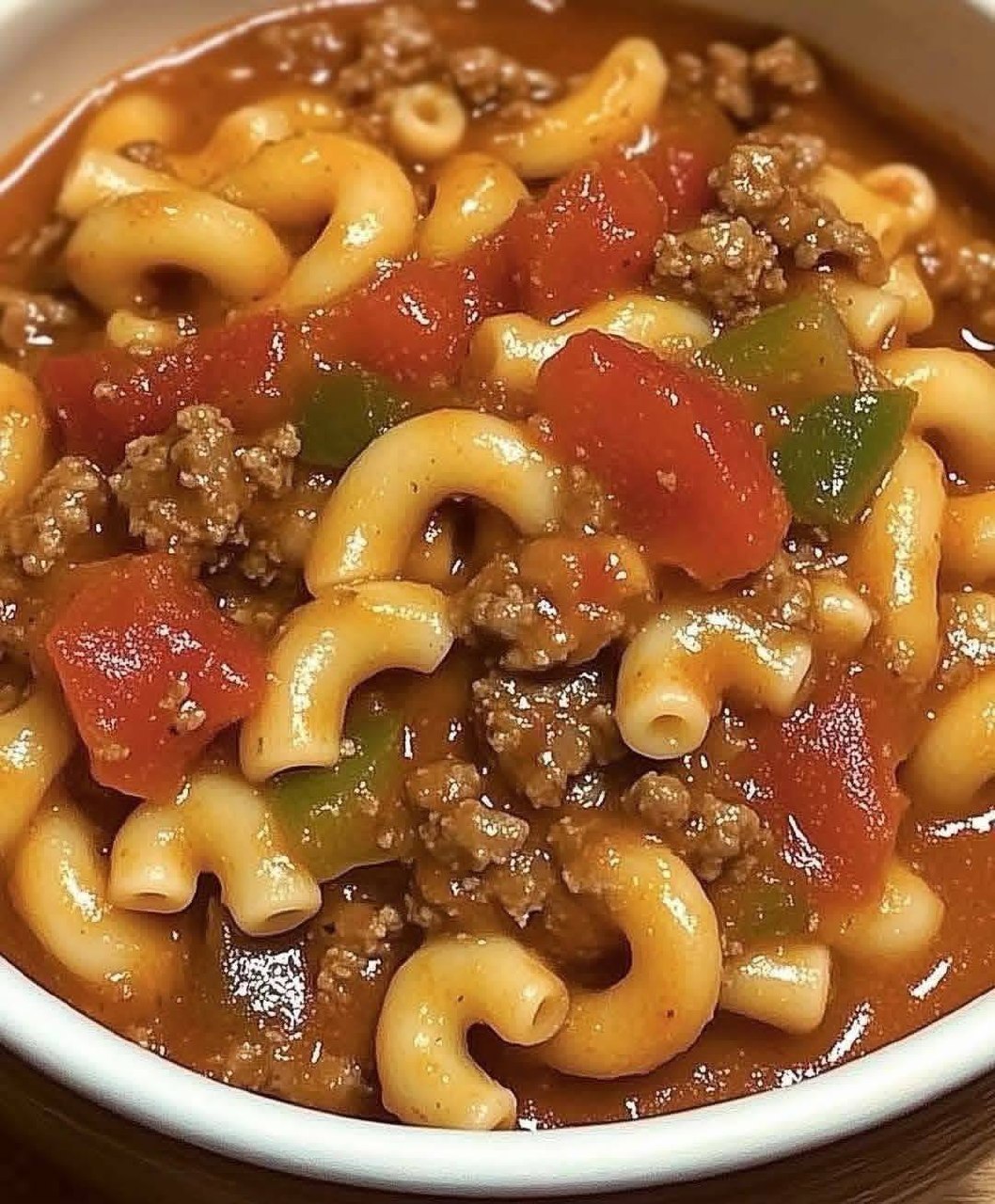
Instructions
- Heat the olive oil in a large Dutch oven or a large, deep skillet over medium-high heat.
- Add the ground beef to the hot oil. Break it apart with a spoon and cook, stirring occasionally, until it is completely browned and no pink remains. This usually takes about 5-7 minutes.
- Once the beef is browned, drain off any excess grease from the pan. This step is crucial for preventing a greasy goulash.
- Reduce the heat to medium. Add the diced yellow onion and green bell pepper to the pan with the cooked ground beef. Sauté for 5-7 minutes, or until the vegetables have softened and the onion is translucent.
- Stir in the minced garlic and cook for another 1 minute, until fragrant. Be careful not to burn the garlic.
- Pour in the crushed tomatoes, tomato sauce, and undrained diced tomatoes.
- Add the beef broth (or water), Worcestershire sauce (if using), Italian seasoning, paprika, black pepper, salt, and granulated sugar. Stir everything together thoroughly to combine.
- Bring the mixture to a gentle boil, then reduce the heat to low, cover the pot, and let it simmer for at least 20-30 minutes. This simmering time allows the flavors to meld and deepen, creating a richer sauce. Stir occasionally to prevent sticking.
- After the sauce has simmered, stir in the uncooked elbow macaroni. Make sure the macaroni is fully submerged in the liquid.
- Increase the heat slightly to bring the mixture back to a gentle simmer. Cook, uncovered, for 10-15 minutes, stirring frequently, until the macaroni is tender and cooked through. The sauce will thicken considerably as the macaroni absorbs the liquid.
- Taste the goulash and adjust seasonings as needed. You might want to add more salt, pepper, or a pinch more sugar depending on your preference.
- Remove the goulash from the heat and let it rest for 5 minutes before serving. This allows the sauce to thicken slightly more and the flavors to settle.
- Serve hot, garnished with fresh chopped parsley, and optionally with a dollop of sour cream or a sprinkle of shredded cheddar cheese.
Cooking Tips and Variations
Achieving the perfect Old Fashioned Goulash is all about balancing flavors and textures, and a few simple tips can elevate your dish from good to unforgettable. First, don’t rush the browning of the ground beef. A good sear creates depth of flavor through the Maillard reaction. Ensure you drain off any excess fat; too much grease can make the goulash unpleasantly oily. If you’re using very lean ground beef, you might not have much fat to drain, which is perfectly fine. When simmering the sauce, resist the urge to add the macaroni too early. The longer the sauce simmers before the pasta goes in, the deeper and more developed its flavor will be. Stirring frequently while the macaroni cooks is crucial to prevent it from sticking to the bottom of the pot and ensuring even cooking. The macaroni will absorb a lot of liquid, so keep an eye on the consistency; if it gets too thick before the pasta is cooked, a splash more beef broth or water can help.
For a richer, more complex flavor, consider adding a bay leaf to the sauce during the simmering stage, removing it before adding the macaroni. A pinch of red pepper flakes can introduce a subtle heat, while a tablespoon of tomato paste, browned with the onions and garlic, can intensify the tomato flavor. If you find the tomatoes a bit too acidic, the teaspoon of sugar in the recipe helps balance this, but you can add a little more to taste. Don’t be afraid to adjust the salt and pepper throughout the process; everyone’s palate is different. The beauty of goulash lies in its adaptability, making it a fantastic canvas for various culinary explorations.
There are numerous ways to vary this classic recipe to suit your preferences or what you have on hand. For a different protein, ground turkey or Italian sausage (mild or hot) can be used instead of ground beef. If using sausage, adjust the seasonings as the sausage itself will bring a lot of flavor. To boost the vegetable content, consider adding diced carrots, celery, or even frozen peas and corn during the last 10 minutes of cooking. Instead of elbow macaroni, other small pasta shapes like ditalini, small shells, or rotini can work well, just be mindful of their cooking times. For a creamier finish, stir in ¼ cup of cream cheese or a dollop of sour cream during the last few minutes of cooking, allowing it to melt and incorporate fully. Serving suggestions are also abundant: while delicious on its own, it pairs wonderfully with a simple green salad and some crusty bread for soaking up the delicious sauce. A sprinkle of fresh herbs like basil or oregano at the end can also brighten the flavors.
Storage and Reheating
Proper storage is key to enjoying your Old Fashioned Goulash leftovers safely and deliciously. Once the goulash has cooled to room temperature (this should happen within two hours of cooking), transfer it to an airtight container. Refrigerate promptly, and it will keep well for 3-4 days. For longer storage, goulash freezes beautifully. Portion the cooled goulash into freezer-safe containers or heavy-duty freezer bags, leaving a little headspace to allow for expansion. It can be stored in the freezer for up to 3 months. When freezing, label the containers with the date to keep track of freshness.
Reheating goulash is straightforward. If refrigerated, you can reheat individual portions in the microwave. Place the goulash in a microwave-safe bowl, cover loosely, and heat on high for 2-3 minutes, stirring halfway through, until heated through. For larger quantities, or if you prefer stovetop reheating, transfer the goulash to a pot or skillet over medium-low heat. Add a splash of beef broth or water, about ¼ to ½ cup, to help loosen the sauce and prevent sticking, as the macaroni will have absorbed more liquid during refrigeration. Stir frequently until heated through. If reheating from frozen, it’s best to thaw the goulash in the refrigerator overnight before reheating on the stovetop or in the microwave. Alternatively, you can reheat it directly from frozen on the stovetop over low heat, adding a bit more liquid and stirring often, though this will take longer. Always ensure the goulash is heated to an internal temperature of 165°F (74°C) before serving.
Frequently Asked Questions
What’s the difference between American Goulash and Hungarian Goulash?
The main difference lies in their origins, ingredients, and preparation. American Goulash, often called “Hamburger Goulash” or “Chili Mac,” is a simplified, tomato-based dish featuring ground beef, elbow macaroni, and a mild blend of seasonings. It’s a one-pot comfort food. Hungarian Goulash, on the other hand, is a traditional stew made with larger chunks of beef (often beef shank or chuck), slow-cooked with a significant amount of paprika, onions, and sometimes root vegetables like carrots and potatoes. It’s typically served with noodles, dumplings, or bread on the side, rather than having the pasta cooked directly in the stew.
Can I make this goulash ahead of time?
Yes, goulash is an excellent make-ahead meal! In fact, many people find that the flavors deepen and improve after a day in the refrigerator. If you plan to make it a day or two in advance, cook the goulash completely, let it cool, and then store it in an airtight container in the refrigerator. When reheating, you may need to add a splash of beef broth or water to thin the sauce, as the macaroni will continue to absorb liquid. This is a perfect dish for meal prep or feeding a crowd.
What if my goulash is too thick or too thin?
If your goulash is too thick, simply stir in additional beef broth or water, a few tablespoons at a time, until it reaches your desired consistency. Do this slowly while reheating. If your goulash is too thin, you can let it simmer uncovered for a bit longer, allowing some of the liquid to evaporate and the sauce to reduce. Alternatively, you can mix 1 tablespoon of cornstarch with 2 tablespoons of cold water to create a slurry, then stir it into the simmering goulash and cook for another minute or two until it thickens. Be careful not to add too much at once.
Can I add other vegetables to this goulash?
Absolutely! Goulash is very versatile. Diced carrots, celery, or even mushrooms can be sautéed along with the onions and bell peppers to add more flavor and nutrients. Frozen peas or corn can be stirred in during the last 5-10 minutes of cooking to ensure they are heated through but not overcooked. The more vegetables you add, the heartier and more colorful your goulash will be, making it an even more complete meal.