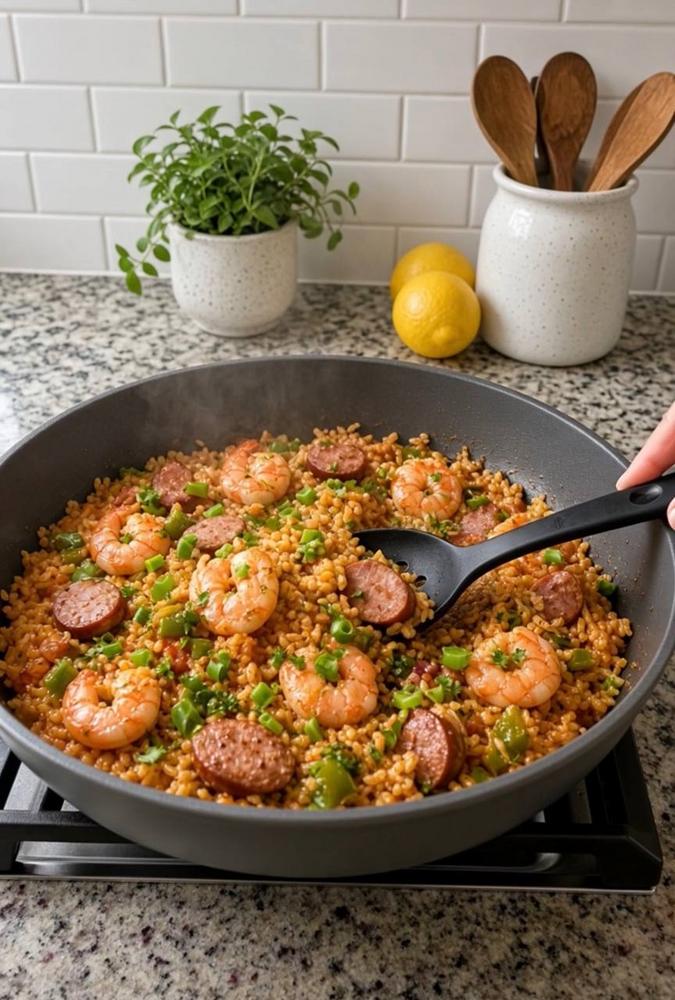
Instructions
- Prep Your Ingredients: Before you begin cooking, ensure all your vegetables are chopped, garlic is minced, and sausage is sliced. Rinse your long-grain white rice under cold water until the water runs clear; this helps remove excess starch and prevents the rice from becoming too sticky. Have your chicken broth and canned tomatoes ready.
- Brown the Sausage: Heat the olive oil in a large (12-inch or larger) oven-safe skillet or Dutch oven over medium-high heat. Add the sliced Andouille sausage and cook, stirring occasionally, until it’s nicely browned and crispy, about 5-7 minutes. Remove the sausage with a slotted spoon and set aside on a plate, leaving the rendered fat in the pan.
- Sauté the “Holy Trinity”: Reduce the heat to medium. Add the chopped onion, green bell pepper, and celery to the pan with the sausage drippings. Cook, stirring occasionally, until the vegetables soften and become fragrant, about 8-10 minutes. This step is crucial for building the foundational flavors of your Jambalaya.
- Add Aromatics and Spices: Stir in the minced garlic, dried thyme, dried oregano, smoked paprika, cayenne pepper, and 2 teaspoons of Cajun or Creole seasoning. Cook for another minute, stirring constantly, until the spices are fragrant. This helps to bloom the spices and release their full flavor.
- Incorporate Tomatoes and Rice: Pour in the diced tomatoes (undrained) and tomato sauce, stirring well to combine. Add the rinsed long-grain white rice to the pan, stirring to coat the rice grains evenly with the vegetable and spice mixture. Cook for 1-2 minutes, allowing the rice to toast slightly.
- Add Liquid and Simmer: Pour in the chicken broth. Bring the mixture to a boil, stirring once or twice. Once boiling, reduce the heat to low, cover the skillet tightly with a lid (or aluminum foil if your skillet doesn’t have a tight-fitting lid), and let it simmer for 20 minutes without lifting the lid. This allows the rice to cook through and absorb the liquid and flavors.
- Return Sausage and Add Shrimp: After 20 minutes, remove the lid. Stir in the reserved browned sausage. Season the peeled and deveined shrimp with a pinch of Cajun seasoning, salt, and pepper. Arrange the seasoned shrimp evenly over the top of the rice mixture.
- Finish Cooking: Re-cover the skillet and continue to cook for another 5-7 minutes, or until the shrimp are pink and cooked through and the rice is tender and has absorbed all the liquid. Avoid overcooking the shrimp, as they can become tough.
- Rest and Garnish: Remove the skillet from the heat and let it rest, still covered, for 5-10 minutes. This allows the flavors to meld and the rice to finish steaming perfectly.
- Serve: Fluff the Jambalaya gently with a fork. Garnish generously with fresh chopped parsley and green onions. Serve hot with lemon wedges on the side for an optional squeeze of fresh citrus.
Cooking Tips and Variations
To ensure your One-Pan Shrimp and Sausage Jambalaya turns out perfectly every time, consider these helpful tips and exciting variations. First, the type of rice you choose can significantly impact the dish’s texture. While long-grain white rice is traditional and works wonderfully, parboiled rice (also known as converted rice) is another excellent option. It’s less starchy, which can result in a fluffier, more separate grain texture, and it’s also less prone to overcooking. Avoid using short-grain or arborio rice, as they will release too much starch and create a very sticky, risotto-like consistency, which isn’t what we’re aiming for in Jambalaya.
When it comes to the shrimp, timing is everything. Shrimp cook very quickly, and overcooked shrimp become rubbery and unappetizing. Always add them towards the end of the cooking process, as directed in the recipe. They only need a few minutes to turn pink and opaque. If you’re concerned about them cooking too fast, you can even remove the pan from the heat, add the shrimp, cover it, and let the residual heat cook them through. For maximum flavor, make sure your Andouille sausage is nicely browned before adding other ingredients. This caramelization adds depth and richness to the entire dish. Don’t be afraid of the fond (the browned bits) at the bottom of the pan; these will deglaze when you add the liquid, contributing immensely to the flavor profile.
Flavor layering is key to a truly outstanding Jambalaya. By sautéing the “holy trinity” (onion, celery, bell pepper) until softened and then blooming your spices before adding liquids, you’re building a complex base of flavors that will infuse every grain of rice. Don’t rush these steps. Similarly, allowing the Jambalaya to rest, covered, for 5-10 minutes off the heat after cooking is crucial. This resting period allows the rice to fully absorb any remaining liquid, firm up slightly, and ensures all the flavors have a chance to meld beautifully. It also prevents the rice from becoming mushy.
For those who love a bit more heat, feel free to increase the amount of cayenne pepper or add a splash of your favorite hot sauce during cooking or at the table. If you prefer a milder dish, you can reduce the cayenne or omit it entirely. You can also experiment with different types of smoked sausage if Andouille isn’t available or preferred; just ensure it’s a smoked variety that will hold up well to simmering. Another variation involves adding other vegetables. Feel free to toss in some corn kernels (fresh or frozen), diced zucchini, or even a handful of spinach during the last few minutes of cooking for added nutrients and color. If you want to make this dish even heartier, consider adding a cup of cooked chicken (shredded rotisserie chicken works great) along with the sausage.
Finally, don’t underestimate the power of fresh garnishes. The bright, herbaceous notes of fresh parsley and the mild oniony bite of green onions cut through the richness of the Jambalaya, adding a refreshing contrast. A squeeze of fresh lemon juice just before serving brightens all the flavors and adds a welcome zing, making the dish feel even more vibrant and complete.
Storage and Reheating
Proper storage and reheating are essential to enjoy your One-Pan Shrimp and Sausage Jambalaya for days to come. Once the Jambalaya has cooled to room temperature (within two hours of cooking), transfer it to an airtight container. It can be stored in the refrigerator for up to 3-4 days. For longer storage, you can freeze Jambalaya. Place cooled portions into freezer-safe containers or heavy-duty freezer bags, removing as much air as possible. It will keep well in the freezer for up to 2-3 months. Thaw frozen Jambalaya overnight in the refrigerator before reheating.
When reheating, it’s best to do so gently to maintain the texture of the rice and prevent the shrimp from becoming rubbery. For individual portions, the microwave is a convenient option. Place a serving in a microwave-safe bowl, add a tablespoon or two of chicken broth or water to prevent drying out, cover loosely, and heat on medium power for 2-3 minutes, stirring halfway through, until heated through. For larger quantities, or if you prefer stovetop reheating, transfer the Jambalaya to a skillet or pot over medium-low heat. Add a splash of chicken broth or water, cover, and stir occasionally until thoroughly heated. Avoid high heat, which can dry out the rice and overcook the shrimp. If the Jambalaya seems a bit dry, a little extra broth or water will help bring back its moisture and freshness.
Frequently Asked Questions
Can I prepare this Jambalaya ahead of time?
While Jambalaya is best enjoyed fresh, you can certainly do some prep work in advance. You can chop all your vegetables (onion, bell pepper, celery, garlic) and slice your sausage a day or two before. Store them separately in airtight containers in the refrigerator. The Jambalaya itself can be cooked entirely and then stored in the refrigerator for up to 3-4 days, making it a great meal prep option. Reheat gently as instructed in the “Storage and Reheating” section.
What kind of sausage is best for Jambalaya?
Andouille sausage is the traditional and most recommended choice for Jambalaya due to its smoky, spicy flavor and firm texture, which holds up well during cooking. If Andouille is unavailable, you can use other types of smoked sausage, such as Kielbasa or another flavorful smoked pork sausage. Just ensure it’s a smoked variety for that essential depth of flavor.
My rice is still hard or mushy. What went wrong?
If your rice is still hard after the recommended cooking time, it likely needed more liquid or more time to absorb it. Ensure your lid is tight-fitting to trap steam, and avoid lifting the lid frequently, as this releases heat and steam. If it’s mushy, it may have had too much liquid, was cooked at too high a heat, or was stirred too often. Rinsing the rice thoroughly beforehand helps prevent mushiness. Using long-grain white rice is crucial, as other types can become overly starchy.
Can I make this recipe spicier or milder?
Absolutely! The spice level is entirely customizable. To make it spicier, increase the amount of cayenne pepper or add a pinch of red pepper flakes along with the other spices. You can also add a few dashes of your favorite hot sauce during cooking or serve it on the side. For a milder version, simply reduce or omit the cayenne pepper. The Cajun or Creole seasoning blend itself usually contains some heat, so adjust that to your preference as well.