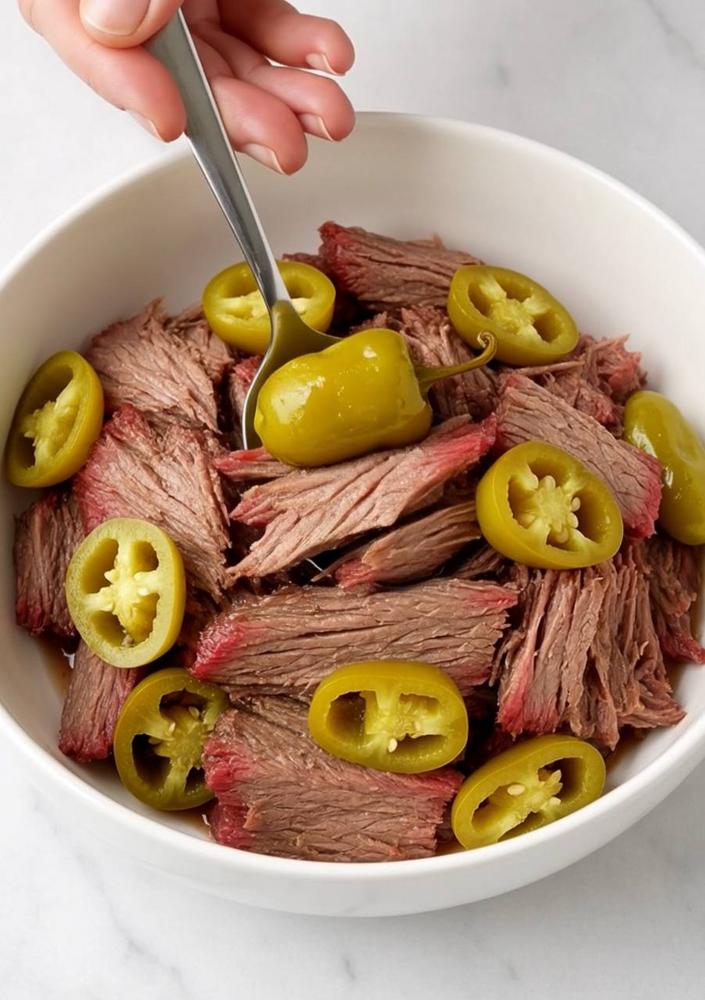
Instructions
- Pat the pork shoulder dry with paper towels. Season generously all over with salt and black pepper. If desired, cut the pork into 2-3 large chunks for easier searing and faster cooking.
- Heat the olive oil in a large Dutch oven or a heavy-bottomed pot over medium-high heat. Once hot, sear the pork chunks on all sides until deeply browned, about 3-5 minutes per side. This step is crucial for developing rich flavor. Remove the seared pork and set aside.
- Reduce the heat to medium. Add the chopped onion to the pot and sauté until softened and translucent, about 5-7 minutes, scraping up any browned bits from the bottom of the pot. Add the minced garlic and cook for another minute until fragrant, being careful not to burn it.
- Pour in the chicken broth and stir, deglazing the pot by scraping up any remaining browned bits. Add the salsa verde, diced green chiles, ground cumin, dried oregano, and cayenne pepper (if using). Stir everything together to combine.
- Return the seared pork chunks to the pot, nestling them into the liquid and sauce. Add half of the drained pickled jalapeño slices and half of the pickled pepperoncini to the pot around the pork.
- For Slow Cooker: Transfer the pork and sauce mixture to a large slow cooker. Cook on low for 6-8 hours or on high for 3-4 hours, until the pork is fall-apart tender and easily shreds with a fork.
- For Instant Pot: Place the pork and sauce mixture into the Instant Pot. Secure the lid and set the valve to the sealing position. Cook on high pressure for 60-70 minutes for a 3-4 pound pork shoulder. Allow for a natural pressure release for at least 15-20 minutes, then manually release any remaining pressure.
- For Dutch Oven (Oven Braise): Bring the mixture in the Dutch oven to a simmer on the stovetop. Cover the pot tightly with a lid and transfer to a preheated oven at 325°F (160°C). Braise for 3-4 hours, or until the pork is incredibly tender.
- Once the pork is cooked, carefully remove it from the pot and place it on a large cutting board or in a shallow dish. Using two forks, shred the pork into desired consistency. It should pull apart very easily.
- Skim any excess fat from the surface of the cooking liquid in the pot. Stir in the remaining half of the pickled jalapeño slices and pepperoncini into the sauce. Return the shredded pork to the pot, tossing it gently with the flavorful sauce to ensure every strand is coated. Taste and adjust seasoning with additional salt if needed.
- Serve hot, garnished generously with fresh chopped cilantro and a squeeze of fresh lime juice.
Cooking Tips and Variations
To achieve the absolute best Salsa Verde Pork, don’t skip the initial browning of the pork. This step, while optional, adds a significant layer of deep, savory flavor through the Maillard reaction, creating a crust that translates into a richer final dish. For the pork cut itself, a boneless pork shoulder, also known as Boston butt, is highly recommended. Its marbling and connective tissues break down beautifully during slow cooking, resulting in that coveted fall-apart tender texture. While leaner cuts like pork loin or tenderloin can be used, they require more careful monitoring to prevent drying out and won’t achieve the same succulent richness.
When it comes to the salsa verde, feel free to use your favorite store-bought brand for convenience, but for an even brighter, fresher flavor, consider making your own. A simple homemade salsa verde typically involves roasting tomatillos, jalapeños or serrano peppers, onion, and garlic until softened and slightly charred, then blending them with fresh cilantro and a squeeze of lime juice. The pickled peppers are not just a garnish here; they are an integral flavor component. Their acidity cuts through the richness of the pork, providing a crucial tangy counterpoint that elevates the entire dish. Don’t be afraid to add extra if you love that zesty kick!
For variations, you can easily adjust the spice level by increasing or decreasing the amount of cayenne pepper or by choosing a spicier salsa verde. For a smoky depth, a teaspoon of smoked paprika can be added along with the other spices. A touch of honey or brown sugar (about 1-2 tablespoons) can be stirred into the sauce for a subtle sweet and savory balance, especially if your salsa verde is particularly tart. For a low-carb option, serve the pork over cauliflower rice or in lettuce wraps. To make it gluten-free, ensure your salsa verde and chicken broth are certified gluten-free. This recipe is incredibly forgiving and encourages experimentation, so feel free to make it your own!
Storage and Reheating
Salsa Verde Pork is an excellent dish for meal prepping and makes fantastic leftovers. To store, allow the pork to cool completely to room temperature. Transfer the pork and its cooking liquid/sauce to an airtight container. It can be stored in the refrigerator for up to 3-4 days. For longer storage, Salsa Verde Pork freezes beautifully. Portion the cooled pork and sauce into freezer-safe bags or containers, removing as much air as possible to prevent freezer burn. It can be frozen for up to 3 months. Thaw frozen pork overnight in the refrigerator before reheating.
To reheat, the best method depends on the quantity. For larger batches, transfer the pork and sauce to a pot or Dutch oven and gently reheat over medium-low heat on the stovetop, stirring occasionally, until heated through. If the sauce seems too thick, you can add a splash of chicken broth or water to loosen it. For individual servings, the microwave works well. Place a portion of pork and sauce in a microwave-safe dish, cover loosely, and heat in 1-2 minute intervals, stirring in between, until piping hot. Avoid overheating, as this can dry out the pork. The goal is to gently warm it while maintaining its tenderness and moisture.
Frequently Asked Questions
What cut of pork is best for Salsa Verde Pork?
The best cut of pork for Salsa Verde Pork is undoubtedly boneless pork shoulder, also known as Boston butt. This cut has a good amount of marbling and connective tissue, which breaks down beautifully during the slow cooking process, resulting in incredibly tender, juicy, and shreddable pork. While leaner cuts like pork loin or tenderloin can be used, they are more prone to drying out and may not achieve the same rich, succulent texture.
Can I make Salsa Verde Pork ahead of time?
Absolutely! Salsa Verde Pork is an ideal dish for making ahead. In fact, many people find that the flavors deepen and meld even more wonderfully after a day or two in the refrigerator. Prepare the entire recipe, let it cool, and then store it in an airtight container in the fridge for up to 3-4 days. When ready to serve, simply reheat gently on the stovetop or in the microwave until warmed through.
How can I make this dish spicier or milder?
Adjusting the spice level is quite easy. To make it spicier, you can increase the amount of cayenne pepper, use a spicier brand of salsa verde, or add a few fresh chopped jalapeños or serrano peppers to the pot along with the onions and garlic. You can also add a pinch of red pepper flakes. To make it milder, simply omit the cayenne pepper and choose a mild salsa verde. You can also reduce the amount of pickled jalapeños and pepperoncini or rinse them thoroughly before adding to lessen their heat and tang.