Instructions
- If desired, pat the beef cubes dry with paper towels. In a large skillet or Dutch oven, heat the olive oil over medium-high heat. Brown the beef in batches, searing on all sides until nicely caramelized. This step adds significant flavor but can be skipped for a quicker prep. Transfer the browned beef to the slow cooker.
- Add the chopped onion and minced garlic to the slow cooker (if you browned the beef, you can briefly sauté the onion and garlic in the same skillet for 2-3 minutes until softened, then add to the slow cooker).
- Pour in the diced tomatoes (undrained) and beef broth. Stir in the tomato paste, Worcestershire sauce, dried thyme, dried rosemary, bay leaf, smoked paprika, salt, and black pepper.
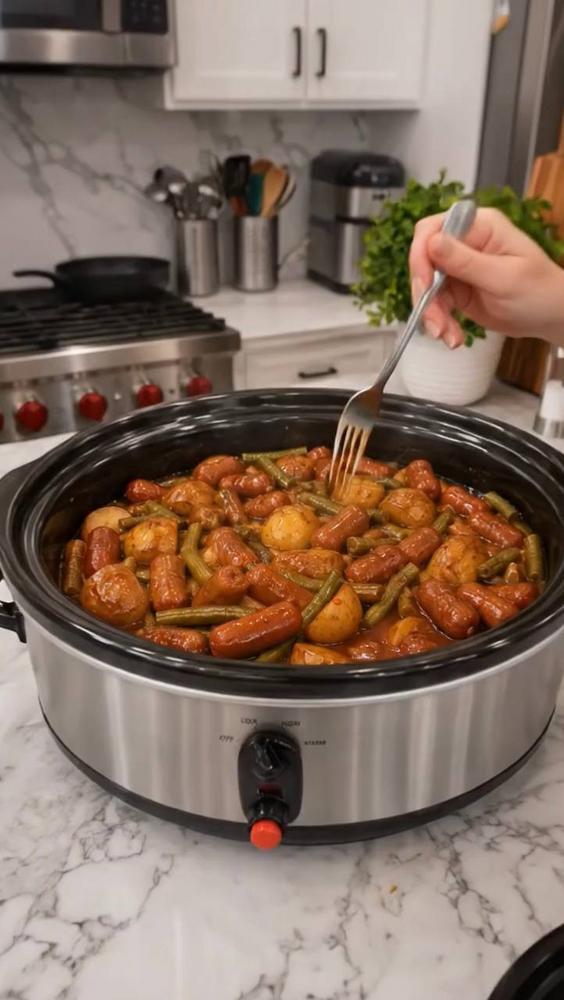
- Add the baby potatoes and cocktail sausages to the slow cooker, gently stirring to combine all ingredients and ensure they are mostly submerged in the liquid.
- Cover the slow cooker and cook on LOW for 6-8 hours or on HIGH for 3-4 hours, or until the beef is fork-tender.
- During the last 30-60 minutes of cooking, add the green beans to the slow cooker. Stir them in and continue cooking until they are tender-crisp or to your desired doneness.
- If you prefer a thicker stew, in a small bowl, whisk together the cornstarch and cold water to create a slurry. Stir the slurry into the hot stew during the last 15-20 minutes of cooking. Cook until the stew has thickened to your liking.
- Remove the bay leaf before serving. Taste and adjust seasonings as needed.
- Ladle the hot stew into bowls. Garnish with fresh chopped parsley, if desired. Serve immediately.
Cooking Tips and Variations
To achieve the absolute best flavor for your slow cooker beef and vegetable stew, don’t skip browning the beef. While it adds an extra 10-15 minutes to your prep, searing the beef cubes creates a rich, caramelized crust that locks in juices and develops a deeper, more complex flavor profile that permeates the entire stew. This process also creates fond (the browned bits at the bottom of the pan), which you can deglaze with a splash of broth and add to the slow cooker for an extra boost of umami.
When it comes to vegetables, feel free to get creative. Carrots and celery are classic additions that provide a sweet, earthy base; add them along with the potatoes. For a touch of sweetness, a handful of frozen corn can be stirred in during the last 30 minutes of cooking. Sliced mushrooms or bell peppers also make excellent additions. If you love a bit of heat, a pinch of red pepper flakes added with the spices will give it a subtle kick. For a brighter, fresher finish, stir in some fresh chopped parsley or chives right before serving.
It’s important not to overcrowd your slow cooker. Filling it more than two-thirds full can prevent even cooking and may cause the liquid to boil over. If you have a very large batch, consider splitting it between two slow cookers or reducing the recipe size. Remember that slow cookers retain moisture very well, so resist the urge to add too much liquid initially; you can always add more if needed, but it’s harder to reduce. For a leaner protein option, you could use cubed chicken thighs, adjusting the cooking time slightly to prevent overcooking. For a vegetarian take, replace the beef and sausages with hearty mushrooms, lentils, and extra root vegetables, using vegetable broth instead of beef broth.
Storage and Reheating
This Slow Cooker Beef and Vegetable Stew is fantastic for meal prep and makes delicious leftovers. To store, allow the stew to cool completely to room temperature (this usually takes about 1-2 hours) before transferring it to airtight containers. Properly stored, it will keep well in the refrigerator for up to 3-4 days. For longer storage, this stew freezes beautifully. Portion it into freezer-safe containers or heavy-duty freezer bags, leaving a little headspace for expansion. It can be frozen for up to 3 months.
When reheating, if frozen, thaw the stew overnight in the refrigerator first. For individual servings, you can reheat the stew in the microwave in 2-3 minute intervals, stirring between each, until heated through. Alternatively, for larger quantities or a more gentle reheat, transfer the stew to a saucepan or Dutch oven and warm it over medium-low heat on the stovetop, stirring occasionally, until it reaches your desired temperature. If the stew seems too thick after reheating, you can thin it out with a splash of beef broth or water.
Frequently Asked Questions
Do I have to brown the beef before putting it in the slow cooker?
While technically optional, browning the beef before adding it to the slow cooker is highly recommended. This step creates a rich, caramelized crust on the meat, which significantly enhances the flavor and depth of the entire stew. It’s a small extra step that makes a big difference in the final taste.
Can I use different types of potatoes or other vegetables?
Absolutely! The beauty of stew is its versatility. You can use larger potatoes, peeled and cubed, or sweet potatoes for a slightly different flavor. Feel free to add other root vegetables like carrots, parsnips, or turnips. For softer vegetables like peas, corn, or spinach, add them during the last 30 minutes of cooking to prevent them from becoming mushy.
My stew isn’t as thick as I’d like. What can I do?
If your stew is too thin, you can easily thicken it. The most common method is to create a cornstarch slurry: whisk 2 tablespoons of cornstarch with 2 tablespoons of cold water until smooth. Stir this mixture into the hot stew during the last 15-20 minutes of cooking, and continue to cook until the stew thickens to your desired consistency. Alternatively, you can remove about 1 cup of the stew liquid, whisk in 1-2 tablespoons of flour, and then return it to the slow cooker to thicken.
Can I make this stew vegetarian?
Yes, you can adapt this recipe to be vegetarian. Replace the beef and sausages with hearty vegetables like large chunks of mushrooms (cremini or portobello work well), chickpeas, or lentils. Use vegetable broth instead of beef broth, and ensure all other ingredients are vegetarian-friendly. The cooking time might be slightly shorter, so keep an eye on the tenderness of your vegetables.